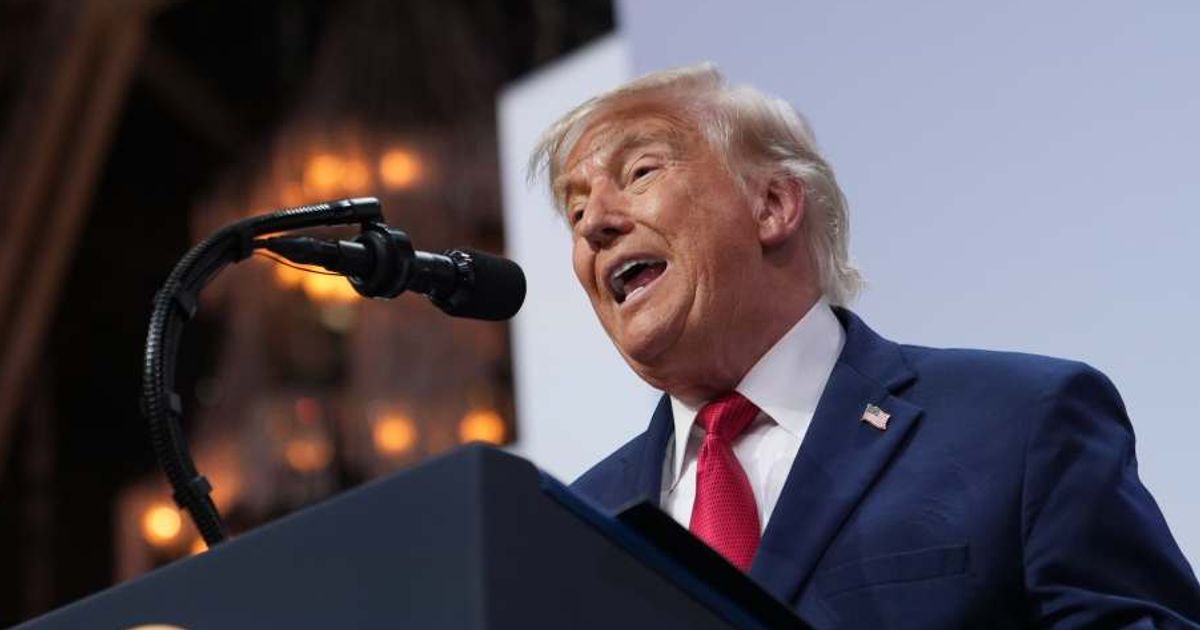
Donald Trump recently asserted that his administration’s immigration policies led to a decrease in car insurance premiums, while claiming that current immigration levels under the Biden administration have caused rates to surge.
This assertion comes as many Americans have experienced rising car insurance costs. An examination of the evidence suggests the claim is not supported.
Trump shared a chart on Truth Social on June 15, displaying year-over-year changes in auto insurance premiums from 2021 to 2026. The graphic, attributed to an analysis by the Council of Economic Advisers using Bureau of Labor Statistics data, showed a sharp increase in premium growth between 2021 and 2023, followed by a slowdown in 2024 and a projected decrease in 2026.
Using this data, Trump stated, “Car Insurance Premiums rose to RECORD HIGHS, forcing Law-abiding American Citizens to subsidize the ‘free riding’ Biden Illegals.” He further claimed, “After over a year of ZERO ILLEGAL IMMIGRATION, and our highly successful efforts to REVERSE the Biden Invasion, Car Insurance Premiums have come tumbling down.”
However, experts widely dispute this connection. They attribute the rise in car insurance premiums primarily to factors stemming from the COVID-19 pandemic, including changes in driving behavior, an increase in the severity of accidents, and disruptions to supply chains that inflated vehicle repair costs. As the insurance industry stabilized financially and competition intensified, many insurers began lowering rates to attract policyholders.
Economists like Michael Clemens of Johns Hopkins University and the Peterson Institute for International Economics dismiss Trump’s argument as unfounded. Clemens stated, “The claim is pure fiction. It does not arise from any study by the White House, by the auto insurance industry, or even by anti-immigration pressure groups. It has no basis in anything but inflammatory statements that juxtapose two unrelated trends.”
A White House spokesperson, while not providing specific evidence, suggested that the Trump administration’s immigration and public safety policies had reduced traffic risks by easing congestion in some urban areas and removing commercial drivers deemed to be safety risks, which they argued contributed to lower insurance costs.
Industry experts, however, emphasize broader economic and market forces. During the initial phase of the pandemic in 2020, reduced driving due to lockdowns and remote work led to fewer accidents and insurance claims, benefiting insurers’ financial standing. As driving resumed, accident rates and repair expenses increased, driving up premiums. By 2024, a decline in accident rates and a stronger financial position for insurance companies enabled many to offer more competitive pricing.
Reference