U.S. Rep. Mike Collins, a Republican candidate for the Senate in Georgia, has criticized the 2022 Inflation Reduction Act, attributing current inflation to the legislation and highlighting incumbent Democratic Sen. Jon Ossoff’s support for it.
In a television advertisement released on June 17, Collins stated that Ossoff "cast the deciding vote for the inflation disaster that cost Georgia families at the gas pump, the grocery store, and the border."
Corbin Keown, a spokesperson for Collins, confirmed the advertisement’s reference to the Inflation Reduction Act. However, the campaign has not elaborated on the basis for claiming Ossoff’s vote was the "deciding" one.
The term "deciding vote" implies a singular vote that tips the scales. While Ossoff’s vote was crucial for the bill’s passage, it was one of many from 49 other Democrats who voted in favor. The tie-breaking vote, which was pivotal, was cast by Vice President Kamala Harris. This role of Harris has been acknowledged by Republican allies in the context of the 2024 election cycle.
Contrary to its name, the Inflation Reduction Act had minimal impact on inflation. Economists suggest that an earlier piece of legislation, the 2021 American Rescue Plan Act, had a more significant influence on inflation. This plan injected substantial funds during the pandemic when supply chains were disrupted. Since the passage of the 2022 act, the year-over-year inflation rate has decreased significantly, and many of the act’s measures are designed for gradual implementation over several years.
Understanding the Law and its Support:
The Inflation Reduction Act is a comprehensive piece of legislation addressing climate change initiatives, healthcare, and corporate taxation. Republicans have described it as "green corporate welfare" that impedes free market principles. Conversely, Democrats have promoted its benefits, such as capping insulin costs and investing in American renewable energy companies.
Ellie Dougherty, a spokesperson for Ossoff’s campaign, responded to inquiries about the "deciding vote" claim by stating, "Through the Inflation Reduction Act, we capped the cost of insulin and out-of-pocket drug costs for seniors. The IRA has also created tens of thousands of new jobs across the state and supercharged economic development in Georgia."
Ossoff has also sponsored legislation to address certain aspects of the act, including a production tax credit for U.S. solar energy manufacturers.
The vote on the Inflation Reduction Act was strictly along party lines, with 50 Democrats supporting it and 50 Republicans opposing it. Vice President Kamala Harris cast the tie-breaking vote on August 7, 2022.
Previous Recognition of Harris’s Role:
Republicans have previously emphasized Vice President Harris’s role in the bill’s passage, particularly in the context of the 2024 presidential election. A House GOP press release from August 2024, titled "Kamala Harris Owns the Inflation Expansion Act After Casting Deciding Vote," targeted her role. Similarly, Vice President J.D. Vance stated in September 2024, "Kamala Harris cast the deciding vote on the Inflation Explosion Act."
Harris herself has acknowledged her role, posting on Facebook in August 2024, "As Vice President, I was proud to cast the tie-breaking vote to pass the Inflation Reduction Act."
While Republicans, including Collins, have blamed the act for inflation, the inflation rate had already peaked before the bill was passed. Following its passage, inflation declined, though economic factors beyond the act itself are largely credited for this decrease. Economists generally attribute the exacerbation of inflation to the American Rescue Plan Act, post-pandemic supply chain issues, and Russia’s invasion of Ukraine.
Conclusion:
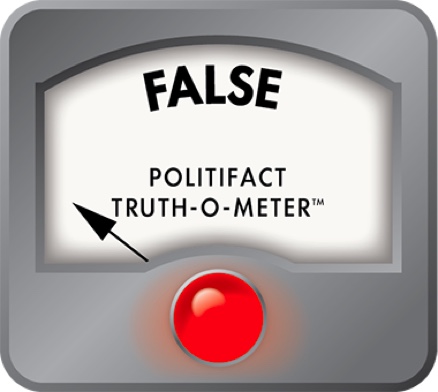
Collins asserted that Ossoff "cast the deciding vote for the inflation disaster," referring to the 2022 Inflation Reduction Act. While Ossoff supported the legislation, and his vote was necessary, he did not cast the "deciding vote." That role fell to Vice President Harris, who broke the tie. Furthermore, the Inflation Reduction Act had minimal impact on inflation, which had peaked prior to its passage and subsequently declined. Many of its provisions are also designed for phased implementation.
Therefore, the statement is rated as False.