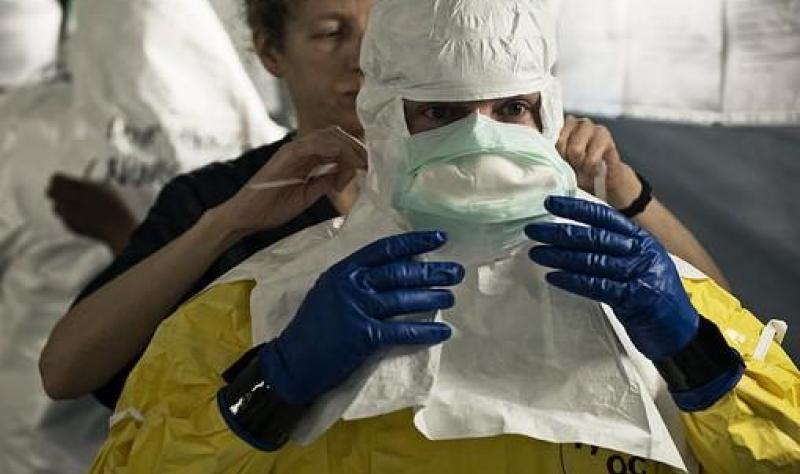
The Democratic Republic of the Congo is grappling with a severe Ebola outbreak, now claiming 506 lives due to the Bundibugyo strain. This particular strain lacks specific treatments and vaccines, making containment efforts particularly challenging.
The Ministry of Health in the DRC has reported a total of 1,561 confirmed cases. The outbreak is primarily concentrated in the Ituri province, with significant spread into North and South Kivu provinces. Recent updates indicate 33 new cases and 14 additional deaths within the DRC. The neighboring country of Uganda has recorded 20 cases, resulting in two fatalities.
Healthcare workers in Ituri province have announced a 24-hour strike notice, citing unacceptable working conditions. Their concerns include unpaid benefits, low wages, and insufficient supplies, issues that have persisted since the outbreak’s official start in May.
This potential strike could disrupt the deployment of two experimental therapies that began this week in the DRC. These trials involve administering the antiviral drug remdesivir, the investigational antibody treatment MBP134, or a combination of both. Patient outcomes will be monitored over a 28-day period to assess survival rates.
Residents in Bunia, a city heavily impacted by the outbreak, have expressed that the new treatment trial offers a glimmer of hope for controlling and ultimately stopping the spread of the virus.
In other developments, the World Health Organization (WHO) has added the first diagnostic test for the Ebola Bundibugyo virus to its emergency use listing. This test allows for the rapid confirmation of infection in blood samples.
There is speculation that diagnostic tests used earlier in the outbreak in the DRC may have overlooked early Bundibugyo strain infections, as they were primarily designed to detect the more prevalent Zaire strain of Ebola.
Yukiko Nakatani, MD, PhD, WHO assistant director-general for health systems, access, and data, stated in a press release, “Public health emergencies require not only speed, but also confidence that the health products being used meet standards for quality, safety and performance. During a fast-moving outbreak, timely access to quality-assured diagnostic tests can make a critical difference in containing transmission. Through this Emergency Use Listing, WHO is helping countries access trusted diagnostic tools more rapidly so that they can respond more effectively.”
While the WHO reported an estimated testing capacity of 200 to 400 tests per day in mid-May, the DRC’s capacity has since increased to over 2,000 tests daily across a network of 10 laboratories in the affected regions.
Despite the enhanced testing capabilities, contact tracing remains a significant hurdle, and the source of this particular outbreak, or “patient zero,” has yet to be identified.
Reference