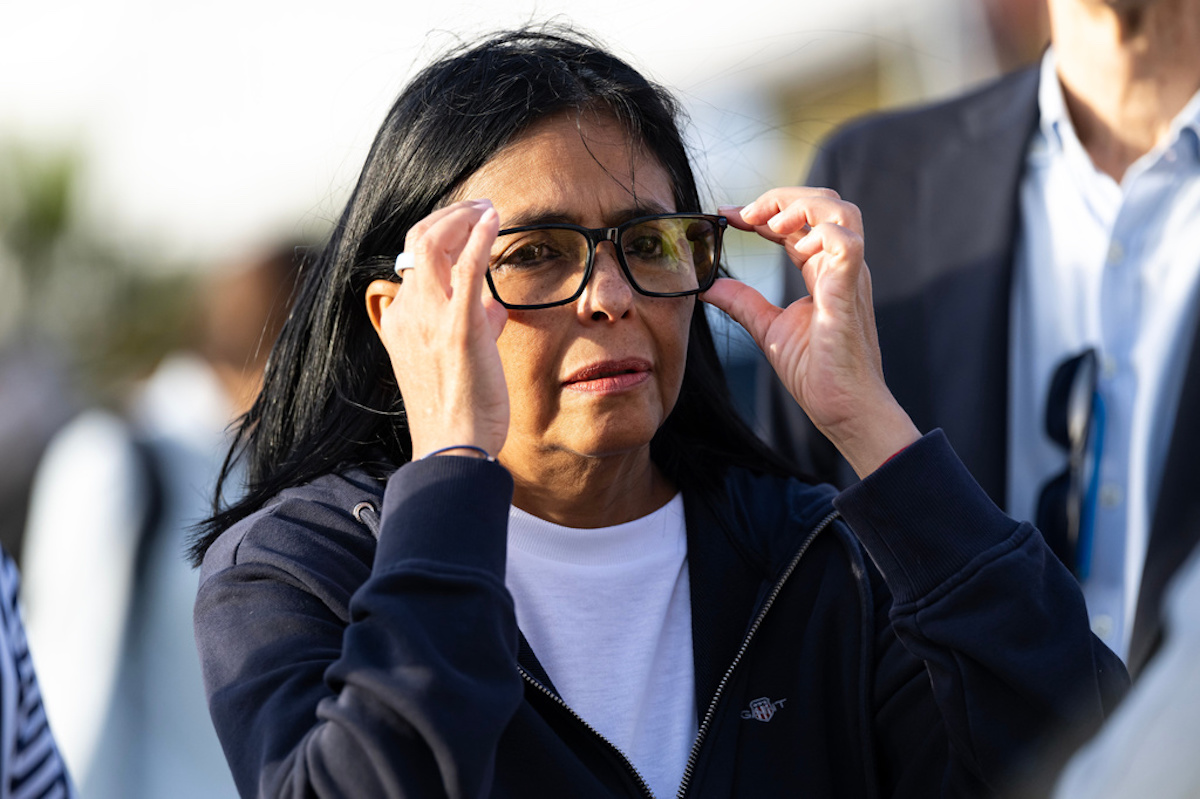
The Trump administration has requested immunity for Delcy Rodríguez, Venezuela’s acting president, in a civil lawsuit. The suit was filed in a federal court in Florida against her and other Venezuelan officials. Three American citizens, who were allegedly imprisoned and subjected to torture under Nicolás Maduro’s government, initiated the lawsuit in 2025. These individuals were later released in a U.S. prisoner exchange in 2023.
The Department of Justice asserted in a court filing on July 2 that the executive branch holds the exclusive authority to determine which heads of state are eligible for immunity. The filing also noted that the State Department had officially recognized Rodríguez as Venezuela’s head of state in March. Consequently, the Department of Justice has urged the court to dismiss all claims against her. The administration’s stance does not dispute the allegations themselves but rather centers on Rodríguez’s legal protection from being sued in U.S. courts. A letter from the State Department on June 11 indicated that including Rodríguez in the case could have negative foreign policy consequences.
The lawsuit, filed by Jerrel Kenemore, Jason Saad, and Edgar José Marval, accused Rodríguez and other high-ranking officials of imprisoning them in 2022 and subjecting them to physical and psychological torture. Rodríguez’s legal representative had previously sought to have the case dismissed in April, citing her status as head of state. A federal judge had previously awarded $314 million in damages to the victims, though Rodríguez was not part of that specific ruling.
Legal experts suggest that Rodríguez is likely to be granted immunity. Professor of international law Rob Howse believes there is no valid legal reason for a court to deny her immunity, given the precedents cited by the U.S. government. He stated that she would be protected based on her current position as acting head of state. A conference call regarding the case is scheduled for September 30, though the exact timing of Rodríguez’s formal dismissal from the lawsuit remains undetermined.
Under international law, certain government officials are protected from legal proceedings in foreign courts. This protection, often referred to as official immunity, remains in effect for as long as the individual holds office. Once an official leaves power, they may be subject to lawsuits or the reinstatement of prior verdicts, though only for actions not covered by official immunity, meaning unlawful acts outside of their official duties. If Rodríguez were to be removed from power, her immunity would cease.
Regarding Nicolás Maduro, while international law generally grants heads of state absolute immunity in foreign courts, U.S. courts are unlikely to extend this to him. This is because immunity is a designation made by the U.S. government, and the Trump administration did not recognize Maduro as Venezuela’s legitimate president.
In a similar context, New York City Mayor Zohran Mamdani had stated during his election campaign that he would order the arrest of Israeli Prime Minister Benjamin Netanyahu if he visited the city. Mamdani described Netanyahu as a war criminal responsible for genocide in Gaza. However, Mamdani later acknowledged that New York City lacks the authority to make such an arrest, noting that this power rests with the federal government. Former President Trump publicly stated that Netanyahu should not be arrested, and legal experts predicted that the Trump administration would likely invoke head of state immunity to protect Netanyahu.
Reference