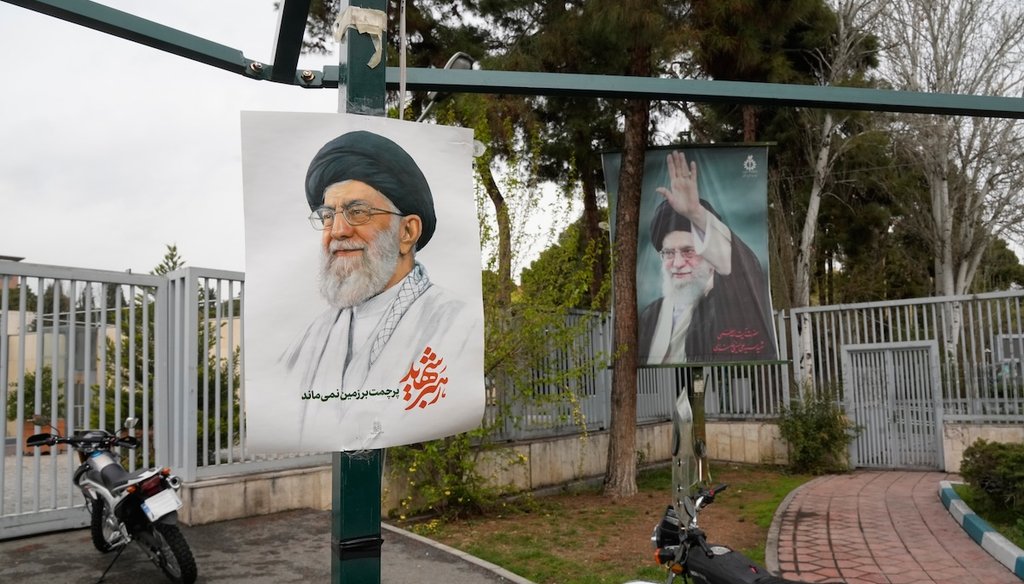
Trump and Pete Hegseth said the U.S. achieved regime change in Iran. Evidence shows Iran’s government structure remains in place.
Donald Trump and Defense Secretary Pete Hegseth said U.S. military action resulted in “regime change” in Iran. The claim is not supported by the evidence.
U.S. and allied forces did kill several high-ranking Iranian officials, including Supreme Leader Ayatollah Ali Khamenei, during the conflict. However, leadership changes alone do not constitute regime change in the political science sense.
Experts define regime change as a fundamental transformation of a country’s governing system, institutions, or ideology—not simply the removal or death of individual leaders.
Following the strikes, Iran’s governing structure remained intact. Power transferred within the existing system, with leadership continuing under the same political and ideological framework. There was no evidence of a collapse or replacement of the Islamic Republic’s institutions.
Statements from Trump and Hegseth appear to rely on a broader or redefined interpretation of “regime change,” focusing on the elimination of top officials rather than systemic transformation. In fact, administration rhetoric shifted over time, sometimes describing the outcome as a military success rather than a structural political change.
Independent analysis and reporting reinforce that key objectives—such as dismantling Iran’s governing system—have not been achieved. Iran continues to function under the same regime despite military losses.
The distinction is critical:
- ✔️ Leadership losses occurred
- ❌ Government system change did not
Final Verdict: False ❌ The United States has not accomplished regime change in Iran. While top officials were killed, the country’s governing system remains in place.