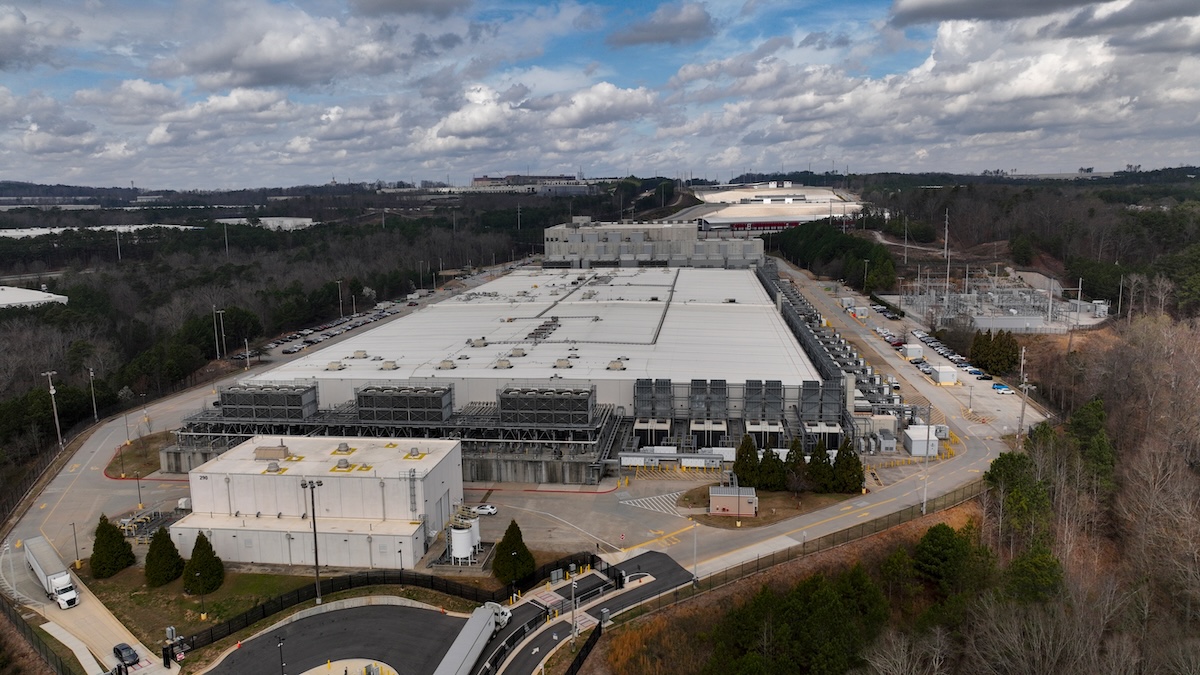
The question of whether massive artificial intelligence data centers should be built in Florida—and how they might impact residential power bills—has emerged as a central debate in the state’s gubernatorial race.
Republican frontrunner and U.S. Rep. Byron Donalds supports bringing these facilities to the state as long as proper consumer safeguards are in place, a stance that has drawn numerous campaign donations from the tech sector. On the other side, prominent Democratic candidate David Jolly is calling for an outright moratorium on new data centers, mirroring restrictions already adopted by several counties.
While Florida currently hosts over 100 functioning data centers, plans for hyperscale AI facilities are still in the proposal stage with none yet active.
“Byron Donalds wants to rush them onto pristine land while dismissing the consequences,” Jolly argued in a July 22 social media post.
Donalds pushed back against the criticism. “No protections for ratepayers and the environment = no data center. That’s the law on the books in Florida,” he posted on X, noting he has advocated for similar legislation at the federal level.
In a follow-up post that same day, Donalds asserted that the state’s 2026 legislation, known as SB 484, “ensures that utility rates will not go up due to data centers.”
Does Florida law genuinely guarantee that everyday electric bills will remain untouched by the arrival of these massive tech hubs?
According to Gates McGavick, Donalds’ campaign communications director, any shift in electric rates requires authorization from the state’s energy commission. This regulatory body is tasked with ensuring “data centers pay their own cost of service,” an expectation the campaign believes municipal utilities and cooperatives will also follow, McGavick noted.
However, energy experts point out that while the law offers tools to shield consumers from rising utility costs, Donalds stretches its actual impact. They emphasize that rate structures depend heavily on regulatory oversight, indirect cost pressures could still push bills upward, and the statute does not apply universally to all power providers across the state.
“Saying rates ‘will not’ go up because of [the law] claims an outcome the statute does not deliver,” explained Mark McNees, a Florida State University professor who studies the intersection of AI infrastructure and consumer utility impacts.
The legislation instructs regulators to ‘reasonably protect’ consumers, but falls short of a guarantee
Under the legislation, the Florida Public Service Commission—the state’s principal energy regulator—is tasked with establishing minimum pricing rules for “large load customers,” defined as data centers requiring 50 megawatts of power or more. (To put that into perspective, a 50-megawatt facility demands roughly the same amount of electricity as 30,000 to 50,000 typical households.)
The law stipulates that tariffs for these massive energy users must “reasonably ensure” they cover their own full cost of service without shifting expenses onto standard residential ratepayers.
Covered expenses include hookups, incremental grid transmission, generation infrastructure, and ongoing maintenance. Furthermore, the measure prohibits data centers from splitting a single large campus into smaller footprints to bypass these financial obligations.
The rules directly bind Florida’s four major investor-owned utilities: Florida Power & Light, Duke Energy Florida, Tampa Electric, and the Florida Public Utilities Company, which collectively supply power to about 75% of the state’s residents. These utilities faced a deadline of Oct. 1 to submit compliant pricing structures for regulatory approval.
Conversely, the statute exempts rural electric cooperatives and municipal utility providers—such as the Jacksonville Electric Authority, the Orlando Utilities Commission, and Gainesville Regional Utilities—which operate under locally elected or appointed boards.
Consequently, customers served by these municipal and cooperative entities lack protections under the new state law and could experience different pricing models if data centers pop up in their service territories.
Energy analysts characterize the law as procedural rather than preventative.
“This directs a process, not a result,” McNees stated. The phrasing that tariffs must “reasonably ensure” costs are covered serves as “an instruction to the commission” rather than a strict price ceiling or an absolute ban on rate hikes, he added.
While the measure grants utilities mechanisms to protect themselves—such as requiring upfront financial security or minimum demand charges to prevent developers from abandoning projects and leaving locals holding the bag—it does not mandate their use.
Additionally, experts note that the legislation focuses narrowly on the direct infrastructure costs associated with data centers, leaving other potential cost drivers unaddressed.
For instance, when global fuel prices rise, utilities typically pass those expenses directly to consumers. The new statute does not shield everyday ratepayers from broader fuel adjustments, even if a massive influx of tech-driven energy demand inflates regional electricity consumption.
Our assessment
Donalds asserted that a recent Florida law “ensures that utility rates will not go up due to data centers.”
While the legislation sets up frameworks to shield consumers from absorbing the infrastructure costs of massive tech facilities, it does not guarantee that rate increases won’t happen.
Utility pricing frameworks for large-scale data centers must “reasonably ensure” facilities cover their own expenses, with the Florida Public Service Commission holding the responsibility to define and enforce those tariffs. However, the rule applies exclusively to the state’s major investor-owned utilities, leaving municipal providers and rural co-ops out of its scope.
Because the statement overstates the absolute protective nature of the law, we rate Donalds’ claim Half True.
RELATED: FL governor’s race: Did Jay Collins sponsor a bill giving permanent tax breaks to AI data centers?
RELATED: How much have data centers increased electricity prices?