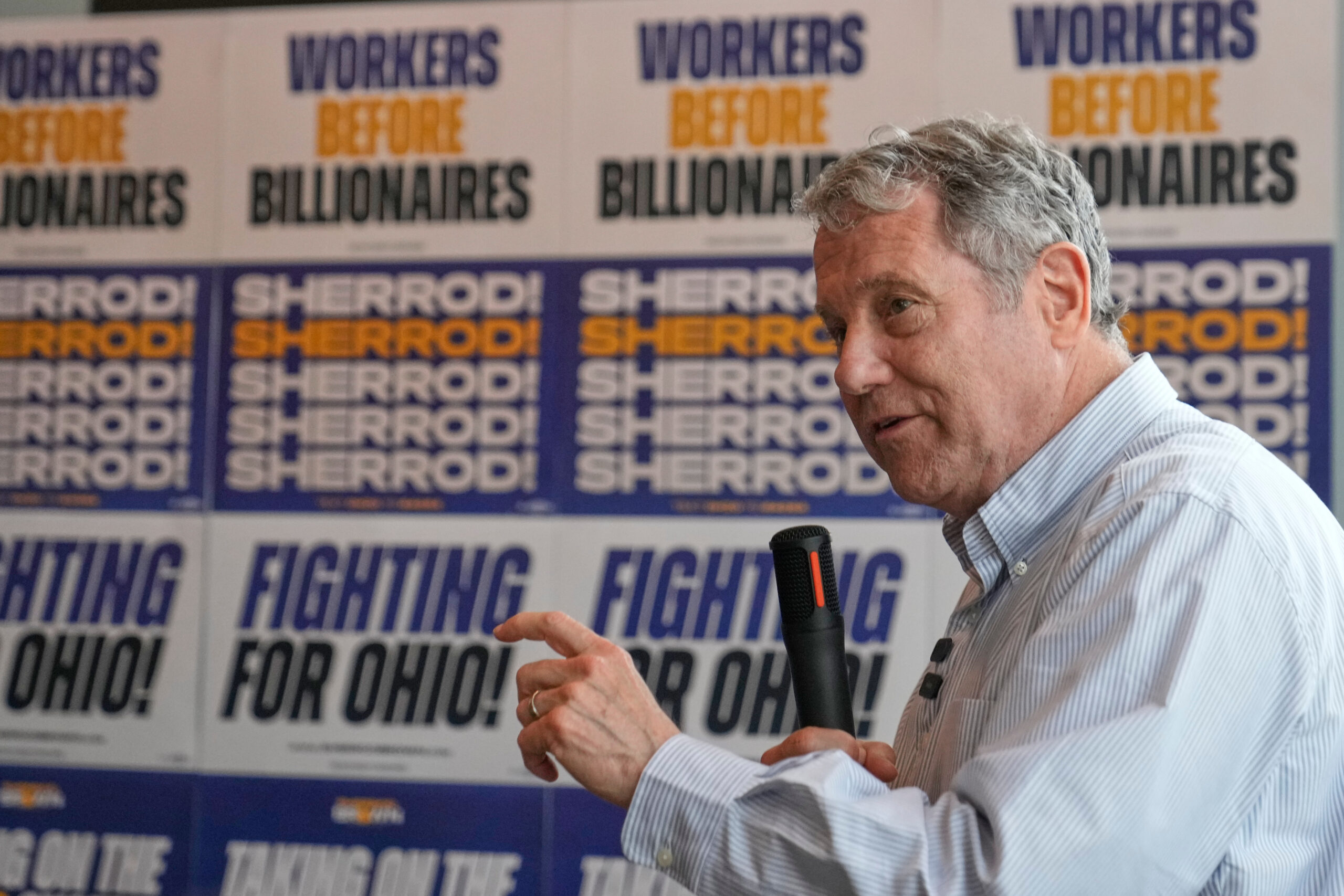
As former Democratic Senator Sherrod Brown campaigns to unseat Republican Senator Jon Husted in Ohio, his historical legislative voting record has once again become a focal point for political attacks.
During an August 4 appearance on Fox News, Husted accused Brown of having “supported Social Security payments for illegals, healthcare for illegals and COVID checks for illegals.”
This line of attack is not new; Brown faced virtually identical claims during his 2024 reelection campaign from Republican Bernie Moreno, who ultimately won that Senate seat.
While Brown did participate in votes concerning Social Security, healthcare, and pandemic relief, a closer look at the specific measures highlighted by Husted reveals they did not actually grant federal benefits to undocumented immigrants.
Much of this rhetoric stems from a standard Washington tactic: political parties frequently introduce targeted amendments designed primarily to force their opponents into politically uncomfortable votes that can later be weaponized in campaign ads.
Social Security Vote Focused on Individuals with Legal Status
Husted’s campaign pointed to Brown’s vote on July 19, 2007, against an amendment that sought to bar immigrants who were previously undocumented—but later secured legal residency—from claiming Social Security credits for taxes they paid prior to obtaining legal status.
Crucially, Brown’s vote did not open the door for undocumented individuals to collect Social Security. Any potential benefits would only be accessible after the individuals had successfully transitioned to legal residency.
Furthermore, the criticism overlooks another vote cast by Brown just months later in October 2007, when he supported an amendment that successfully blocked immigrants from receiving Social Security credits for taxes paid while they lacked legal status (though that specific proposal did not account for individuals who later regularized their status).
Healthcare Legislation Did Not Alter Eligibility Rules
The Husted campaign also highlighted a March 23, 2013, vote by Brown against an amendment proposed by then-Senator Jeff Sessions (R-AL), which aimed to restrict federally subsidized healthcare from going to undocumented immigrants.
However, that amendment was essentially redundant. Existing federal law already strictly prohibited undocumented immigrants from accessing Medicaid, the Children’s Health Insurance Program (CHIP), and Affordable Care Act (ACA) marketplace subsidies.
On that same day, the Senate approved a separate voice vote reaffirming that undocumented individuals are barred from receiving federal benefits. While roll-call votes weren’t taken for that measure, Brown’s team maintains he supported it.
COVID-19 Relief Measures Already Restricted Stimulus Recipients
In 2021, Brown voted for the American Rescue Plan Act, which delivered $1,400 economic impact payments to millions of Americans amid the COVID-19 pandemic.
During debate, Senate Republicans introduced an amendment intended to explicitly bar anyone “not lawfully present” from receiving the stimulus checks.
The underlying legislation already mandated that recipients possess valid Social Security numbers, which effectively blocked the vast majority of undocumented immigrants. GOP proponents argued, however, that the amendment was necessary to close a potential loophole affecting participants in the Deferred Action for Childhood Arrivals (DACA) program.
DACA recipients—brought to the U.S. as children—receive temporary protection from deportation along with work authorization and valid Social Security numbers, theoretically making them eligible for the stimulus funds.
Brown voted down the March 6, 2021 amendment, but critics’ assertions ignore the reality that standard undocumented immigrants were already excluded from the stimulus checks due to lacking qualifying Social Security numbers.
Bottom Line
Jon Husted’s assertion that Sherrod Brown backed Social Security, healthcare, and pandemic stimulus payments for undocumented immigrants mischaracterizes the legislative record.
None of the targeted votes from 2007, 2013, or 2021 granted eligibility for federal benefits to undocumented individuals. The Social Security vote pertained to future tax credits for people who later acquired legal status; the healthcare vote was redundant because federal law already blocks undocumented individuals from those programs; and the COVID-19 relief package already excluded the vast majority of unauthorized immigrants by requiring valid Social Security numbers.
This claim has been rated False.