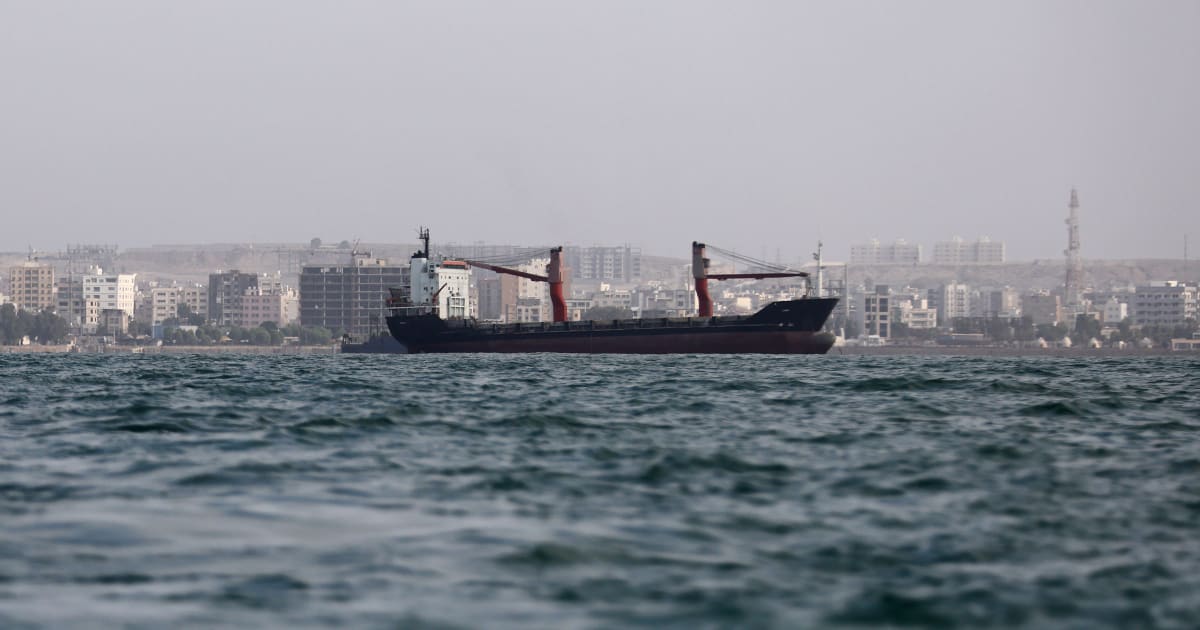
A recent US military operation against Iran—the first since July—has sharply escalated tensions between the two nations.
TEHRAN, IRAN: Following recent military strikes in the Strait of Hormuz, the Islamic Revolutionary Guard Corps (IRGC) has publicly accused Washington of committing an “act of aggression.” This allegation has intensified existing friction regarding security in this critical maritime corridor. Here is a closer look at the facts surrounding the IRGC’s assertions.
Claim: The IRGC labels US strikes an ‘act of aggression’
JUST IN: 🇺🇸🇮🇷 US military says its strikes were not an “act of aggression” and were “limited” to counter threats in the Strait of Hormuz.
— BRICS News (@BRICSinfo) August 31, 2026
On August 30, American forces carried out strikes targeting two IRGC rocket launchers stationed on Larak Island. According to US officials, the equipment was actively being prepared to launch rockets equipped with sea mines into vital shipping lanes within the Strait of Hormuz.
This engagement represents the first direct US military action against Iranian targets since July, serving as an immediate catalyst for heightened geopolitical tensions.
🚨 US strikes Larak Island
US forces hit two IRGC rocket launchers on Iran’s Larak Island after they were observed preparing to fire rockets carrying sea mines into the Strait of Hormuz.C14 sources say dozens of IRGC personnel were killed and nearly 100 wounded.
The IRGC… pic.twitter.com/QwmugtGhiV
— Gina Beana Fofina (@Ginasassyass) August 30, 2026
In the wake of the operation, the IRGC strongly denounced the maneuver as unprovoked aggression and vowed retaliation. Social media platforms quickly amplified conflicting narratives regarding the incident.
While one widely shared post noted that the US military maintained its actions were strictly “limited” and aimed at neutralizing threats, another user on X alleged heavy casualties, writing that sources claimed “dozens of IRGC personnel were killed and nearly 100 wounded,” with the IRGC officially condemning the event as a “terrorist act of aggression.” These contrasting reports rapidly fueled online debate.
Fact Check: The IRGC’s accusation is unfounded
🚫CLAIM: Iran’s Islamic Revolutionary Guard Corps (IRGC) claimed in a recent statement that strikes by U.S. forces to prevent the IRGC from placing mines in the Strait of Hormuz were an “act of aggression.” This claim is absolutely FALSE.
✅FACT: U.S. forces took limited,… pic.twitter.com/XLx8xNTHto
— U.S. Central Command (@CENTCOM) August 31, 2026
The assertion made by the IRGC lacks validity. A statement released by CENTCOM clarified, “U.S. forces took limited, precise action against IRGC minelaying forces posing an imminent threat in the Strait of Hormuz.”
The command further emphasized, “Ultimately, Iran engineered the threat, and the U.S. military intervened to eliminate it, safeguarding civilian mariners, commercial vessels, and the uninterrupted flow of international trade.”
Contextual evidence strongly reinforces CENTCOM’s position that the military action was defensive and aimed at an immediate hazard.
Notably, the strike occurred shortly after US forces successfully cleared pre-existing sea mines from the same waters, making any new attempts to deploy mines a severe and direct danger to regional navigation.
In subsequent developments, Iran responded by launching missiles toward US military positions in Jordan, framing the move as retaliatory action.
Together, these events align closely with the official characterization of the operation as a targeted, defensive response rather than an aggressive, unprovoked assault.