Political Ad Sparks Outrage After Using Family’s Fatal Crash
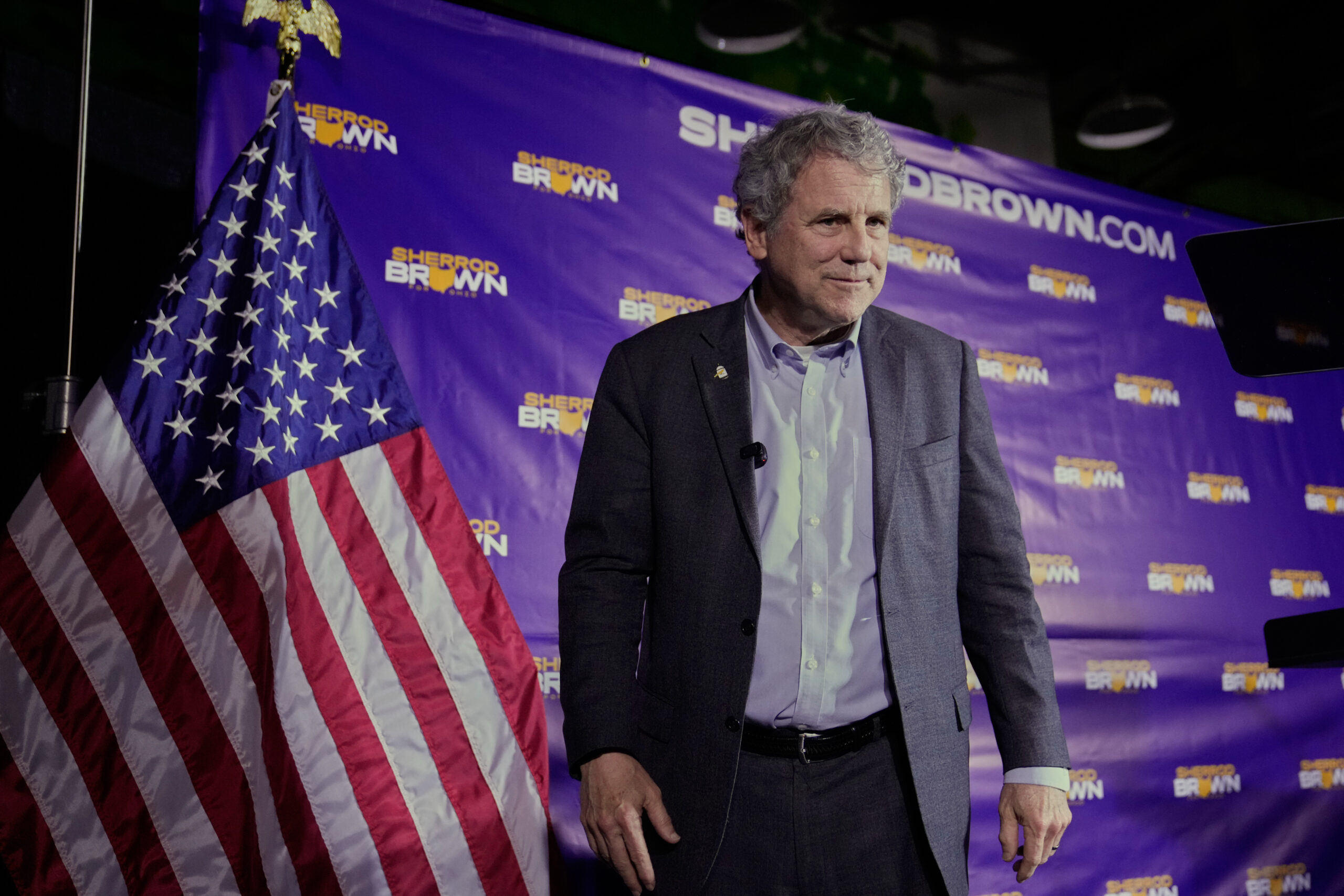
Months following a tragic highway collision that claimed the lives of an Ohio family of three, the incident became a central component of a political advertisement targeting former Democratic Senator Sherrod Brown during his race against Republican Senator John Husted.
Released by the National Republican Senatorial Committee (NRSC), the commercial features footage of a wrecked highway alongside a narrator stating, “Sherrod Brown opened our borders to dangerous illegals. The consequences were deadly.”
The screen briefly displays a photograph of Lynnea Soposki, her husband Luke, and their 1-year-old son, Logan. According to law enforcement, the family died on April 11 north of Columbus on Interstate 71 when a semitruck collided with stopped traffic, triggering a multi-vehicle pileup that left others injured.
The driver of the semitruck, 50-year-old Modou Ngom, faces three counts of aggravated vehicular manslaughter and four counts of vehicular assault. Additionally, federal prosecutors allege that Ngom fraudulently acquired both U.S. citizenship and an Ohio driver’s license.
Family Condemns Politicization of the Tragedy
Relatives of the victims strongly condemned the ad, noting that family members were never consulted before their loved ones’ photographs were used, and demanded its removal. In response to the backlash, Husted distanced himself from the commercial, describing it as the product of an independent third-party organization. Despite the family’s objections, the ad received widespread broadcast coverage across Ohio and remains accessible on the NRSC’s official YouTube channel.
The commercial attempts to link the tragedy directly to Brown, featuring images of him alongside former President Joe Biden paired with footage of southern border fencing.
Fact-checkers have repeatedly noted that the Biden administration did not maintain an “open border” policy. Throughout that period and currently, the United States has continued to enforce border security using physical barriers, advanced surveillance systems, and Border Patrol personnel, notwithstanding instances of unauthorized crossings.
Furthermore, an examination of Brown’s extensive legislative career—spanning three terms in the U.S. Senate and prior service in the House of Representatives—reveals no factual correlation between his votes on immigration policy and the circumstances surrounding the fatal collision.
Examining the Driver’s Immigration and Citizenship Background
Shortly after the crash, the Ohio Department of Public Safety reported that Ngom initially entered the United States during the 1990s and subsequently utilized various aliases and birth dates to secure state and federal identification documents.
State officials stated that Ngom used an alternate identity to fraudulently obtain an Ohio driver’s license around 2003 and a commercial driver’s license in 2007. Under that same alias, he achieved U.S. naturalization in the mid-2010s before legally changing his name back to Modou Ngom in 2015.
While a Department of Homeland Security spokesperson confirmed via email that Ngom was naturalized in 2015, the agency did not specify the exact year he arrived in the country. Inquiries directed to Ngom’s defense attorney, Jeffery M. Poth, went unanswered. Without precise arrival records, it remains impossible to determine whether Brown was holding congressional office when Ngom first entered the U.S.
Brown assumed office in Congress in 1993. Over a legislative tenure lasting three decades, his voting record reflects support for expanded protections for certain immigrant populations alongside opposition to specific Republican-led enforcement proposals.
For instance, in 1996, Brown voted against a Republican-sponsored bill designed to increase the number of Border Patrol agents, streamline deportations, and heighten penalties for document fraud and human smuggling. However, days later, those same provisions were incorporated into a broader federal spending package that Brown supported, which was ultimately signed into law by then-President Bill Clinton.
Reviewing the Legislative Record
When asked by investigators to specify which of Brown’s legislative actions or votes contributed to the accident, an NRSC spokesperson referenced his broader voting history on immigration, mirroring points raised in prior media reports following his 2024 Senate reelection loss to Republican Bernie Moreno.
Among the legislative items frequently cited is Brown’s support for a 2001 amendment intended to restrict deportations for a specific category of immigrants facing pre-1997 criminal plea agreements. That measure ultimately failed and had no bearing on Ngom’s legal status or entry into the country. Similarly, many other votes highlighted by critics either failed to pass or exerted no influence on federal law.
Records also show that Brown co-sponsored the 2019 End Mass Deportation Act, a proposal intended to reverse executive orders expanding deportation priorities and to prevent federal funding cuts to so-called sanctuary cities. That bill failed to advance out of committee.
In subsequent years, Brown opposed several Republican-backed amendments, including a 2021 proposal to redirect $300 million from federal employee COVID-19 emergency leave funds toward Customs and Border Protection drug-detection technology. He also voted against measures aimed at preserving or restarting construction contracts for the U.S.–Mexico border wall in 2021 and 2023.
Conversely, Brown’s record includes support for bipartisan initiatives focused on border enforcement and security. In 2023, he worked alongside Republicans to advance the FEND Off Fentanyl Act, designed to implement stricter sanctions and anti-money laundering measures against narcotics traffickers. He also supported legislation in 2024 providing nearly $7 billion in funding for Customs and Border Protection, and co-sponsored the Border Management, Security, and Assistance Act of 2023, which sought to increase penalties for smuggling operations and enhance the recruitment of border enforcement personnel. Neither of those measures was enacted into law.
Conclusion
An NRSC political advertisement asserted that an April highway accident resulting in the deaths of three family members occurred because “Sherrod Brown opened our borders to dangerous illegals.”
State and federal records indicate that the semitruck driver implicated in the crash entered the United States in the 1990s, subsequently acquired fraudulent identification and driver’s licenses in 2003 and 2007, and attained naturalized citizenship in 2015.
In the absence of definitive federal confirmation regarding his exact entry date, a direct link to Brown’s congressional tenure cannot be established. Furthermore, an analysis of Brown’s legislative history provides no evidence that his votes on immigration policy opened national borders or precipitated the crash.
Consequently, the claim made in the political advertisement is rated False.