
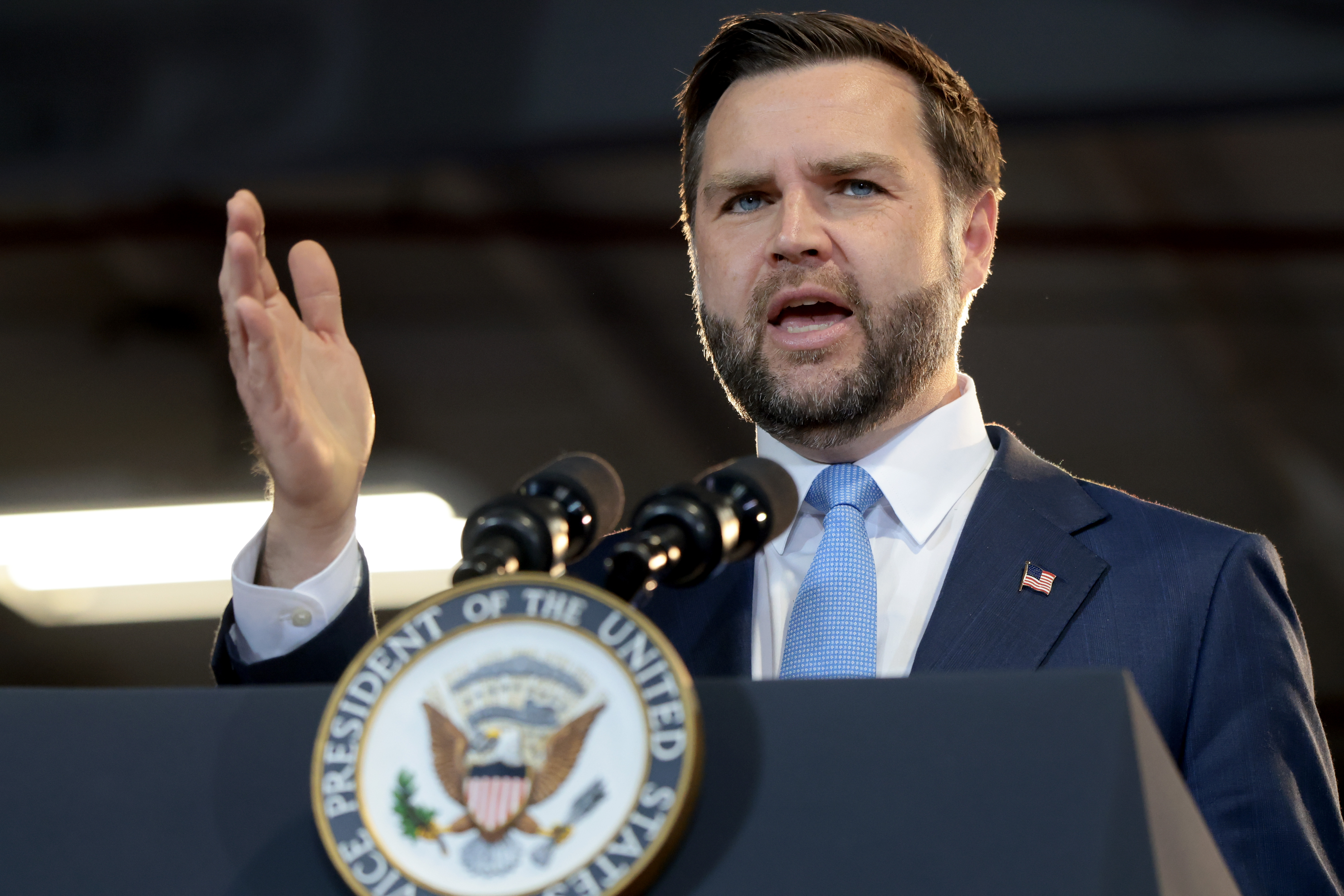
During a White House briefing, Vice President JD Vance addressed post-pandemic inflation and outlined the Trump administration’s economic initiatives, including a heavily debated figure regarding national investments.
WASHINGTON, DC: Vice President JD Vance asserted during a Thursday, September 3 White House press briefing that the United States has attracted $19 trillion in fresh investments under President Donald Trump. This statement aligns with a series of rising economic figures frequently cited by the administration to champion its financial policies. Let’s examine the validity of this assertion.
Claim: JD Vance stated that $19 trillion in new investments flowed into the country
Vice President JD Vance says the Biden administration’s inflation crisis will take time to undo, while touting the Trump administration’s economic agenda.
Vance highlighted no taxes on Social Security, tips, or overtime, along with $19 trillion in new investment coming into the… pic.twitter.com/RPzqscWjXF
— One America News (@OANN) September 3, 2026
Taking the podium in the White House Briefing Room, JD Vance focused heavily on the economic fallout from the prior administration, criticizing the previous handling of consumer prices while promoting current countermeasures.
Recalling the peak of the economic downturn, Vance referenced remarks made by President Donald Trump throughout the 2024 campaign trail regarding historic inflation rates.
“Inflation under the last Administration hit a record high of about 9.5 percent, and it’s funny. During the 2024 campaign, the president… would say this is the highest inflation in American history, and people would come back and say no history. It’s just the highest inflation in the last 60 or the last 48 years. I was, like, well, that’s still very, very bad.”
According to Vance, even as inflation metrics stabilize, elevated price levels require patience to reverse fully. “So, what happened with that? Is that when prices get baked in like that? It takes a little bit of time for us to undo some of the damage.”
Transitioning to targeted relief measures, Vance highlighted proposed policies aimed at easing the burden on working-class citizens, before turning his focus to domestic infrastructure and capital influx.
“We’ve seen 19 trillion dollars of new investment come into the country, but most of that is Bill’s building new factories and new facilities.”
He noted that while construction crews stand to benefit immediately from industrial development, transforming capital pledges into operational, job-producing facilities is a gradual process.
“Those factories are being built, so if your construction worker, that’s great. And obviously, we love our construction workers. However, it takes time to build those factories and employ the rest of the workers.”
Vance emphasized that the long-term economic dividends will multiply once manufacturing operations officially launch.
Fact Check: The claim is false
Available evidence contradicts the $19 trillion figure, as the White House has not substantiated the statistic or clarified the methodology used to calculate it.
Official White House documentation around the time of Vance’s speech pointed to roughly $11 trillion in “major investment announcements.” However, a detailed analysis by CNN revealed that this tally heavily relies on speculative pledges, broader trade frameworks, and non-binding economic agreements rather than guaranteed capital.
Official federal figures indicate that actual foreign direct investment in the U.S. sat near $232 billion for 2025. Furthermore, the administration’s broader figures encompass domestic corporate commitments alongside international funds.
Notably, the administration’s reported investment metrics have steadily escalated over time. President Trump cited $17 trillion late last year, adjusted the claim to $19.2 trillion recently, and reportedly told Republican lawmakers that the cumulative total had surpassed $20 trillion following another two months of data integration.