Claim:
In September 1992, legendary musician Eric Clapton reportedly invited a 16-year-old deaf fan named Sarah Mitchell onto the stage during a concert in Birmingham, England, and performed directly for her.
Rating: False
Viral Rumor Recirculates Online
A heartwarming tale describing an emotional interaction between Eric Clapton and a deaf teenager began circulating widely across social media platforms, including Facebook, X (formerly Twitter), LinkedIn, and YouTube.
According to the widely shared narrative, the event took place on September 23, 1992, during a concert at the National Exhibition Centre (NEC) in Birmingham, England. The dramatic retelling claims that amid a roaring crowd of 12,000 fans, Clapton noticed a young girl sitting completely still in the third row. The narrative asserts that upon realizing the 16-year-old—identified as “Sarah Mitchell”—was profoundly deaf, the musician stopped his performance midsong. Supposedly, an amplifier was placed behind her chair so she could physically feel the vibrations of the guitar, and Clapton played an intimate acoustic piece exclusively for her as the arena fell into a hushed silence.
While many users shared the story as an uplifting piece of music history, it is entirely fictional.
Why the Story Falls Apart
1. Contradictions in Tour History
The viral posts explicitly tie the event to Clapton’s Journeyman tour. However, official tour records and timelines maintained by Clapton’s management show that the Journeyman World Tour actually concluded in March 1991—more than a year before the claimed September 1992 date.
Furthermore, venue schedules do not align with the narrative. While Clapton did perform in Birmingham in February 1992, those shows took place at the National Indoor Arena, not the NEC. His later appearances at the NEC in 1992 were for benefit concerts held in October, rendering a September 23 concert date completely inaccurate.
2 Missing from Official Accounts
An event as remarkable as stopping a massive arena show to serenade a deaf fan would undoubtedly stand out in a musician’s career. Yet, no such encounter is mentioned in Eric Clapton: The Autobiography, published in 2007, which chronicles his life, tours, and notable career moments. Additionally, extensive searches across major search engines yield no historical news coverage or credible media reports from 1992 documenting the event.
The Role of Artificial Intelligence and Clickbait
Investigation into the origins of the viral post reveals a familiar pattern of fabricated content designed to generate web traffic and ad revenue.
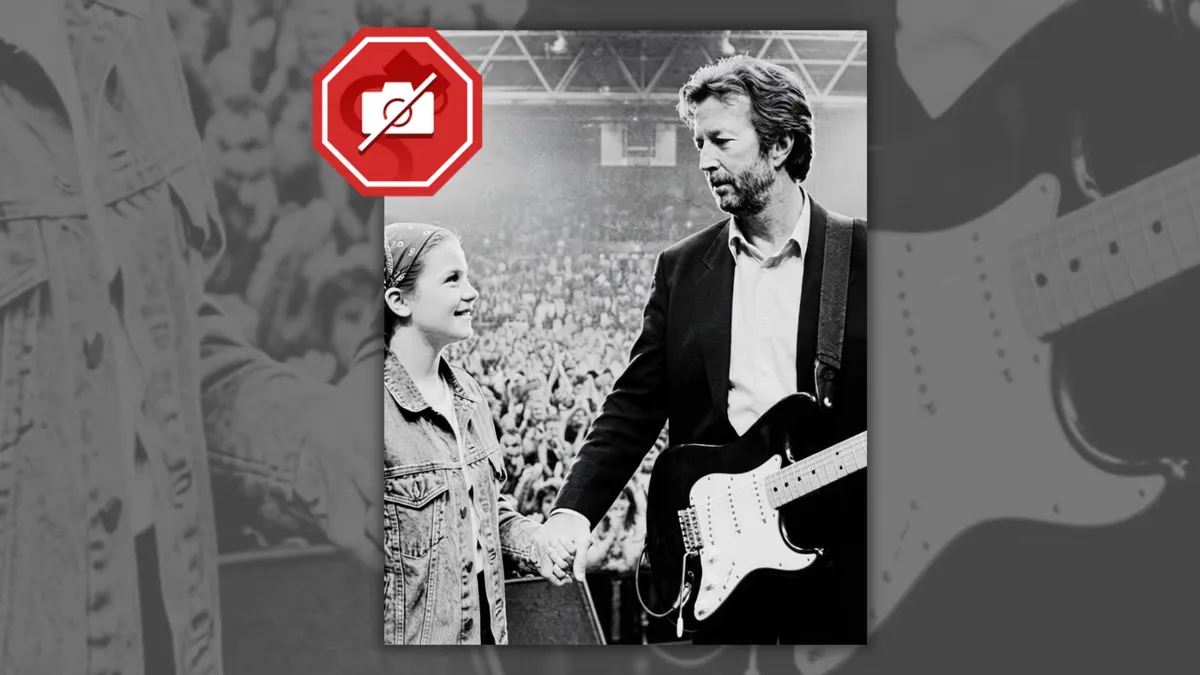
- AI-Generated Imagery: The posts frequently feature images depicting an older Clapton alongside a teenage girl. Independent AI detection tools, such as Hive Moderation, indicate that these photos were generated using artificial intelligence. Later iterations of the hoax even repurposed the same image with black-and-white filters and watermarks from clickbait pages.
- Synthetic Text: Linguistic analysis and AI-detection platforms like ZeroGPT suggest the narrative itself was likely crafted using generative AI, relying on heavily sentimental, emotional language typical of online “glurge”—fabricated heartwarming stories meant to manipulate reader emotions.
- Clickbait Origins: The rumor traces back to monetized social media channels known for posting sensational, unverified anecdotes about celebrities under vague, emotional titles aimed at driving high view counts.
Ultimately, the tale of Eric Clapton pausing his Birmingham concert for a deaf teenager is a modern internet fabrication, joining a growing trend of AI-generated celebrity myths designed to go viral for clicks.