A long-standing point of friction within the NATO alliance may finally be settled.
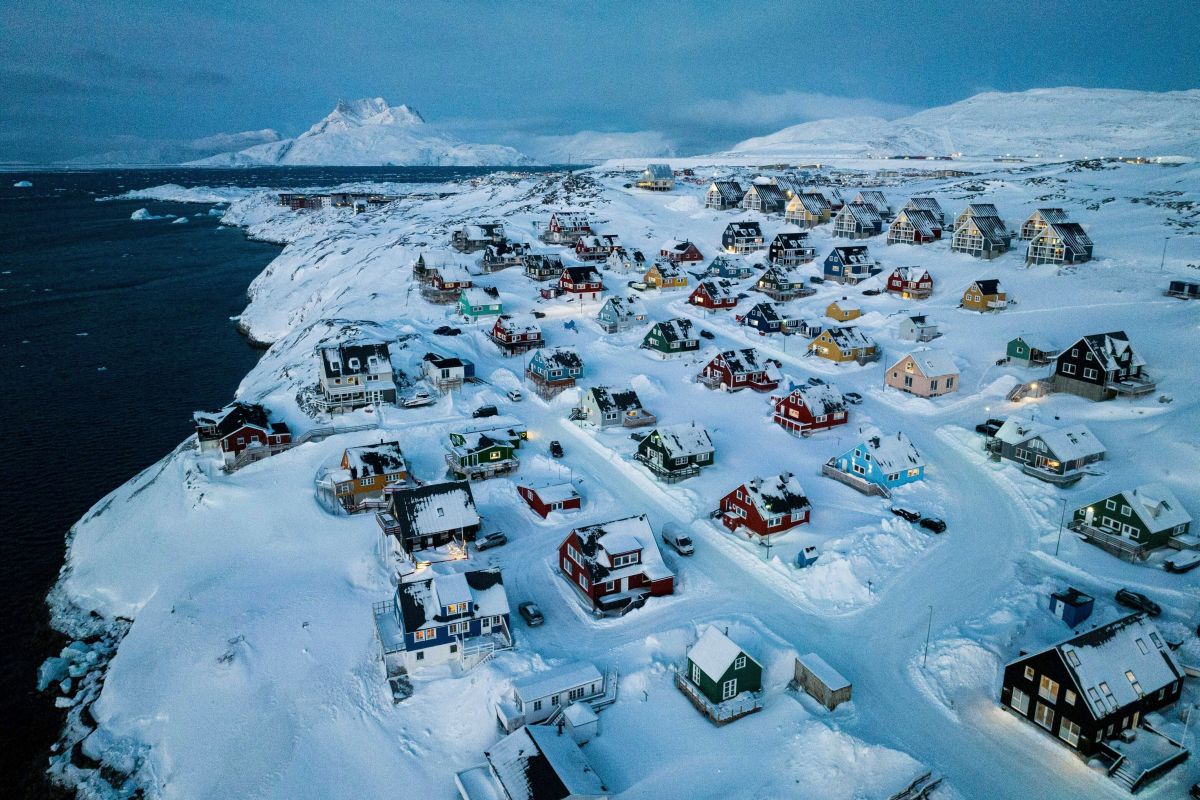
On Sept. 18, President Donald Trump announced a major breakthrough regarding the U.S. military footprint on Greenland. The vast Arctic island operates under Danish home rule, but Trump had previously insisted it should fall under direct American control for national security purposes.
“The United States of America has entered into an Agreement with The Kingdom of Denmark, and Greenland, that gives the United States permanent control over security, and all other needs, in Greenland, completely addressing ALL of our many U.S. concerns,” Trump announced via Truth Social.
Because Greenland is governed through Denmark, a complete U.S. takeover risked pitting close NATO partners against each other. European allies firmly resisted American acquisition efforts, culminating in January when Denmark joined forces with the United Kingdom, France, Finland, Germany, the Netherlands, Norway, and Sweden for joint military exercises on the island.
Specific details and the final text of the new accord remain scarce. While Trump hailed the arrangement as an absolute triumph, leaders in Denmark and Greenland adopted a more measured tone, describing the discussions as nearly finished rather than fully completed.
It remains to be seen how drastically this pact will alter the existing dynamic, given that the U.S. already maintains personnel and military assets in Greenland.
“This Greenland agreement appears, from what we have heard, to be a new summation of agreements we have had formally or in an applied fashion with Denmark and the Greenlanders during the Cold War and up to the present,” noted Evelyn Farkas, executive director of Arizona State University’s McCain Institute for foreign policy.
She compared it to the USMCA trade agreement, which Trump negotiated with Mexico and Canada during his first term to replace the North American Free Trade Agreement with a largely similar framework.
Notably, the agreement stops short of making Greenland the 51st U.S. state—an idea previously floated by Trump and his supporters.
Officials from all participating governments indicated the pact is on track to be formally signed during the United Nations General Assembly, which runs through Sept. 28.
Here is a breakdown of what is currently known about the Denmark-Greenland accord.
Why does Trump want Greenland under U.S. control?
The Arctic shipping lane situated between Greenland, Iceland, and the United Kingdom—known as the “GIUK Gap”—serves as a vital maritime chokepoint connecting Europe, the Americas, and Russia.
Additionally, the U.S. operates troops out of Greenland’s Pituffik Space Base. Trump has emphasized that the island is essential for realizing his vision of the “Golden Dome,” an advanced next-generation missile defense shield he pitched during his 2024 campaign.
Greenland also boasts rich mineral deposits critical for manufacturing items like electric vehicle batteries.
Who controls Greenland now?
Denmark’s colonization of Greenland dates back to the 1720s. In 1933, an international tribunal resolved a territorial dispute between Denmark and Norway, ruling that Denmark held legitimate sovereignty over the entirety of Greenland as of July 1931.
Following the ratification of the United Nations charter in 1945, Denmark integrated Greenland via a 1953 constitutional amendment that granted the island seats in the Danish Parliament.
After Denmark informed the UN that Greenland’s colonial status had officially concluded, the UN General Assembly approved the transition in November 1954—with the United States voting in favor.
Since then, Greenland has steadily pursued greater self-governance. Local activists successfully advocated for home rule in 1979, which created its own legislative body. Today, Greenland functions as an autonomous territory within the Kingdom of Denmark, retaining two elected representatives in the Danish parliament.
What do we know about the deal?
Earlier this year—prompted by U.S. military threats—the three governments committed to high-level talks to defuse regional tensions, ultimately yielding the agreement announced by Trump.
While a formal text has not been published, Trump outlined several core pillars in his social media post:
- “The United States will FOREVER have the complete ability to do what is necessary in Greenland in order to secure and defend the security of Greenland, and the United States of America.”
- “No U.S. adversary can EVER have a base in Greenland, have a military presence in Greenland, or make sensitive investments in Greenland, without our express written approval.”
- “This is an ‘Infinite Life’ Agreement, there is no end.”
- “There will be NO COST to the United States.”
By the afternoon of Sept. 19, the administration had yet to release the official paperwork. However, State Department officials informed PBS News and The Atlantic that the pact grants permanent U.S. base-building rights, bars non-NATO military installations, blocks Chinese and Russian investments, drops any U.S. territorial claims, and preserves Greenland’s right to self-determination.
U.S. Secretary of State Marco Rubio stated that the agreement “permanently and completely addresses our national security concerns in Greenland.”
Greenlandic Premier Jens-Frederik Nielsen and Danish Prime Minister Mette Frederiksen released upbeat statements on Sept. 18.
“I am pleased that we now have the prospect of a good agreement for Greenland, the Kingdom of Denmark and the United States,” Frederiksen remarked, emphasizing that it bolsters collective Arctic security while respecting Danish sovereignty and the Greenlandic people’s self-determination.
Danish Foreign Minister Lars Løkke Rasmussen shared on Facebook that the upcoming week “could be a good week … for both Greenland, Denmark and the USA.”
Slightly diverging from Trump’s absolute framing, Nielsen characterized the nations as being “close to concluding an agreement” rather than having a finished deal.
What are the next steps?
All parties confirm their intention to sign the accord at the United Nations. It remains ambiguous whether the agreement constitutes a formal treaty requiring U.S. Senate ratification, as Trump did not label it as such.
How does the agreement compare with what Trump previously said he wanted?
During a January Oval Office interview with The New York Times, Trump insisted he would accept nothing less than outright U.S. ownership. “Because that’s what I feel is psychologically needed for success,” he explained. “I think that ownership gives you a thing that you can’t do, whether you’re talking about a lease or a treaty.”
Even so, analysts noted that Trump has a history of projecting himself as a master negotiator, making his willingness to settle short of statehood unsurprising.
Based on public disclosures, experts question how much the new framework alters the existing status quo.
“The NATO treaty already obligates the United States to come to the defense of Denmark, including Greenland,” pointed out Greg Fox, a law professor at Wayne State University.
Furthermore, the U.S. and Denmark signed a bilateral defense agreement in 1951—which was updated in 2004. James J. Townsend Jr., a senior adviser at the Atlantic Council and former deputy assistant secretary of defense, noted that the historical pact already secured many of the provisions Trump is currently championing.
One distinct shift, analysts suggest, is that Greenland is explicitly listed as a co-signatory. This direct inclusion secures long-term American access even if Greenland eventually pursues complete independence.
While restrictions on Russian and Chinese investments may have been implied under prior understandings, the new deal introduces a more explicit prohibition.
Regarding Trump’s description of the deal as “infinite,” Tom Ginsburg, a professor of international law at the University of Chicago, noted that the 1969 Vienna Convention on the Law of Treaties stipulates that agreements lacking a termination date are implicitly infinite anyway, rendering Trump’s phrasing largely redundant.
To John Pike, director of globalsecurity.org, Trump’s Greenland campaign was fundamentally “performative not instrumental.”
“If it turns out that this agreement just restates terms of the existing treaty relations between the U.S. and Denmark, that seems to be a huge win for Denmark, Greenland, Europe and international law prohibiting the use of aggressive force,” Fox said. “Of course [Trump] can brag all he wants about ‘wins’ … but I imagine Denmark would be willing to live with that.”
What does this agreement mean for NATO?
At a minimum, codifying the agreement removes “one less irritant in trans-Atlantic relations” as the alliance contends with broader strategic threats, particularly an assertive Russia, Pike observed.
Bruce Stokes, a visiting senior fellow with the German Marshall Fund, told PolitiFact that “Trump will portray this deal as demonstrating the effectiveness of his threats at a time when he desperately needs a win.”