Artificial intelligence has seamlessly integrated into daily routines, assisting individuals with discovering news, creating images, drafting emails, and conducting research.
WASHINGTON, DC: As the 2026 midterm elections approach, a growing number of Americans are utilizing AI platforms to research candidates, political platforms, and voting procedures. Recent studies indicate that while voters increasingly rely on AI for electoral insights, questions persist regarding the precision and reliability of the data these systems deliver. Let’s examine the facts behind this trend.
Claim: Voters are turning to AI chatbots for election insights ahead of the 2026 midterms
Artificial intelligence is now a staple of modern life, supporting everything from research queries and news gathering to image creation and email composition.
Naturally, these technological advancements have also intersected with American politics. Emerging data suggests that the 2026 midterm cycle is spurring a new application for AI, with portions of the electorate consulting chatbots for guidance on the polls.
This intersection has sparked considerable debate in Washington. While lawmakers on Capitol Hill weigh potential regulations, President Donald Trump has pushed back against efforts to restrict the industry. Meanwhile, prominent figures within the AI sector have advocated for a more measured approach to development.
The debate has even bridged unusual political divides, temporarily uniting figures like democratic socialist Senator Bernie Sanders and conservative strategist Steve Bannon at a Washington, DC forum.
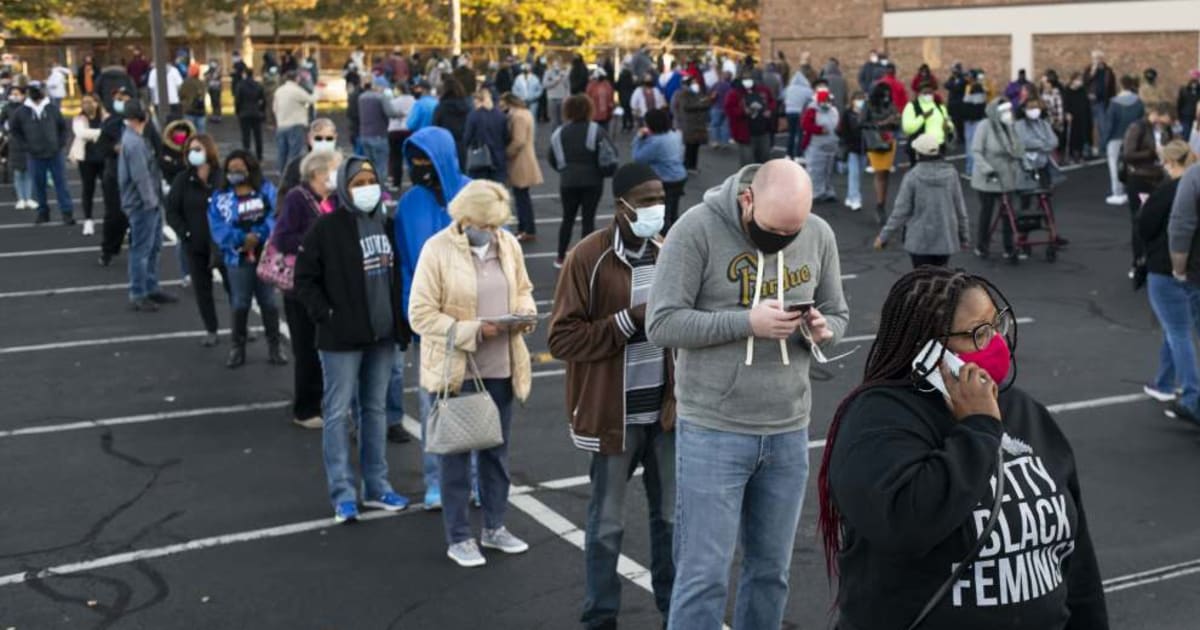
As November’s matchups draw near, analysts note that individuals are leveraging AI to explore candidate backgrounds, evaluate key issues, and navigate the voting process.
Fact Check: The claim is verified
The assertion holds true. Chara Podimata, a professor at the Massachusetts Institute of Technology, noted, “We started hearing from friends around us that they have been using chatbots in order to obtain information about elections. So we started thinking about, ‘How does a chatbot that knows some information about you potentially change the information that it gives you with regard to elections?'”
Data from the Institute for Strategic Dialogue indicates that roughly 10% of Americans turn to chatbots for news updates. In a September 3 analysis, researchers Valeria de la Fuente, Max Read, and Peter Benzoni observed, “While recent surveys show only a small proportion of American voters knowingly turn to AI chatbots for information about politics and elections, this share is likely to grow in the coming years.”
Furthermore, a voter survey published in June 2026 by the Rainey Center revealed that 9% of respondents had actively utilized AI for political insights. Participants reported using these tools for various electoral tasks, such as examining candidate stances, comparing political opponents, learning how to cast a ballot, verifying claims, and reviewing summaries of political topics.
The Rainey Center also pointed out that beyond the 9% who intentionally seek out political AI, many more voters inadvertently encounter AI-driven or AI-curated content across platforms like TikTok, Google, and other social search engines.
While investigators have found that AI can occasionally help counter election-related misinformation, experts simultaneously warn that chatbots remain capable of producing deceptive videos and imagery concerning campaigns.
The authors concluded, “This, along with other findings from our study, suggests that in an ongoing election with little authoritative information for models to rely on, AI may not be as helpful in pushing back against unsubstantiated rumors and misinformation.”