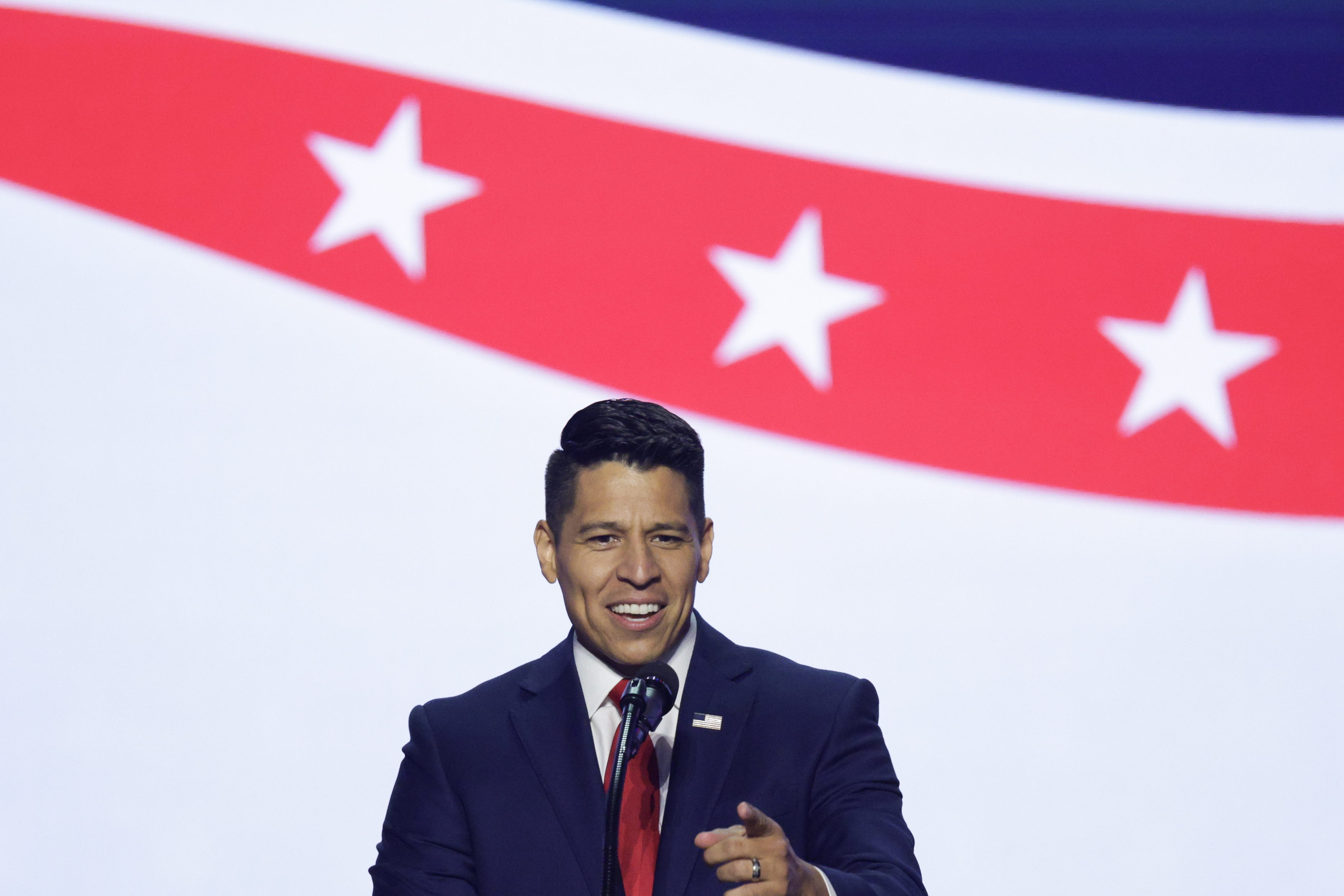
Texas congressional hopeful Carlos De La Cruz drops “Trump Conservative” branding from his campaign’s main page.
WASHINGTON, DC: As the 2026 midterm elections draw closer, political analysts are scrutinizing how tightly GOP candidates are tying their platforms to President Donald Trump.
This dynamic has intensified as nominees gear up for November match-ups in battleground districts, sparking rumors that certain Republicans are quietly putting distance between themselves and the White House. Let’s examine the validity of these reports.
Claim: Republicans are distancing themselves from Trump ahead of the 2026 midterms
The narrative that GOP contenders are cooling their association with Trump has taken center stage as campaigns transition from primaries to the general election.
Observers point to candidates trimming explicit references to the president online, pivoting toward hyper-local concerns, or occasionally offering public pushback against specific administration policies.
Chatter about a potential rift grew loudest in late August following observations that several nominees subtly tweaked their digital footprint once their primary victories were secured.
Alongside Texas candidate Carlos De La Cruz scrubbing the moniker “Trump Conservative” from his website’s header, other high-profile figures have similarly dialed back prominent endorsements.
Despite these adjustments, the National Republican Congressional Committee has consistently pushed back against the narrative, arguing that localized tweaks do not signal a broader party rebellion.
Media investigations have also noted Florida Republican Byron Donalds scaling back the visibility of Trump’s endorsement on his campaign portal. Furthermore, a handful of candidates in tightly contested House and Senate races have broken with the administration on matters like trade tariffs, immigration enforcement, and foreign policy regarding Iran, choosing instead to emphasize pocketbook issues like the cost of living.
Fact Check: The claim is partly true
Ultimately, the assertions hold a grain of truth. Certain Republican hopefuls have indeed modulated their public alignment with Donald Trump or reformatted their messaging strategies as the midterm showdown approaches.
Documented instances show specific candidates diverging from the presidential platform on targeted issues such as tariffs and immigration.
However, these isolated adjustments are far from indicative of a systemic party-wide retreat. The vast majority of the GOP base and its congressional candidates remain closely aligned with Trump’s agenda, continuing to leverage his endorsement on the campaign trail.
Motivations also vary significantly by district; representatives like Rep. Young Kim have explicitly denied that structural website updates are meant to create distance, maintaining that localized campaigns naturally prioritize regional issues.
Because the strategic calculus of balancing a national figure with local district demographics varies wildly from race to race, the claim is judged to be partly true only when applied to specific, individual campaigns.