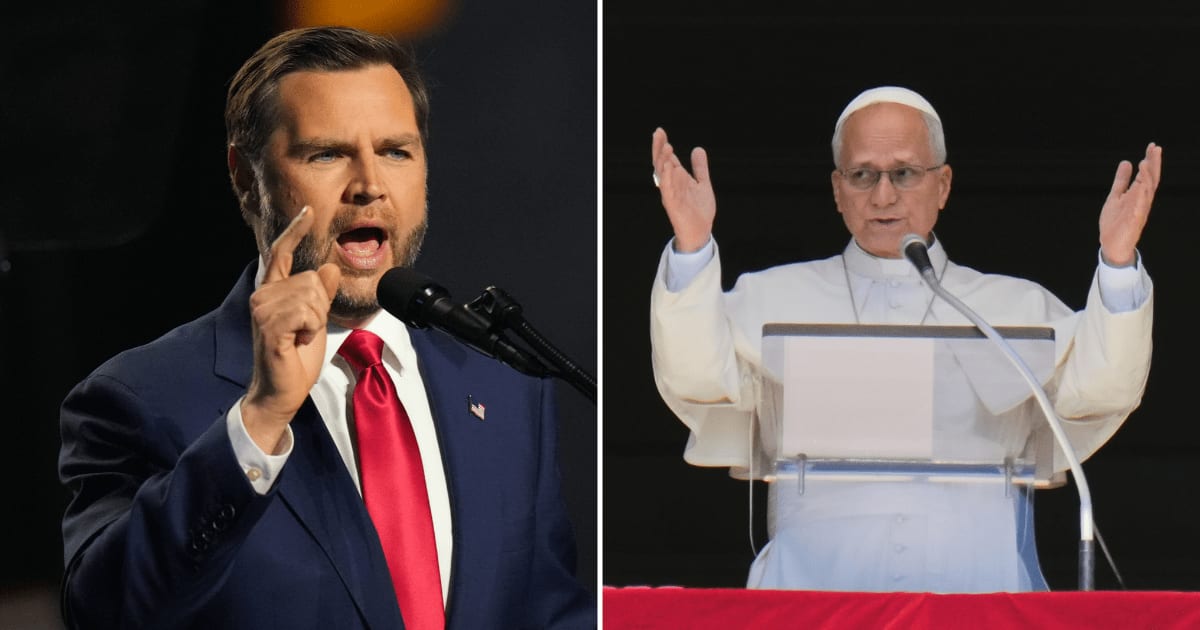
A viral social media post falsely claimed that Pope Leo XIV and Vice President JD Vance traded heated words regarding the true definition of compassion.
WASHINGTON, DC: A fictional narrative gaining traction on Facebook alleges that Pope Leo XIV and Vice President JD Vance recently engaged in a sharp verbal sparring match over compassionate values.
According to the viral posts, Vance dismissed compassion as a sign of weakness, prompting the pontiff to deliver a passionate defense of helping the poor, the sick, and marginalized communities.
While the Pope and the Vice President have previously held well-documented disagreements on topics like immigration and international conflicts, this specific story required a closer look. Here is the reality behind the rumor.
Claim: Pope Leo XIV and JD Vance engaged in a heated debate over compassion
The rumor began spreading when a Facebook account operating under the name “Dee Wallace”—referencing the well-known actress from *E.T. the Extra-Terrestrial*—shared an image combining photos of Vice President Vance and Pope Leo XIV.
The caption asserted that Vance had criticized one of the Pope’s recent addresses, allegedly labeling compassion a weakness. The post then fabricated a dramatic response from the pontiff, quoting him as saying, “You say compassion is weakness. Then when did caring for the sick become weakness? When did helping the poor become weakness? When did loving our neighbors become weakness?”
Furthermore, the fabricated dialogue claimed the room fell silent before the Pope asked, “Can we imagine hatred in heaven? Can we imagine cruelty in heaven? Then why do we tolerate these things on earth?”
The post framed the supposed interaction as starting from a political jab before evolving into a widespread online phenomenon.
Fact Check: False; there is zero credible proof backing the story
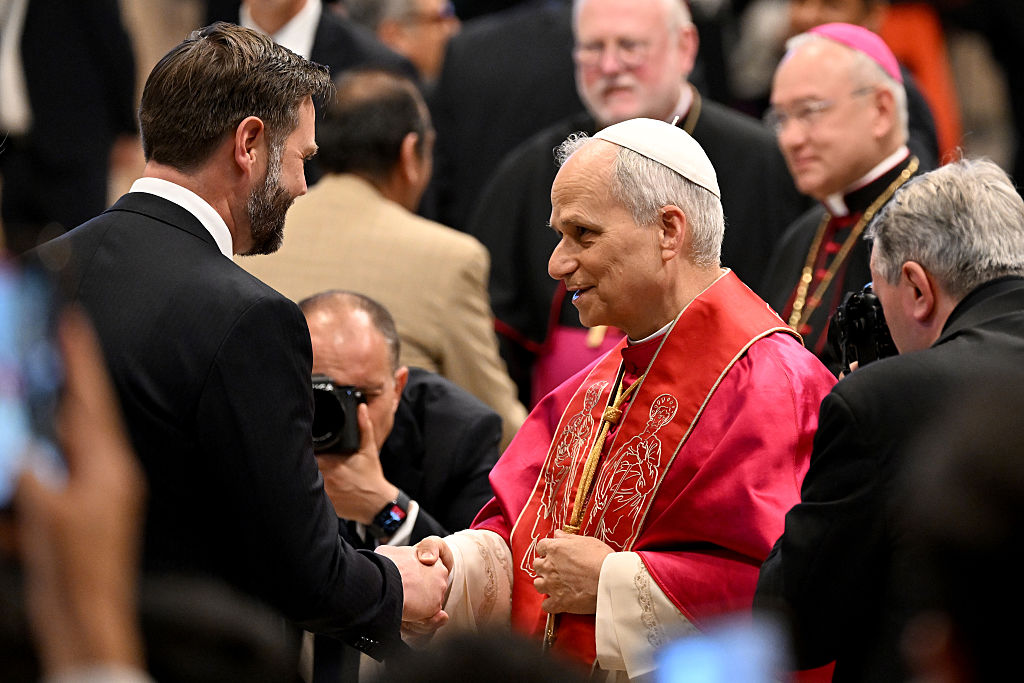
This narrative is entirely untrue. Comprehensive searches across major search engines yielded no reporting from legitimate, mainstream news organizations regarding any such conversation or direct quotes.
An exchange of this magnitude between a sitting US Vice President and the head of the Catholic Church would undoubtedly attract global media coverage. Instead, investigations reveal that the viral text is a piece of artificial intelligence-generated fiction.
The creators of this fake story likely twisted real-life remarks made by Vance earlier in the year. Back in April, during a Turning Point USA rally, Vance discussed the Pope’s commentary on issues like immigration, war, and peace. While acknowledging they sometimes disagree, Vance stated he welcomed the Pope’s perspectives, though he playfully noted the pontiff should “be careful” when delving into specific policy details.
Additionally, the Facebook page responsible for spreading the rumor is not genuinely connected to actress Dee Wallace. Although the profile carried the handle @DeeWallaceOfficialFB and a verification checkmark, its page transparency history indicates it was previously operated as a fan community and is currently managed by administrators located in Vietnam. A scroll through the page’s history reveals a frequent pattern of posting AI-generated and entirely fictional stories.
Ultimately, this viral post is a classic example of utilizing real-world political figures and historical context to manufacture a dramatic, entirely imaginary confrontation.