Republican Senate candidate Mike Rogers recently targeted his Democratic opponent, Abdul El-Sayed, over his initial remarks regarding a violent March incident at a Michigan synagogue.
Appearing on a September 24 Fox News interview with Sean Hannity, Rogers asserted that El-Sayed had refused to condemn the individual who drove a vehicle into a preschool at a local synagogue. The perpetrator ultimately died from a self-inflicted gunshot wound, and no other fatalities were reported.
“He couldn’t condemn the terrorist who tried to attack and kill 140 Jewish children right here in Michigan,” Rogers stated, referencing the assault carried out by Ayman Mohamad Ghazali at a West Bloomfield Township synagogue. Referring to El-Sayed’s broader commentary, Rogers added, “‘Hurt people hurt people’ is all he could come up with.”
Prior to full details emerging on the day of the assault, El-Sayed released an initial statement condemning antisemitism and expressing solidarity with those targeted.
In a subsequent video address the following day, once the assailant’s identity was known, El-Sayed explicitly condemned the actions twice, stating that “there is no justification for what he did.” However, his inclusion of the phrase “hurt people hurt people” sparked widespread backlash from critics who argued he was contextualizing the violence by pointing to losses the attacker’s family had suffered in the Middle East.
By August, El-Sayed issued an apology, admitting he should have limited his remarks strictly to condemnation.
Asked for evidence supporting his televised claims, a spokesperson for Rogers dismissed the apology as insincere.
“The only reason he issued a fake apology five months later is because the polling told him to,” said Rogers spokesperson Alyssa Brouillet, characterizing the initial comments as offensive to Michigan’s Jewish community.
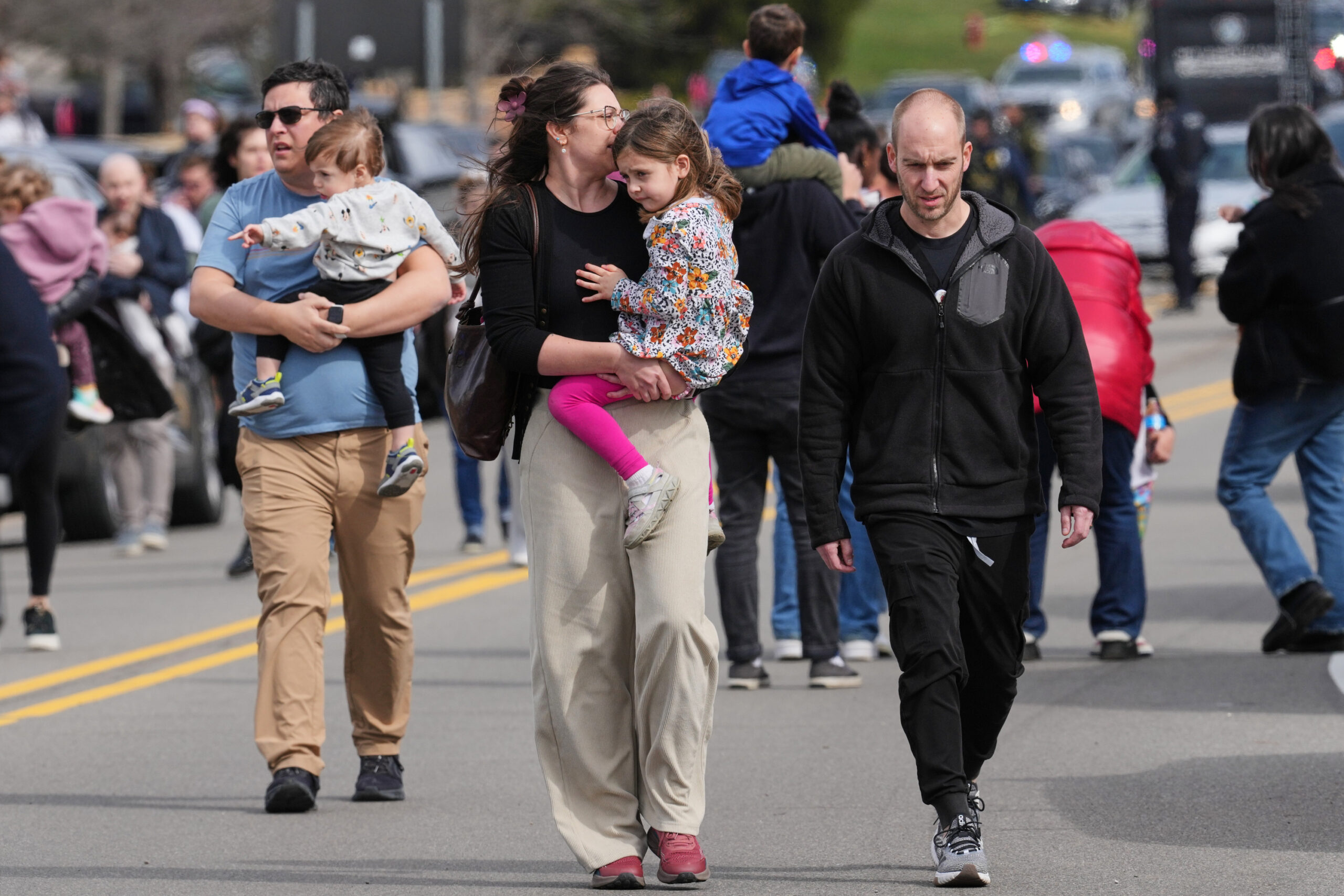
The March 12 incident involved Ghazali arriving at Temple Israel armed with a rifle and driving a truck loaded with gasoline and fireworks into the facility, where roughly 140 individuals—mostly children—were present. Following an exchange of gunfire with security guards, Ghazali fatally shot himself. The FBI formally classified the event as a Hezbollah-inspired terrorist attack directed at Michigan’s premier Jewish synagogue.
El-Sayed’s Initial Responses
In his first March 12 statement, El-Sayed emphasized the right of Jewish citizens to worship and send their children to school safely and free from fear.
The following day, a extended video statement acknowledged that investigators had identified the suspect as an Arab-American Muslim.
“I condemn what he did,” El-Sayed said in the video. “There is never a justification for attacking innocent people or houses of worship. Never.”
While repeatedly denouncing the attack as heinous and devoid of justification, he also brought up broader geopolitical tensions, noting that Ghazali’s family members in Lebanon had recently been killed in an airstrike.
Drawing on his background, El-Sayed remarked, “As an epidemiologist, I’ve spent my career studying the worst things that happen to people to understand how to stop them from happening, and I’ll never forget one of the simplest lessons I learned while on my psychiatry rotation in medical school: hurt people hurt people.”
He argued that the suspect acted out of “displaced rage” connected to the ongoing violence in the region, adding that while the attack on the synagogue must be condemned, the violence overseas must also be addressed.
Reflecting on the attack at Temple Israel. pic.twitter.com/u9p4BwdzoA
— Dr. Abdul El-Sayed (@AbdulElSayed) March 13, 2026
Representatives for El-Sayed highlighted multiple subsequent interviews where he consistently labeled the incident horrific and reiterated his condemnation, though he frequently continued to couple those statements with observations regarding the cycle of regional violence.
The August Apology
The candidate’s initial framing drew sharp rebukes from Temple Israel members and Jewish Democratic organizations, who accused him of rationalizing the assault.
Appearing before the Michigan Jewish Democratic Caucus in August, El-Sayed addressed the controversy directly. According to reports from The New York Times, he stated, “If my statement caused pain, I’m sorry,” and acknowledged, “I should have issued a statement, of course condemning it, and it just should have been the full stop.”
Feedback from Jewish voters regarding the apology has remained mixed, as noted by NPR and local media. Tensions between El-Sayed and members of the Jewish community have also been fueled by other policy stances, including his characterization of Israeli military actions in Gaza, his opposition to U.S. military aid, and his position on Israel’s status as a Jewish state.
Conclusion
Rogers claimed that El-Sayed was entirely unable to condemn the individual behind the March synagogue attack.
In reality, El-Sayed issued statements on the day of the event and the following morning explicitly denouncing the violence and stating that antisemitism has no place in the country. However, his inclusion of psychological framing and references to foreign conflicts during his second address led to widespread accusations that he was rationalizing the attack.
Because the accusation omits crucial context regarding El-Sayed’s explicit condemnations while highlighting valid controversies surrounding his qualifying remarks, the claim is rated Mostly False.