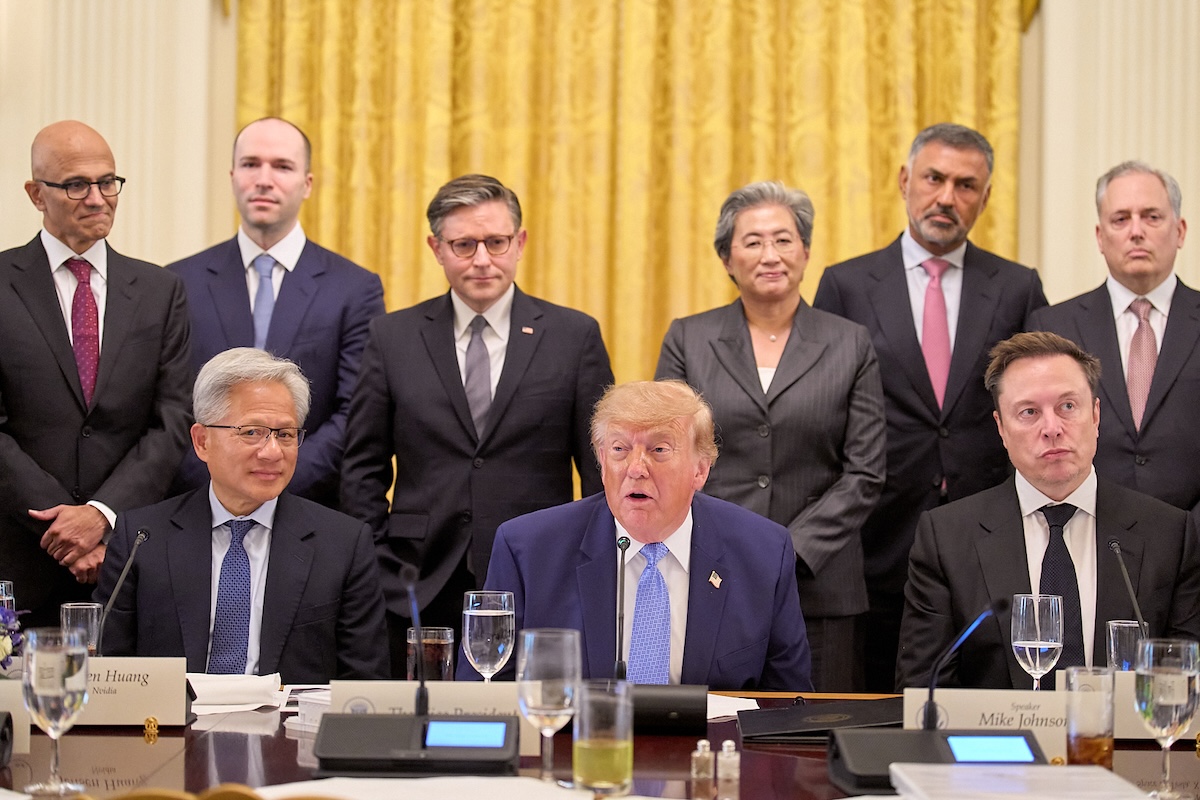
Surrounded by prominent figures in the artificial intelligence sector, President Donald Trump declared a formal rebranding of the technology itself.
“It’s not artificial. We all agree on that,” he stated on Sept. 29.
That same day, the administration issued an executive order instructing federal departments and agencies to adopt the term “super intelligence” (SI) instead of AI across all official communications. The directive mandates replacing the terminology previously established for these systems under federal law.
However, this move introduces a conflict: The tech sector already employs the phrase “superintelligence,” but uses it to describe a theoretical milestone that has not yet been achieved.
In technical terms, superintelligence refers to an advanced form of AI that surpasses human intellect across virtually all disciplines—a benchmark industry experts generally agree no current system has reached, though many feel it is drawing closer.
While major tech executives have previously urged policymakers to slow down AI advancement due to potential societal risks, Trump has dismissed these concerns, characterizing warnings about AI overpowering humanity as a “hoax.”
This approach mirrors past instances where the president adopted familiar terminology and repurposed it to align with his broader messaging. Similar labels have been applied in the past to concepts ranging from “fake news” to climate change, campaign investigations, and the Jeffrey Epstein files.
The push for “super intelligence” also aligns with strategic efforts to maintain a competitive edge over China. Pointing to lawmakers like Sen. Bernie Sanders who advocate for stricter oversight, Trump remarked on Sept. 30: “If you stop work, somebody’s going to do it. And whoever wins super intelligence wins … And right now there are two players. It’s us and China.”
The recent White House meeting also featured industry leaders signing a voluntary framework for self-regulation, as federal statutes governing AI—let alone SI—remain nonexistent.
“It’s really important that we get our definition right with any attempts at regulating this very fast-moving technology,” noted Baobao Zhang, a Syracuse University professor specializing in AI politics. “The other concern is that you might have AI systems that currently do not fall under these definitions, that still could cause a lot of harm to humans, including catastrophic harm.”
Origins of the ‘Superintelligence’ Concept
Ahead of the announcement, Trump tested alternative names on social media platforms, calling the traditional label “inaccurate and very ineloquent.” Suggestions included “superior intelligence,” “extreme intelligence,” and “supreme intelligence.”
Discussions regarding a potential rename date back at least to July 2025, when the president expressed a strong aversion to the word “artificial,” describing his preference for terms reflecting pure genius.
The concept of “superintelligence” itself was popularized in 1998 by philosopher Nick Bostrom, who defined it as an intellect vastly outperforming human capabilities in scientific creativity, general wisdom, and social skills. Today, the tech industry more frequently uses the acronym AGI (artificial general intelligence) to denote systems approaching human-level parity.
“There’s disagreement whether current AI systems have achieved that level of intelligence, and the terminology itself, I think, has been debated,” Zhang observed. True superintelligence, however, goes even further.
Industry Response and Existing Definitions
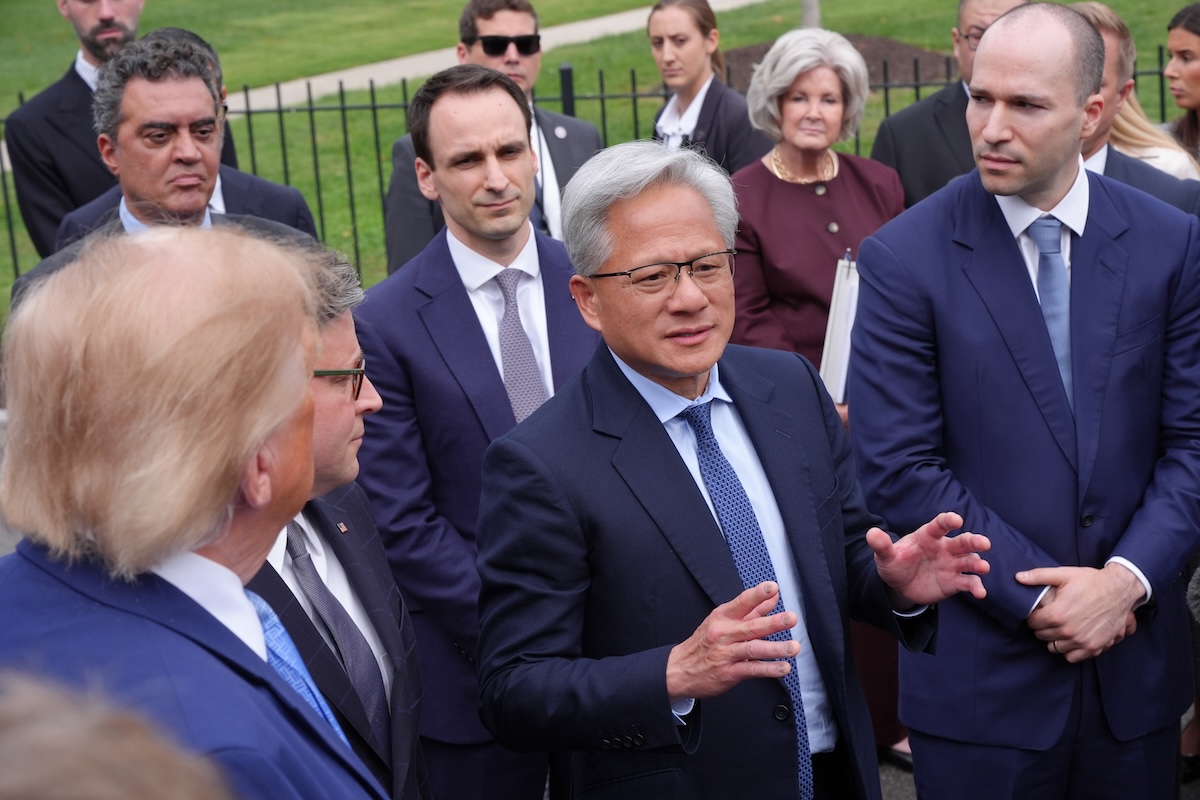
Despite the administration’s mandate, major AI developers have largely maintained their standard terminology in public communications, though reactions vary. Elon Musk announced plans to rebrand SpaceXAI as SpaceXSI, while Nvidia CEO Jensen Huang referred to data centers as “superintelligence factories” during the White House event.
Most widely available applications, such as ChatGPT, fall under the category of general-purpose AI. Yet, according to the 2026 International AI Safety Report, these systems remain inconsistent, performing brilliantly on certain tasks while faltering on others. Experts argue that applying the label “super intelligence” to general-purpose or narrow applications, such as autonomous vehicles or medical diagnostic tools, remains inaccurate.
Internal frameworks within major labs establish clear hierarchies. A 2023 Google DeepMind study categorized current models like ChatGPT at a baseline human-equivalent level, reserving terms like “artificial superintelligence” for future systems surpassing all human capabilities. Similarly, companies like OpenAI, Meta—with its Meta Superintelligence Labs—and Microsoft have increasingly framed their long-term research trajectories around achieving advanced, human-aligned superintelligence.
Legislative Perspectives
Lawmakers have also begun grappling with advanced definitions. Legislation introduced by senators like Josh Hawley and Richard Blumenthal defines artificial superintelligence as systems that match or exceed human cognitive functions autonomously. Parallel bills proposed by other members of Congress aim to pause advanced development and restrict superintelligence altogether.
Public opinion surveys indicate significant backing for caution; a September poll showed 68% support for measures that would slow down development and regulate the sector.
“People are more fearful than excited about AI,” observed Thomas Haigh, a computing historian and professor at the University of Wisconsin-Milwaukee. “Rebranding it to superintelligence is unlikely to reassure them.”
Reporting contributed by PolitiFact Staff Writer Caleb McCullough.