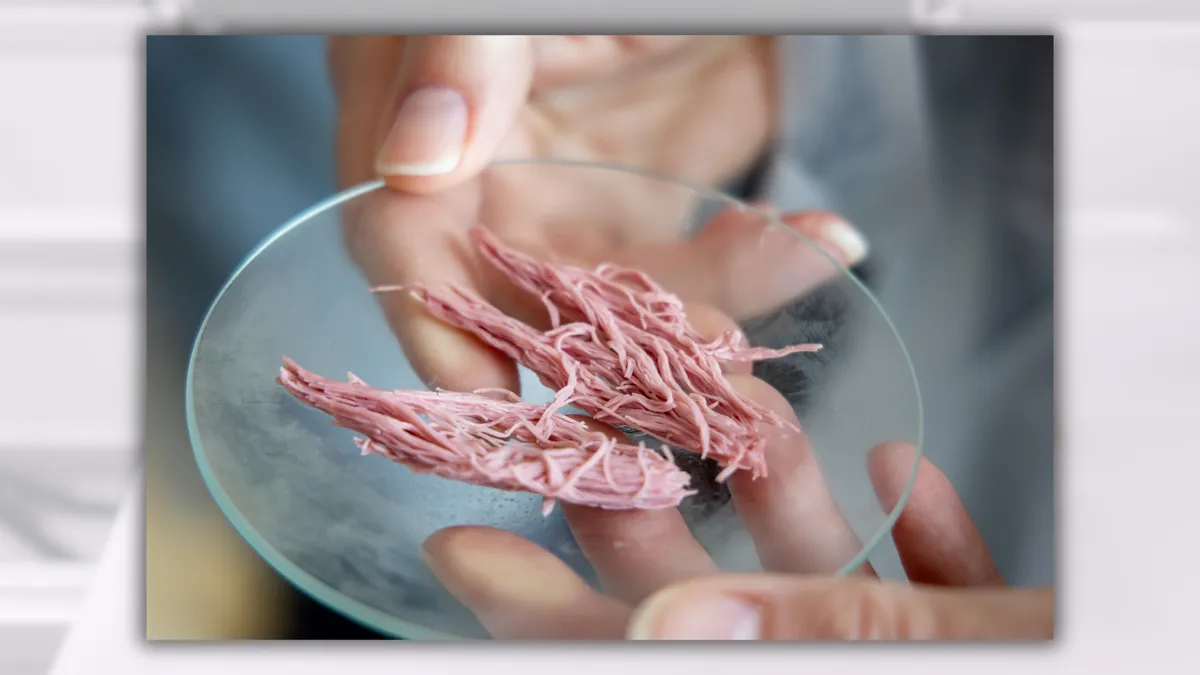
Retail stores in the U.S. are selling 3D-printed meat, as of September.

A company named Steakholder Foods introduced a product line under the Perfecta brand. Although these items are produced using 3D-printing technology, they consist of plant-based ingredients rather than animal cells grown in a lab. While specific retail chains or grocery stores stocking Perfecta items remain unconfirmed, the manufacturer has stated that the goods have arrived on shelves in select Northeastern U.S. markets.
Throughout September and October, social media discussions circulated regarding the introduction of 3D-printed, lab-cultured meat in American retail stores starting early in September.
A widely shared post on platforms like Facebook asserted that this 3D-printed option had secured federal clearance and would not carry a “lab-grown meat” designation on its labeling. The text noted that 3D-printed plant foods were already available, contrasted this with regulations requiring terms like “cell-cultivated” for animal-cell-based chicken and pork, and pointed to Steakholder Foods rolling out its Perfecta line in Northeastern supermarkets on September 3.
Similar rumors surfaced across other social media channels, prompting numerous inquiries from readers wanting to verify the validity of the claims.
Ultimately, the core claim is accurate: on September 3, the Israeli firm Steakholder Foods—known for developing 3D-printing equipment tailored for plant-based alternatives—officially rolled out its Perfecta brand of 3D-printed, plant-based products to retailers in the Northeastern United States.
According to the company’s official announcements, this launch represents the brand’s inaugural commercial debut on American store shelves. The initial rollout is designed to build consumer familiarity in the Northeast before expanding to a broader nationwide audience down the line.
Specific details regarding which grocery chains or individual stores are carrying the merchandise have not been publicly disclosed. Inquiries sent to the manufacturer for further clarification are currently pending a response.
Steakholder Foods explains that its manufacturing process utilizes plant-derived ingredients and structured elements to form the final 3D-printed alternative.
Federal oversight by the U.S. Food and Drug Administration (FDA) and the U.S. Department of Agriculture’s Food Safety and Inspection Service (FSIS) does apply to cultured meat products derived from animal cells, requiring specific labels. However, because Perfecta items are formulated from plant sources rather than animal cells, they fall under a different category.
Packaging images visible on the manufacturer’s website show labels designating the items as “premium plant meat” and “plant-based,” without specific callouts regarding 3D printing or cell cultivation.
In the broader plant-based sector, creating a realistic texture typically requires processing ingredient mixtures to mimic conventional meat. Standard industry techniques include applying shear stress via extruders to align proteins into fibrous strands, alongside alternative methods such as stretching, kneading, layer assembly, and 3D printing.