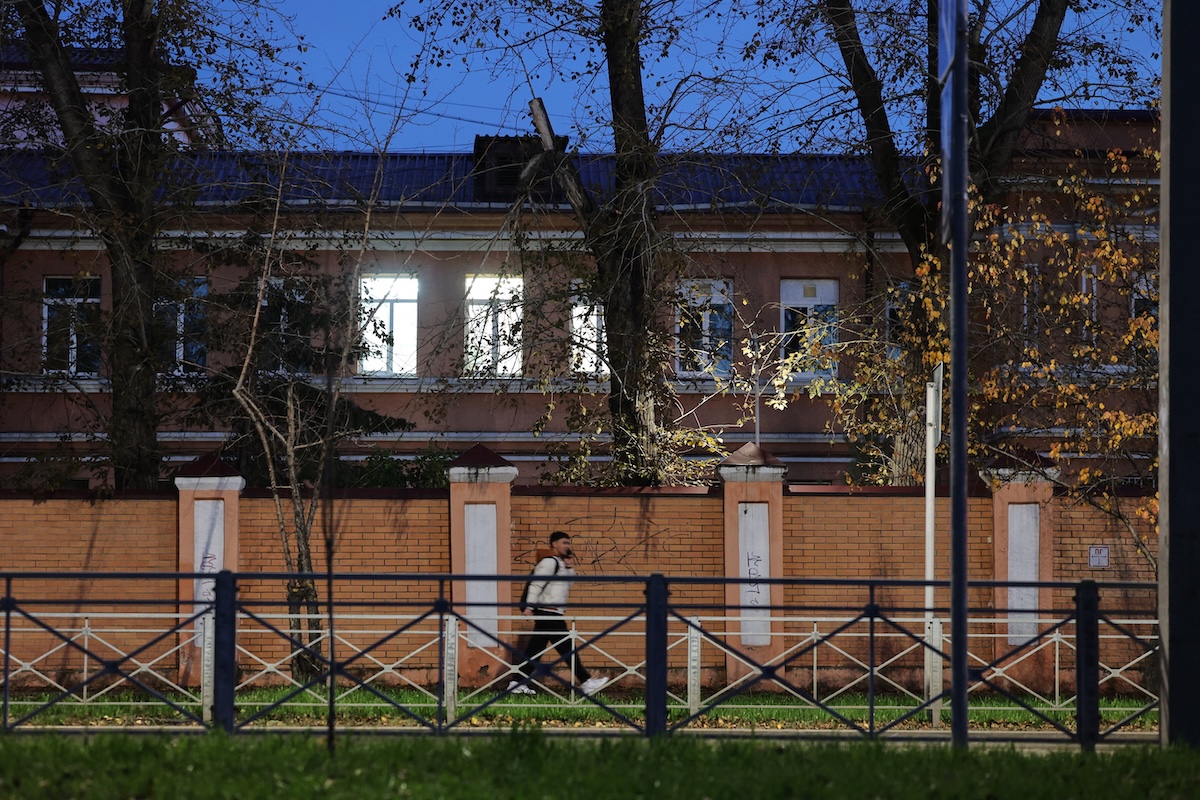
The situation carries a familiar ring: a fatal pneumonia case near a facility researching infectious agents within a nation historically known for withholding transparency. Vague details and conflicting accounts surrounding the October 2 death of a researcher in Russia have naturally stirred memories of the early days of the COVID-19 pandemic.
Initial local reports suggested a Siberian anti-plague laboratory worker had succumbed to the plague following a potential accidental exposure, triggering the quarantine or isolation of dozens of individuals. The World Health Organization subsequently acknowledged that the individual passed away after being hospitalized with acute pneumonia, though the exact underlying pathogen has yet to be officially identified or independently verified.
Complicating matters further, Russian officials maintained that no active plague cases existed in Irkutsk Oblast, the east-central region where the incident allegedly occurred.
Despite the eerie parallels to late 2019, virology and global health security specialists interviewed by PolitiFact’s Well Informed emphasize that current indicators do not point toward an unfolding pandemic. Even so, a significant red flag remains: the heavy-handed response from Moscow starkly contradicted its downplayed public narrative.
While the government officially classified the fatality as an undetermined form of pneumonia, its actions spoke volumes. Authorities placed roughly 200 close contacts under medical surveillance, slapped a quarantine on an entire hospital, and dispatched Russia’s chief disease control official directly to the region.
“That is not how you respond to garden-variety pneumonia — and it isn’t really how you’d respond to ordinary plague either, which has been curable with cheap antibiotics for decades,” noted Dr. Amesh Adalja, a senior scholar at the Johns Hopkins Center for Health Security.
Adalja stresses that regardless of the missing pathogen confirmation, the primary indicator of pandemic potential is a widening chain of human-to-human transmission, which is entirely absent here. Notably, none of the nearly 200 people under observation have developed severe illness clusters.
Meanwhile, Hayley Anne Severance—deputy vice president for global biological policy and programs at the Nuclear Threat Initiative—adopts a cautious “wait-and-see” approach, noting that critical data is still missing.
“We need to know more about laboratory test findings, the treatments provided and her reaction to them, and any other potential exposure factors,” Severance said. “We do not have confirmation of the causative agent, or if there even is an infectious agent involved, so we are flying in the dark here.”
Experts monitor Russian authorities and local media for hidden outbreaks
Roughly ten days following the researcher’s death, zero secondary cases have been officially linked to the incident.
“If this were a fast-spreading cluster, the window in which we’d expect to see it has basically passed,” Adalja observed.
However, experts caution that warning signs would include sudden expansions of quarantine zones, or Moscow stonewalling international oversight by refusing entry to a WHO investigation team. Regional news reports will also serve as a crucial bellwether.
“I would be concerned if I begin to see reports from independent news outlets in Russia that there are unreported cases or deaths ongoing in the region that are not being acknowledged or confirmed by official Russian sources,” Severance explained.
Standard pneumonic plague poses a low global risk
Pneumonic plague occurs when an individual breathes in airborne droplets containing *Yersinia pestis* bacteria, or when bubonic or septicemic strains migrate to the lungs.
While the U.S. Centers for Disease Control and Prevention warns that untreated pneumonic plague carries a near 100% fatality rate, the disease is entirely manageable when caught early with standard antibiotics. It stands as the only form of plague capable of spreading directly between humans, typically requiring prolonged exposure.
Because the incubation period is remarkably brief—typically one to four days—and transmission generally requires close contact, infected individuals are far less likely to unknowingly fuel widespread contagion. Historically, each infected person transmits the illness to fewer than two others on average, a rate that plummets rapidly once basic isolation measures are implemented.

Lingering concerns over transparency
Based on current intelligence, WHO officials maintain that the threat level to populations outside Russia is “very low,” though they echo the demand for definitive answers.
“A trained worker inside a plague research institute died of something still unexplained, and we’re relying on the word of a government with a documented history of concealment on biosecurity,” Adalja pointed out.
Ian Jones, a professor of virology at the University of Reading in the U.K., added that given modern diagnostic capabilities, it remains “almost unbelievable” that specialists have yet to pinpoint the exact cause of the worker’s fatal pneumonia.
In response to the opacity surrounding the event, WHO Director-General Tedros Adhanom Ghebreyesus has strongly urged Moscow to ensure timely and transparent data sharing.
RELATED: Why experts say hantavirus isn’t ‘COVID-19: The Sequel.’ Four facts to calm your nerves