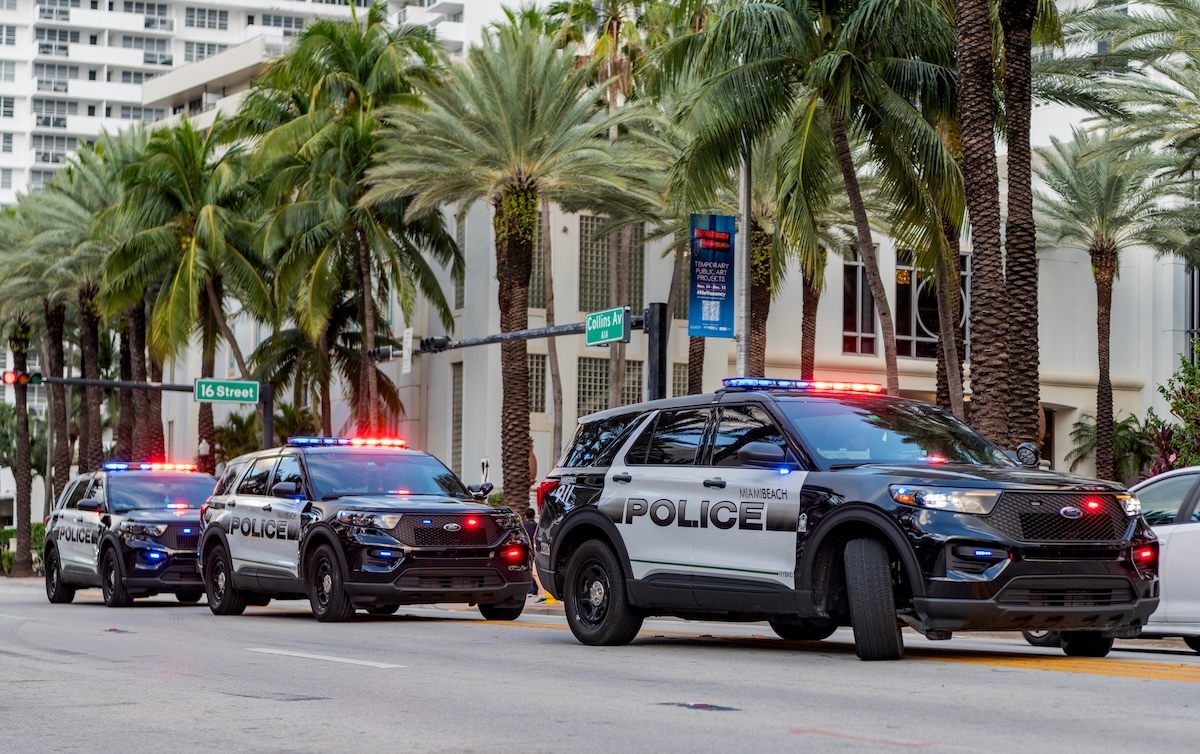
As Florida residents prepare to vote on a major property tax measure this November, a sharp debate has emerged. Realtors, local officials, and law enforcement leaders are locked in a disagreement over whether Amendment 3 will inadvertently defund vital emergency services like local police and fire departments.
The Vote Yes on 3 campaign, spearheaded by Florida Realtors (the state’s largest trade association), argues that critics are exaggerating the threat to public services.
Proponents point out that the initiative mandates that local governments dedicate property tax revenues exclusively toward essential needs, including education, infrastructure, natural resources, and public safety.
Several prominent conservative politicians, including Republican gubernatorial candidate and U.S. Rep. Byron Donalds, echo these assurances, maintaining that the legislation safeguards money for first responders.
“State leaders ensured that the initial funds local governments allocate must go directly to local law enforcement, fire departments, and emergency personnel,” Donalds stated during an Oct. 1 appearance in Lakeland.
Conversely, opponents argue the amendment will have a devastating impact. A television commercial sponsored by the “Vote No on 3” coalition—which represents sheriffs, city mayors, and county commissioners—notes that public safety accounts for roughly 60% of property tax expenditures.
The advertisement warns that “Amendment 3 guarantees severe budget reductions for sheriffs, firefighters, and emergency crews.”
Polk County Sheriff Grady Judd expressed similar concerns in a Sept. 15 statement, emphasizing that law enforcement and emergency medical services consume the largest share of municipal and county budgets. “Implementing a drastic policy like Amendment 3 without negatively impacting community safety simply defies reality,” Judd said.
Similarly, Democratic gubernatorial nominee David Jolly announced his opposition to the measure, citing fears that it would strip resources from local law enforcement.
At the core of the debate is a fundamental question: Does the proposed amendment genuinely protect public safety funding, or will it severely slash it?
The official text of the amendment dictates that leftover tax revenue must support public safety alongside other public services, but it fails to establish a funding priority, minimum spending thresholds, or a mandate that police and fire departments be paid first.
“Nothing in this text guarantees that police or fire services receive priority funding or immunity from cuts,” explained Jeff Brandes, a former state senator and head of the Florida Policy Project. “It merely lists them among allowable expenses without creating any enforceable funding priority.”
While supporting the initiative, the Florida Realtors group conceded that the measure does not enforce specific spending amounts for public safety, noting that the state Legislature would likely need to issue future instructions.
“Voters should view Amendment 3 primarily as an initiative focused on housing affordability,” the association stated. “Florida is fully capable of maintaining public safety while delivering property tax relief; these two goals are not mutually exclusive.”
Even so, policy analysts warn that a significant drop in tax revenue, combined with inflation and escalating equipment and insurance costs, will likely result in diminished public safety budgets across many municipalities.
To preserve current funding levels for emergency services, local governments might be forced to make steep cuts to non-essential programs like libraries and parks, or alternatively, introduce new taxes and fees.
What are the specifics of the amendment?
If it achieves the required 60% voter approval, Amendment 3 will progressively increase the tax exemption on primary residences (homestead properties). The current $50,000 exemption would rise to $150,000 by 2027 and reach $250,000 by 2028, though school property taxes remain exempt from these changes.
For example, the owner of a $400,000 home in Broward County could see their annual property tax bill drop by roughly $2,672 by 2028, provided the county maintains its existing millage rate and no non-ad valorem flat fees increase.
Furthermore, the policy directs the Legislature to establish a roadmap that continues raising exemptions past 2028 until reaching the complete assessed value of primary homes, ultimately erasing non-school property taxes for homeowners statewide.
State economic forecasters have estimated that the amendment will reduce local tax revenues by $13.7 billion over its initial two years, followed by an annual loss of nearly $12 billion every year after.
Does the legal wording offer safeguards?
The ballot text specifies that counties and municipalities must direct property taxes toward public safety, education, infrastructure, natural resources, debt service, employee pensions, and administrative operations, while also allowing funding for “other expenditures.”
Analysts argue that this phrasing lacks binding enforcement. By grouping public safety alongside numerous other obligations, police and fire departments are left to compete against general administrative costs and infrastructure repairs for a shrinking pool of funds.
Tax Foundation senior fellow Jared Walczak pointed out that the presence of broad clauses, such as permission to fund “other expenditures,” renders the restriction largely meaningless.
“The provision fails to restrict property tax spending in any substantive way and offers zero guarantees for specific programs,” Walczak noted.
Brandes also criticized the inclusion of broad terms like “operations and administration,” asking rhetorically, “What administrative cost doesn’t fall under that umbrella?”
An earlier iteration of the amendment explicitly referenced the protection of core services, but a state judge compelled officials to rewrite the language to prevent voter confusion, noting that shrinking the property tax base would inevitably constrain money available for essential government operations.
Even with the updated terminology, “any claims that services are protected remain entirely speculative,” said Esteban Leonardo Santis, research director at the Florida Policy Institute.

Do past revenue surges protect against upcoming cuts?
Supporters of Amendment 3 frequently highlight the dramatic increase in Florida’s property tax collections over recent years as proof that local governments can easily absorb potential budget losses without touching emergency services.
In 2025, local taxing authorities collected roughly $59.1 billion—marking a nearly 75% jump since 2019, driven largely by the post-pandemic real estate boom and soaring property valuations.
While major metropolitan centers like Miami-Dade and Hillsborough counties have seen administrative costs and payrolls expand significantly during this period, smaller municipalities operate under much tighter financial constraints.
A 2025 analysis by the Florida League of Cities revealed that in 176 out of 276 cities, local spending on police, fire, and EMS outpaces all collected property tax revenue combined. If the $250,000 exemption takes effect, “85 of those cities would be unable to sustain baseline public safety operations even if every other tax-funded department were completely defunded.”
Additionally, data from the Florida Association of Counties shows that in 55 of the state’s 67 counties, public safety represents the single largest expenditure, absorbing approximately 85 cents of every property tax dollar.
With municipal expenses—spanning everything from insurance premiums to fire apparatus—climbing faster than general inflation, experts warn that revenue losses will inevitably force local agencies to choose between downsizing public safety or cutting alternative community services.
To compensate for the shortfall, local governments might try adjusting tax rates on properties that remain eligible for taxation, or increase their reliance on non-ad valorem fees, such as utility, local sales, and tourist development taxes, which are exempt from homestead protections.
“Municipalities will likely respond with a mix of strategies, implementing fee hikes while still executing cuts across various departments, including public safety,” Walczak concluded.
RELATED: Fact-checking claims that Florida’s property tax amendment will ‘defund’ essential public services
RELATED: Is Byron Donalds right that school districts are to blame for Florida property tax increases?