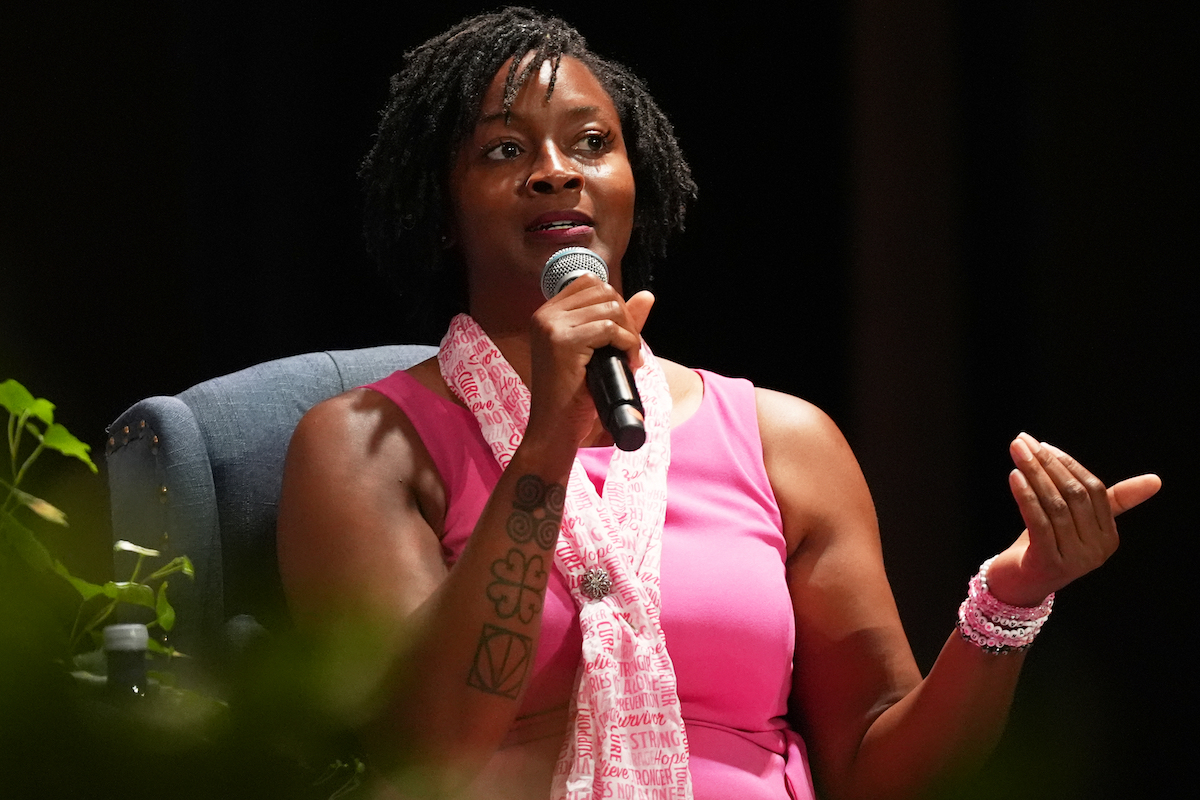
U.S. Senator Ashley Moody (R-Fla.) is cautioning voters that her Democratic challenger, Florida state Representative Angie Nixon, would drive up the cost of living by raising taxes.
In a campaign advertisement released by Moody, a waitress serves coffee to a table of seniors. “She works nine-hour shifts, mostly on her feet,” Moody narrates from off-camera. Pointing to the patrons, she continues, “They spent 40 years paying in to Social Security. Every dollar in this diner was earned.”
Moody then presents her own record: “I voted to stop taxing tips and Social Security while my opponent backed a $4 trillion tax hike on everyone in this diner.”
Moody’s claim stems from Nixon’s vocal opposition to the One Big Beautiful Bill Act, which was signed into law in July 2025. The legislation, backed by Moody, extended the provisions of the 2017 Tax Cuts and Jobs Act alongside introducing new exemptions. Economic analysts note that completely repealing this law could trigger roughly $4 trillion in tax increases.
However, the campaign spot stretches the truth. While Nixon has frequently criticized the One Big Beautiful Bill Act, her public pushback centers primarily on the tax breaks handed to corporations and the ultra-wealthy, rather than the provisions aimed at older citizens or service-industry hourly workers.
The original 2017 tax cuts enacted under the first Trump administration reduced income tax rates across all brackets, though the largest financial relief disproportionately favored the top 5% of earners. With those cuts slated to expire at the end of 2025, the One Big Beautiful Bill Act renewed them while also introducing temporary relief for overtime and tipped wages.
The 2025 statute provided partial tax relief on tip income and granted residents aged 65 and older an extra $6,000 deduction through 2028, though it did not completely eliminate taxes on Social Security benefits or tips.
Nixon’s campaign clarified that she actually favors abolishing federal taxes on tips and Social Security; her goal is to repeal only the sections of the 2025 law that benefit corporations and high earners, using those reclaimed funds to support initiatives like universal childcare and healthcare.
Examining Nixon’s Criticism of the 2025 Tax Law
Moody’s ad references a write-up from Florida’s Voice, a conservative outlet, displaying a headline that reads, “Socialist…vows to scrap tax cuts as Florida leads nation in refunds.” That August report drew from remarks Nixon made during a July podcast appearance and an August segment on CBS Mornings.
During the podcast, Nixon argued that the One Big Beautiful Bill Act scaled back vital assistance programs in order to deliver “tax breaks to the rich,” vowing to defend those social programs.
On CBS Mornings, she reiterated her support for universal healthcare and free childcare, stating that to fund these programs, she “would repeal that big BS bill because that’s what it was. It wasn’t beautiful. And I would make sure that these big-time billionaires and ultra-wealthy millionaires pay what they owe.”
Nixon echoed similar points during a Miami Beach Democratic primary forum in June, emphasizing her commitment to affordability and ensuring the wealthy pay their fair share by rolling back the legislation.
She has repeated these arguments on other platforms as well.
According to her campaign platform, Nixon also advocates for Medicare for All, free paid family and sick leave, a national rent freeze, and an eviction moratorium. She proposes funding these measures by introducing a 5% annual wealth tax on billionaires and reducing military spending.
Representatives for Moody directed fact-checkers to various financial models projecting that the tax cuts within the One Big Beautiful Bill Act would exceed $4 trillion, matching the anticipated tax hikes if the 2017 reductions were allowed to lapse.
Independent analysis from the Tax Foundation estimated that the 2025 law would reduce federal revenue by roughly $4.3 trillion over a decade, aligning closely with Moody’s figures. Garrett Watson, the organization’s vice president of federal tax policy, noted this sum encompasses both new breaks and the extension of the 2017 cuts.
Watson calculated that roughly 35% of the law’s overall tax relief flowed to the top 10% of earners. Dismantling just those specific provisions—closer to Nixon’s stated targets—would generate an estimated $1.5 trillion to $2 trillion in tax increases.
Who Benefits Most From the One Big Beautiful Bill Act?
Although Moody’s ad highlights relief for everyday workers and seniors, policy experts emphasize that the legislation disproportionately benefits higher-income brackets.
“It is the case that the benefits of the tax cuts were larger for higher-income Americans than they were for low and middle income Americans,” noted Joseph Rosenberg, a senior fellow at the Urban Institute-Brookings Institution Tax Policy Center. He explained that because federal income taxes are progressive, broad reductions to income tax schedules naturally yield the largest savings at the top of the economic ladder.
Rosenberg added that the law also altered federal estate and gift taxes—which apply strictly to the very wealthy—and extended business income deductions that predominantly benefit high-earning individuals.
While a Tax Foundation review indicated that the 2025 statute boosted after-tax incomes across the board, the distribution was heavily skewed toward top earners.
Summary
Moody claimed that Nixon “backed a $4 trillion tax hike on everyone in this diner,” specifically referencing waitstaff and older patrons.
This figure reflects the estimated tax increase that would occur if the One Big Beautiful Bill Act were entirely repealed.
While Nixon has consistently stated her intention to repeal the legislation to fund childcare and healthcare initiatives, her public criticisms target corporate tax loopholes and benefits for the ultra-rich rather than relief for everyday workers. Furthermore, campaign representatives confirmed she supports maintaining tax breaks for tips and seniors while rolling back provisions for top earners.
Targeting tax cuts exclusively for the top 5% of earners could realistically raise between $1.5 trillion and $2 trillion.
Because the statement contains an element of truth but lacks crucial context and omits important distinctions, it earns a rating of Half True.