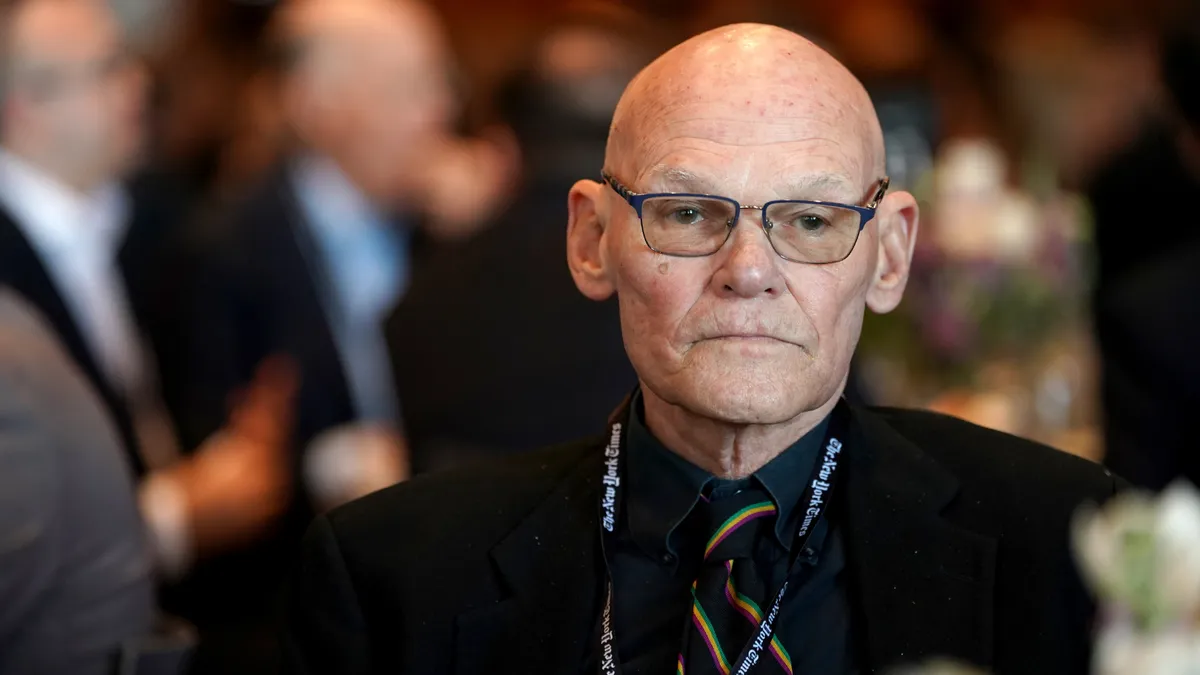
In October, shortly before Election Day, social media users widely shared a surprising remark attributed to veteran Democratic strategist James Carville. According to the posts, Carville stated that he would prefer to see Republicans maintain control of the House of Representatives by a slim margin rather than see Democrats win a narrow majority.
The quote—circulating heavily across X (formerly Twitter) and Instagram—was captured in a post reading: “I would rather the Republicans keep the House by five than the Democrats win by five, because if that happens, they’re hostage to the DSA. Like, Hakeem cannot move. There’s no place for him to go,” with references to the Democratic Socialists of America (DSA) and House Democratic Leader Hakeem Jeffries.
Verification inquiries flooded in to check the authenticity of these statements.
Upon investigation, the attribution was confirmed as correct. Carville made the remarks during an October 18 appearance on The Bulwark’s “Bulwark Takes” podcast, where he was speaking with Bill Kristol.
Roughly three minutes into the episode, discussing the implications of a tightly contested House, Carville explained:
“However, I would be disappointed if it comes in at 225 House seats. That would be — that would almost be — I would rather the Republicans keep the House by five than the Democrats win by five. Because if that happens, they’re hostage to the DSA. Like, Hakeem [Jeffries] cannot move. There’s no place for him to go.”
He added, “Even if you have a close Senate, [Sen. John] Fetterman would keep [Sen. Chuck] Schumer Pepto-Bismol all night. So I think this is one of these races where margin matters a lot. Winning big is almost as big as winning, which is weird, but it’s a nightmare at 225.”
Context on the DSA Reference
Carville’s mention of the “DSA” refers to the Democratic Socialists of America. Following various primary election cycles where progressive candidates—some officially endorsed by the DSA or identifying as democratic socialists—secured notable victories, debates grew within the party regarding how far left the Democratic platform should pivot.
Following this brief, candid assessment about the legislative challenges a razor-thin majority would pose for leadership, Carville and Kristol moved on to discuss potential Senate race outcomes.