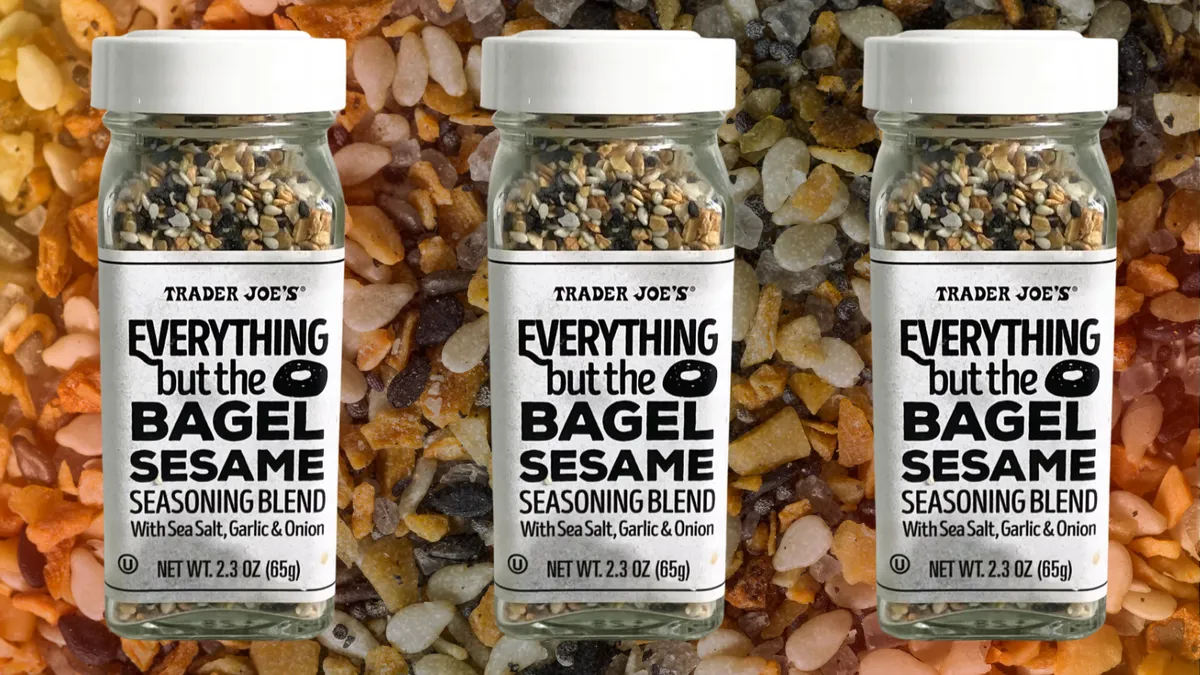
South Korea banned Trader Joe’s “Everything but the Bagel” sesame seasoning blend after detecting morphine and codeine in the product.

Morphine and codeine are opium compounds naturally found in poppy plants. In essence, South Korea restricted Trader Joe’s popular seasoning because it contains poppy seeds. The restriction was originally implemented in 2022 rather than recently.
Rumors circulated online claiming that South Korea had prohibited the popular Trader Joe’s “Everything but the Bagel” sesame seasoning blend because the formula contained morphine and codeine.
As social media posts on platforms like Facebook alleged that customs officials were actively confiscating the product, readers reached out to verify the accuracy of the ban.
Official records from South Korea’s official food safety portal (archived) confirm that the seasoning blend is prohibited due to trace components of morphine, thebaine, and codeine.
Consequently, the claim is accurate, keeping in mind that these substances are naturally occurring opium compounds found in poppy seeds. Singapore has reportedly enforced similar restrictions (according to credible reports).
Both The New York Times and The Washington Post previously noted that authorities added the product to the restricted foods registry in 2022, and customs agents have targeted it during inspections.
Interest in the topic surged following an August report by the Korea Herald indicating that law enforcement in Seoul had halted online secondhand sales of the seasoning. Major outlets like The BBC subsequently covered the development.
Inquiries were sent to Incheon International Airport regarding their specific enforcement policies on poppy seed items, and a reply remains pending.
How to find information on banned products
The South Korean government maintains an online searchable database tracking imported food items blocked for safety reasons.
Searching for “everything but the bagel” yields three specific Trader Joe’s items: the Sesame Seasoning Blend, the Nut Duo, and the Seasoned Kettle-Cooked Potato Chips.
Translation tools indicate that the flagged components for the sesame blend include morphine, thebaine, and codeine.
The database entry can be viewed on this page (archived in Korean).

(South Korea Ministry of Food and Drug Safety)
While the database registration date reflects a later update, the Ministry of Food and Drug Safety could not be reached for immediate clarification.
South Korea’s poppy seed ban vs. U.S. rules
Under South Korea’s Narcotics Control Act, poppy plants and any alkaloid extracts are classified as narcotics. The U.S. Embassy in Seoul warns travelers that items containing poppy seeds are illegal locally.
The advisory notes that bringing such products into the country can lead to criminal investigations, fines, travel restrictions, or imprisonment.
Certain parts of the poppy plant contain opiate alkaloids like morphine and codeine. Federal drug enforcement guidelines indicate that unwashed seeds may carry significant opiate residue.
Conversely, FDA guidelines state that clean poppy seeds generally contain minimal internal alkaloids. While the agency doesn’t advise against normal consumption, it cautions against preparations like poppy seed tea, which have caused severe health complications.
Although culinary poppy seeds do not produce psychoactive effects, health experts note that sensitive drug screenings can detect trace alkaloid levels.
Trader Joe’s has been contacted regarding its quality assurance processes for managing alkaloid content in the seasoning.
According to the American Spice Trade Association, U.S. processing standards typically involve mechanical cleaning, residue testing, and microbial safety treatments to align with regulations (detailed on pages 5 through 8 of a 2025 association report submitted to the FDA).