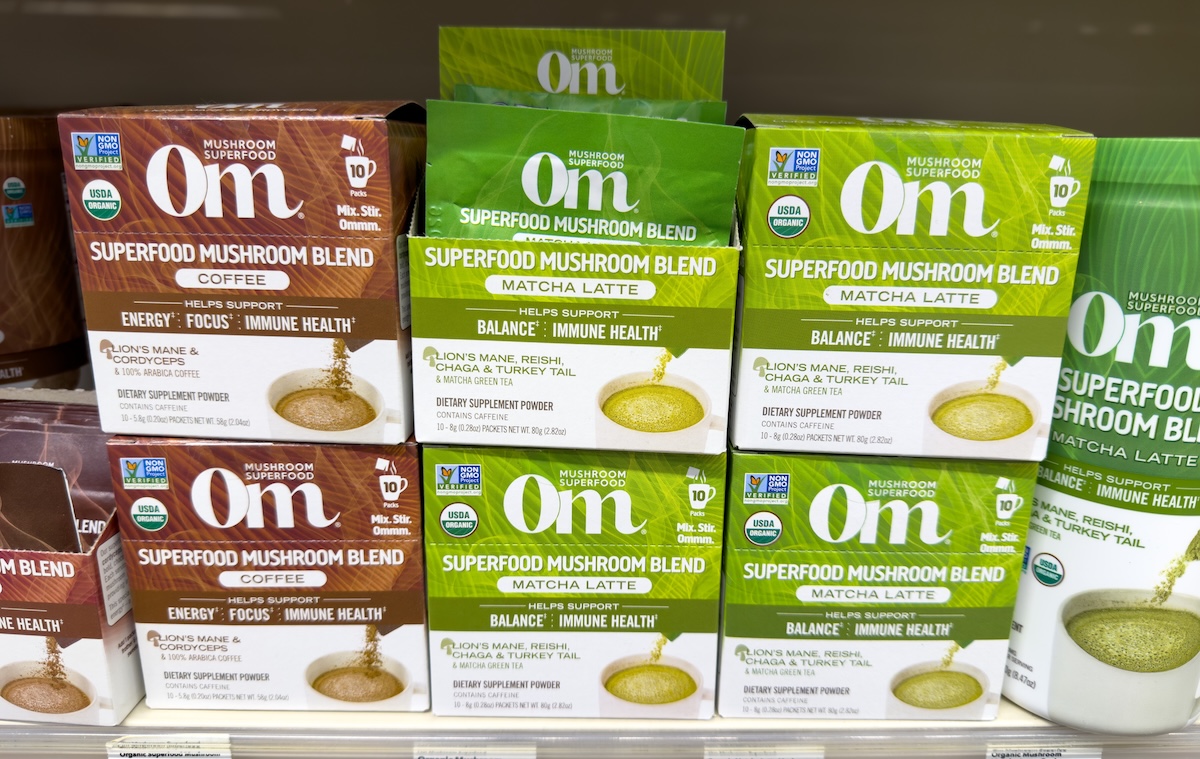
Coffee lovers are constantly looking for ways to enhance their daily brew, and a major trend sweeping social media involves mixing traditional joe with an unexpected ingredient: mushrooms.
Proponents on platforms like Instagram frequently praise the concoction for preventing afternoon slumps. Advertisers claim that the blend offers a steady boost in focus and energy while simultaneously boosting immunity and gut health.
Commercially available mushroom coffee typically consists of either instant coffee blended with concentrated mushroom powders, or a caffeine-free powder made entirely from mushrooms and other botanical ingredients.
Despite the earthy addition, experts note that the beverage tastes remarkably similar to standard coffee. However, the price tag tells a very different story. While a standard container of instant coffee usually costs under $10, an equivalent amount of mushroom-infused coffee frequently ranges from $15 to $35.
For many consumers, the elevated price is worth paying if the health claims hold true. Yet, a closer look at the science reveals a lack of direct evidence supporting these benefits.
While some laboratory and animal studies suggest certain fungi possess healthful properties, clinical trials involving humans are scarce. Furthermore, researchers have not yet conducted formal studies specifically evaluating mushroom coffee.
Experts remain skeptical. Fungi researcher Nicholas Money points out that there is no concrete proof linking mushroom coffee to tangible physical or mental health improvements, concluding that the product may not justify the added expense.
On the other hand, nutritionists like Toby Amidor suggest that drinking the beverage poses no inherent risks. Amidor recommends looking for products that utilize both the fruiting body and the root-like mycelium of the mushroom, as these parts are most frequently highlighted in existing nutritional research.
Additionally, because these products often fall under loosely regulated dietary supplement categories, consumers cannot always verify the exact concentration or quality of the mushroom extracts listed on the label.
To help consumers navigate the hype, nutrition and medical experts break down the validity behind the most common marketing claims associated with mushroom coffee.
Claim: Mushroom coffee prevents a caffeine crash.
Reality: While some variations are completely decaffeinated, most blends still contain caffeine—just in smaller amounts than regular coffee because a portion of the scoop is replaced with mushroom powder. Switching to a mushroom blend may help sensitive individuals avoid caffeine-induced headaches, fatigue, or jitters, but experts emphasize there is no proof that the mushrooms themselves are responsible for easing the crash.
Nutrition lecturers note that while certain fungi might theoretically buffer the effects of caffeine, researchers simply do not yet know enough about how these specific powders interact with the human body.
Claim: Mushroom coffee improves gut health.
Reality: Dietary studies show that incorporating whole mushrooms into your diet can positively influence the gut microbiome—the complex ecosystem of bacteria, fungi, and other microorganisms in the digestive tract responsible for breaking down fiber and supporting immune defenses.
Although whole mushroom powders have been shown to increase beneficial gut bacteria in general studies, this research has not been replicated specifically using mushroom coffee.
Dietitians acknowledge the promising potential of mushrooms as prebiotics, but state there is currently insufficient evidence to confirm that drinking mushroom coffee actively improves human digestive health.
Claim: Mushroom coffee supports the immune system.
Reality: Certain compounds found in mushrooms are known to interact with the body’s immune system, with some acting as stimulants and others exhibiting suppressive or anti-inflammatory properties.
While marketing materials frequently use vague terms like “immune-supporting,” experts point out that any dietary fungus will trigger a baseline immune response in the human body. Whether that biological reaction translates to meaningful health benefits, however, remains unproven.

Claim: Mushroom coffee enhances brain function and focus.
Reality: Certain varieties, particularly those featuring lion’s mane, are heavily marketed for cognitive enhancement. Observational studies have noted a correlation between regular mushroom consumption and better scores on cognitive tests among older adults.
Laboratory experiments have also shown that compounds derived from lion’s mane can stimulate nerve cell growth in petri dishes, and animal studies have demonstrated shifts in brain chemistry.
However, human clinical trials have yet to find any noticeable impact on concentration, focus, or mental task performance. Furthermore, no scientific literature suggests that drinking these compounds in coffee form provides cognitive advantages.
Claim: Mushroom coffee is completely safe.
Reality: For the average person, consuming mushroom coffee in moderation poses very few risks, especially since the concentration of mushroom extracts in a single cup is typically quite low.
Nevertheless, certain medical considerations apply. Specific medicinal mushrooms can increase bleeding risks or interfere with prescription medications. Additionally, some fungi contain high levels of oxalates, which can be problematic for individuals prone to kidney stones.
Ultimately, if consumers enjoy the taste and feel the benefits—even if driven largely by the placebo effect—enjoying a cup of mushroom coffee is generally considered harmless.