Fresh speculation has emerged across social media following Abdul El-Sayed’s historic election as the first Muslim senator.
HAMTRAMCK, MICHIGAN: A viral rumor recently claimed that Hamtramck, Michigan—a municipality with a Muslim-majority population—has outlawed pride flags. The claim gained widespread traction in the wake of Abdul El-Sayed’s midterm victory, sparking intense online debate and triggering a closer look at the facts.
Claim: Michigan’s Muslim-majority city banned pride flags
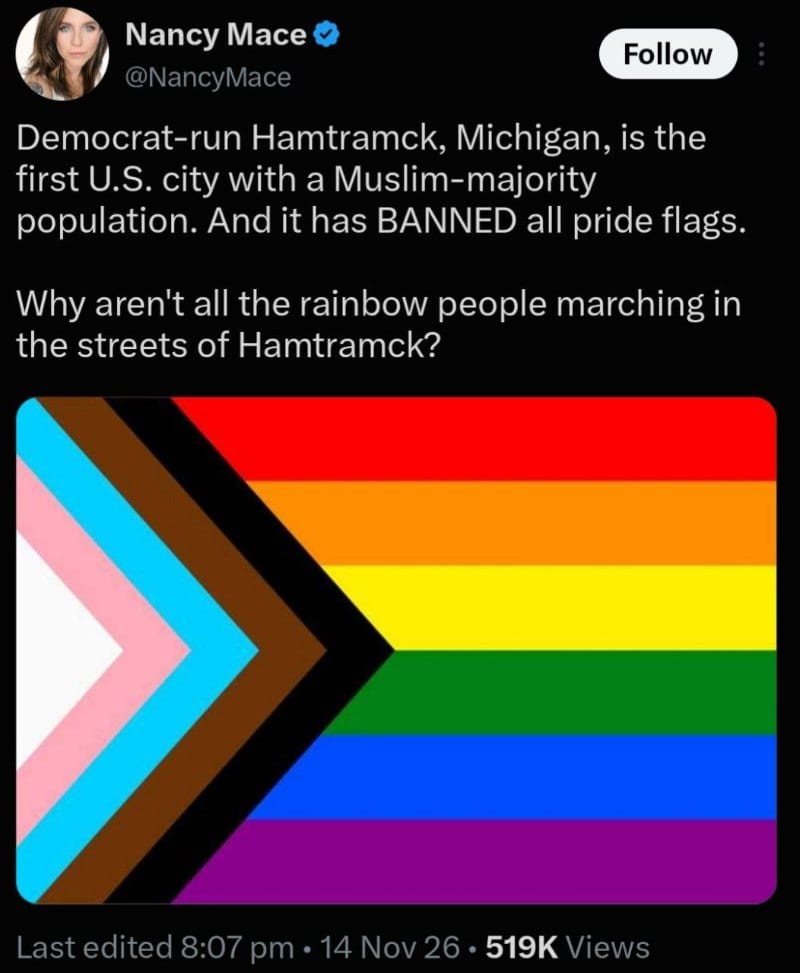
The rumor began circulating earlier this month, alleging that Hamtramck had prohibited the display of pride flags.
South Carolina Republican Representative Nancy Mace amplified the claim on X, writing: “Democrat-run Hamtramck, Michigan, is the first U.S. city with a Muslim-majority population. And it has BANNED all pride flags. Why aren’t all the rainbow people marching in the streets of Hamtramck?”
The narrative quickly spread to other platforms, notably Facebook, where it amassed millions of views and fueled anti-Muslim sentiment and anxiety.
Fact Check: The policy applies to all non-official banners, not just pride flags
While technically true that pride flags cannot be displayed on municipal property, the narrative is misleading. Following a yearlong legal and civic dispute, the city’s entirely Muslim City Council approved a resolution in 2023 banning *all* non-official flags from city-owned property.
Under the policy, only the American flag, the Michigan state flag, the Hamtramck city flag, POW flags, and international flags representing the city’s diverse immigrant communities are permitted on public grounds. However, residents are entirely free to fly pride flags—and any other banners—on private property, making the blanket “ban” claim misleading.
Furthermore, the timing of the vote during June (Pride Month) sparked immediate protests and public demonstrations in the city, directly contradicting Rep. Mace’s suggestion that no one had marched or spoken out against the decision.
The restriction on public flag displays was ultimately solidified following a ruling by the 6th U.S. Circuit Court of Appeals after prolonged friction with the local Human Relations Commission.
Abdul El-Sayed makes history as the first Muslim U.S. Senator
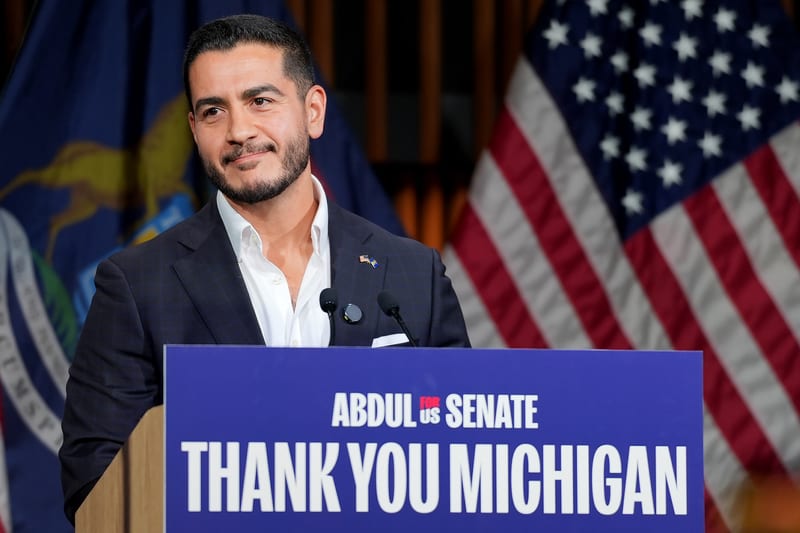
The resurgence of these local Hamtramck debates coincided with El-Sayed’s landmark political milestone, which has brought increased national attention to Muslim figures in American politics.
Backed by prominent progressives like Senator Bernie Sanders and Representative Alexandria Ocasio-Cortez, El-Sayed secured the Democratic nomination by defeating Rep. Haley Stevens in August. He then went on to win the general election against Mike Rogers, who had been endorsed by President Donald Trump.
El-Sayed’s victory is part of a broader wave; seven other Muslim lawmakers also secured seats in this year’s midterms, expanding Muslim representation in both the House and the Senate.