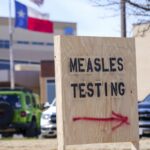
Tragic fatalities involving infants have been documented in Wisconsin, Pennsylvania, and New York, while a Pennsylvania high school was forced to shut its doors. Meanwhile, a Texas labor and delivery department recently instituted emergency protocols after a mother went into labor while infected with measles.
The U.S. is currently experiencing a measles surge unlike anything seen in over thirty years. This highly contagious respiratory illness triggers symptoms such as a distinctive rash, cough, runny nose, fever, watery eyes, and dangerously high temperatures, frequently resulting in hospitalization or even death.
As communities across the nation grapple with these outbreaks, the United States is poised to forfeit the coveted “measles elimination” milestone it proudly attained 26 years ago.
The Pan American Health Organization—a regional branch of the World Health Organization that helps direct public health initiatives throughout the Americas—grants elimination status to nations whose rigorous surveillance proves they have successfully halted “endemic,” or consistent and ongoing, transmission of the virus.
Achieving this designation signifies that a country has avoided massive outbreaks and managed to prevent uncontrolled domestic spread for a year or longer.
However, current data indicates that this is no longer the reality for the United States.
After infections surged sharply through 2025 and 2026, the nation has already documented upward of 5,100 measles cases this year alone, marking a 35-year high.
With weekly infection numbers continuing to climb, public health specialists emphasize that boosting vaccination rates remains the sole definitive strategy to stop the outbreak.
Populations where vaccine coverage falls below 95% face an exceptionally high risk of widespread transmission.
Describing the pathogen as “exquisitely contagious,” Jennifer Nuzzo, an epidemiology professor and measles researcher at Brown University, noted, “The virus just has to show up, and then it explodes.”
How many measles cases have U.S. health authorities recorded this year?
As of November 6, the Centers for Disease Control and Prevention had documented 5,182 cases and six deaths nationwide for 2026.
The CDC maintains that it tallies only laboratory-confirmed cases.
Conversely, alternative public health tracking organizations have published higher totals.
The Johns Hopkins U.S. Measles Tracker reported 5,400 cases for 2026 as of November 11, drawing from confirmed lab data provided by state and county health agencies alongside local news reports.
Meanwhile, the Brown University School of Public Health’s Tracking Report newsletter logged 5,478 cases and nine deaths by November 5—eight verified by state authorities and one by a local coroner. This particular count relies on state health website updates and categorizes cases by the date they were officially reported, whereas other groups often sort them by the date symptoms first appeared.
How many measles outbreaks have been documented this year?
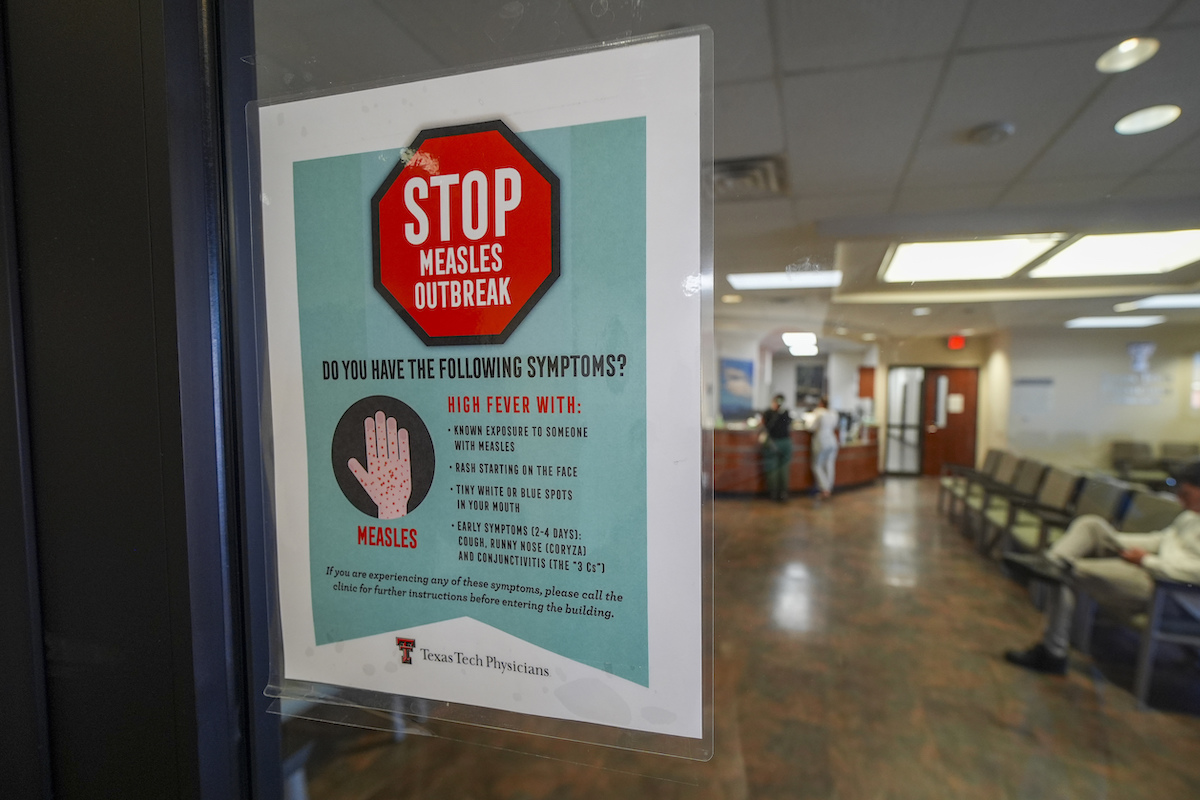
With a couple of months remaining in the year, the CDC has registered 43 distinct outbreaks for 2026, defining an outbreak as three or more epidemiologically linked infections. By comparison, the agency noted 48 total outbreaks last year and just 16 in 2024.
Additionally, the U.S. has surpassed 100 new weekly cases for 13 consecutive weeks.
How many states are seeing large measles outbreaks?
According to CDC metrics, 13 states have exceeded 100 measles infections so far in 2026, a significant jump from the five states that crossed that threshold in 2025. At least half a dozen states are actively managing substantial outbreaks right now.
Pennsylvania accounts for the most extensive outbreak of the year by a wide margin, with officials documenting upwards of 1,500 infections and six virus-related fatalities, based on state health department records from November 9. Significant numbers of cases have also surfaced in South Carolina, Utah, and Wisconsin.
Because not every infected individual seeks professional medical treatment, these tallies are widely considered undercounts. Furthermore, state health departments frequently attribute a death to measles if the patient passed away while actively fighting the disease.
Following public skepticism from Health and Human Services Secretary Robert F. Kennedy Jr.—a prominent vaccine critic—regarding whether the available evidence sufficiently proved measles was the direct cause of death, the CDC under the second Trump administration has not matched the mortality figures reported by individual states sources say.
Nationally, health agencies typically anticipate roughly one to two deaths per 1,000 cases. Given the nine fatalities reported by states this year, Nuzzo suggested that “there is reason to believe that we are far, far from totally enumerating the amount of infections.”
Why is the U.S. likely to lose its measles elimination status?
The Pan American Health Organization’s regional commission responsible for monitoring measles and rubella elimination convened from November 10 to 13 and is slated to announce its verdict regarding the U.S. status on November 17.
Numerous infectious disease specialists are convinced that measles has returned to being endemic within the country.
Earlier in the year, Boston Children’s Hospital computational epidemiologist Maimuna Majumder and her colleagues reviewed American measles trends, leading Majumder to conclude that losing the designation had become “inevitable.”
Nuzzo pointed out that the U.S. is presently enduring continuous, uncontained virus circulation lasting longer than 12 months, with existing data indicating that true infection totals far surpass official counts.
“By every measure that matters, measles is no longer a rare condition in the United States,” Nuzzo remarked. “It has returned to continual spread—spread that doesn’t require imported infections.”
Dr. Jonathan Temte, professor emeritus of public health and community engagement at the University of Wisconsin, noted that forfeiting a status the nation helped establish decades ago speaks volumes about the current state of America’s medical and public health infrastructure.
Maintaining elimination is a standard nations strive for, according to Nuzzo: “It is a point of pride when you achieve it, and it is a point of embarrassment when you lose it.”

Could the U.S. eliminate measles again?
Yes, though turning the tide begins with aggressive containment.
For instance, Canada saw its elimination status revoked in 2025 yet successfully curbed transmission the following year, declaring its multi-region outbreak resolved in October. Similarly, Brazil lost its status in 2019 before earning it back in 2024.
The U.S. maintained relatively low numbers from 2000 until 2019, when a major spike brought 1,274 cases to light. Centered primarily around New York City and its suburbs, the 2018–2019 outbreak prompted local officials to declare public health emergencies, issue vaccine mandates, shut down affected schools, bar unvaccinated students from classrooms, and launch public awareness campaigns, according to KFF. Those efforts successfully halted the New York outbreak by August 2019—within a 12-month window.
While isolating infected individuals and placing exposed, unvaccinated people under a 21-day quarantine are crucial steps, broad transmission can only be stopped through higher vaccination rates, Nuzzo emphasized.
Noel Brewer, a professor of public health at the University of North Carolina who delivered the nation’s briefing to the Pan American Health Organization, reiterated the vital importance of immunizations.
“If we do not want an incurable and deadly disease to stalk our kids in schools, playgrounds and churches,” Brewer stated, “we need to get more kids vaccinated.”
It remains unclear how federal health leadership will adapt if the country officially loses its standing. During a Tuesday interview with Reuters, CDC Director Dr. Erica Schwartz indicated that federal strategies would likely remain unchanged.
“We’re going to be doing the same exact thing that we’ve been doing today, which is working with the states,” she said.
PolitiFact Staff Researcher Caryn Baird contributed to this report.
RELATED: ‘Measles-associated deaths’: Dissecting the dispute between RFK Jr. and PA Gov. Josh Shapiro
RELATED: A parent’s guide to measles: What to look for and how to prevent infection
RELATED: Why the measles, mumps and rubella vaccine is combined