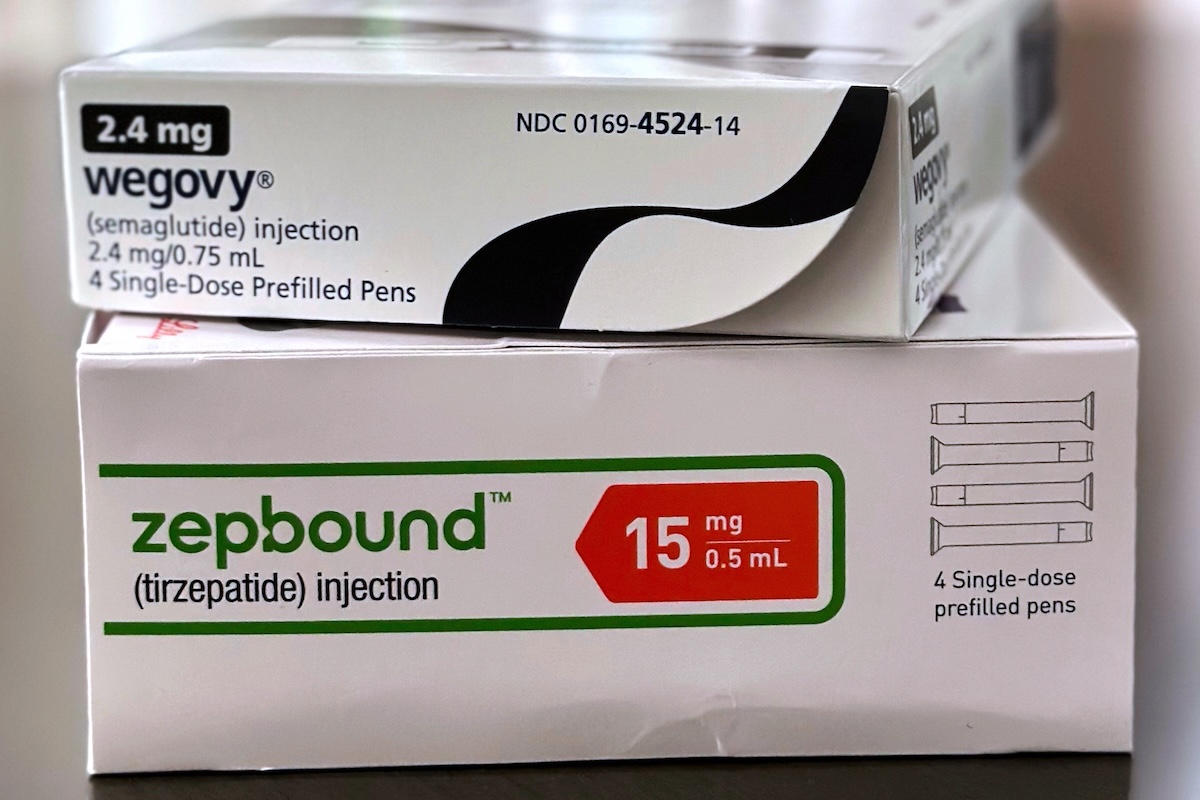
With approximately 15% of Americans having used GLP-1 medications, recent reports connecting these popular diabetes and weight-loss drugs to a risk of blindness have sparked nationwide concern.
On Nov. 9, the Food and Drug Administration announced that manufacturers of GLP-1 receptor agonists must update their product labels to include warnings regarding a rare, severe eye disorder that can lead to partial vision loss.
This regulatory update follows scientific findings indicating a potential link between the drugs and an elevated risk of an optic nerve condition among users compared to non-users.
The updated warnings will appear on all major GLP-1 medications, including Ozempic, Wegovy, Zepbound, and Mounjaro.
However, researchers emphasize that a direct cause-and-effect relationship has not been definitively proven; current data only shows a statistical association, and the underlying biological mechanisms remain unclear.
“The FDA is making this warning out of an abundance of caution,” explained Dr. Scott Kahan, an obesity medicine specialist.
To better understand the situation, we examined the specific eye condition flagged by the FDA and the research that prompted the labeling changes.
Understanding the Vision-Impairing Condition
Nonarteritic anterior ischemic optic neuropathy, commonly known as NAION, occurs when blood circulation to the optic nerve is significantly reduced or blocked.
The condition strikes suddenly, is painless, and typically results in permanent damage. It rarely causes complete darkness; instead, it usually manifests as blurred vision or blind spots within a specific portion of the visual field.
While it generally impacts only one eye initially, about 15% of individuals who experience it in one eye will eventually develop it in the other. Currently, there is no effective treatment.
In the general population, NAION is exceedingly rare, affecting roughly 1 in every 200,000 individuals. However, the incidence rises among adults over 50, where two to 10 out of every 100,000 people are affected.
Establishing a clear connection between NAION and GLP-1s is complicated because the established risk factors for the eye condition heavily overlap with the exact health issues these medications are prescribed to manage—such as diabetes, high blood pressure, elevated cholesterol, and sleep apnea.
Consequently, some patients taking GLP-1s may have already possessed an elevated baseline risk for vision loss before starting the treatment.
The Research Behind the FDA’s Review
Regulatory scrutiny was largely initiated by a study published in 2024. Investigators reviewed the medical files of nearly 1,700 patients treated at a specialized Boston neuro-ophthalmology clinic between 2017 and 2023, focusing exclusively on individuals with diabetes, overweight, or obesity.
The rates of NAION were compared between patients prescribed the GLP-1 medication semaglutide and those who were not.
Among 169 diabetic patients using semaglutide, 17 developed the eye condition—a rate four times higher than the control group not using GLP-1s. Similarly, among 254 patients taking the drug for weight management, 20 developed NAION, representing a sevenfold increase compared to non-users.
Because the data was gathered from a specialized clinic, the overall incidence of NAION in this cohort was much higher than what would be seen in the general public. Nevertheless, the stark differences prompted federal health officials to investigate further.
What the FDA’s Analysis Revealed
In response, the FDA performed a comprehensive meta-analysis encompassing 126 clinical trials tied to the development of these drugs. This review covered 134,253 participants, splitting roughly between 78,200 patients assigned to GLP-1 therapies and 56,000 given either a placebo or an alternative blood-sugar-lowering medication.
Within this large group, the agency identified 10 probable instances of the vision-threatening condition in the GLP-1 cohorts compared to five instances in the control groups, translating to an estimated 1.7 times higher risk for those on the medication.
While these rigorous clinical trials confirmed that GLP-1s may carry a modestly higher risk of the condition, they also underscored just how rare NAION remains at a population level.
After evaluating additional observational studies involving patients with type 2 diabetes that yielded comparable conclusions, the agency determined that the potential risk warranted an official warning label.
Practical Takeaways for Patients
Dr. Kahan noted that due to the massive popularity of GLP-1 therapies, even rare side effects will inevitably gain broader visibility.
“The risk appears to be real albeit quite rare,” Kahan stated. “There has been a perception that these medications are miracle cures, but it’s important to be mindful of risks, which are inherent with any treatment, including GLP1 medications.”
While the updated labeling is unlikely to alter his prescribing habits, Kahan hopes it will foster more transparent discussions between physicians and patients, ultimately encouraging more thoughtful medical management.
Healthcare providers should ensure patients understand potential complications and review any prior history of eye issues. Anyone currently using a GLP-1 who feels anxious about these findings should consult their physician before making any abrupt changes to their treatment routine.
RELATED: Realities of life on GLP-1s for weight loss: What doctors say you can expect