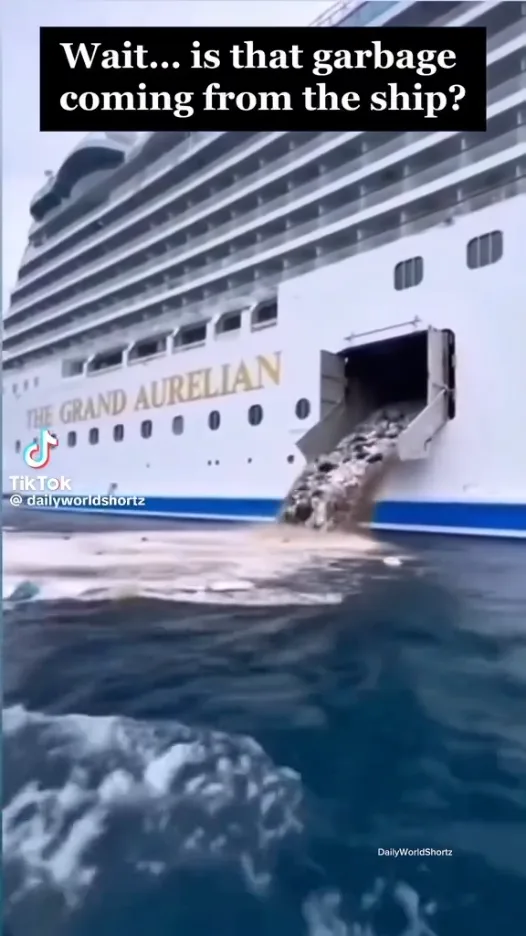
A viral video circulating online claims to show a cruise ship called the “Grand Aurelian” dumping massive amounts of waste directly into the ocean.
The clip spread rapidly across TikTok, Threads, Facebook, and X, where users reacted with outrage and accused cruise companies of destroying marine ecosystems while avoiding environmental accountability.
But the video is not real.
Fact-checkers found the footage was AI-generated — and there is no evidence a cruise ship called the “Grand Aurelian” even exists.
What the Viral Video Claimed
The clip appeared to show:
- a massive luxury cruise ship at sea
- dark waste pouring into the ocean
- dramatic aerial-style footage
- environmental destruction supposedly caught on camera
Captions attached to reposts claimed the vessel was:
“The Grand Aurelian”
Some users accused the ship of illegally dumping garbage and sewage into protected waters.
The emotional imagery caused the video to spread rapidly across social media platforms, especially among environmental activism pages and outrage-driven viral accounts.
Why Fact-Checkers Say the Video Is Fake
According to investigations by Lead Stories, there is no record of a cruise ship named “Grand Aurelian.”

Fact-checkers searched:
- cruise ship registries
- major news databases
- shipping records
- Yahoo News
- Google News
and found no evidence the vessel exists or was ever involved in an environmental dumping scandal.
Investigators also found multiple indicators the footage was AI-generated.
A Hive Moderation AI detection tool reportedly concluded the clip was:
“98.5% likely to be AI-generated.”
In addition, the original TikTok upload carried a platform label indicating:
“Creator labeled as AI-generated.”
The Original Video Came From TikTok
Lead Stories traced the clip back to a TikTok account called:
@dailyworldshortz
The video was reportedly uploaded on April 11, 2026.
As the footage spread across other platforms, many reposts removed:
- the AI label
- original context
- creator information
That made the video appear more authentic to viewers encountering it later through reposts.
Why People Believed the Video
The fake clip felt believable because real environmental controversies involving cruise ships have happened before.
Cruise companies have faced genuine accusations involving:
- illegal dumping
- sewage discharge violations
- fuel pollution
- marine ecosystem damage
Several major cruise corporations have previously paid fines tied to environmental violations involving ocean pollution.
Because those real scandals exist, viewers were more likely to assume the “Grand Aurelian” video was authentic.
Experts say misinformation spreads especially effectively when fake visuals are attached to believable real-world concerns.
AI-Generated Environmental Videos Are Increasing
The “Grand Aurelian” clip reflects a growing trend involving AI-generated environmental outrage content.
Modern AI video tools can now create:
- fake disasters
- synthetic pollution footage
- fabricated industrial accidents
- realistic ocean scenes
- fictional environmental crimes
Researchers warn these videos spread rapidly because they trigger strong emotional reactions involving:
- anger
- fear
- environmental anxiety
- corporate distrust
As AI video quality improves, distinguishing authentic footage from fabricated content is becoming increasingly difficult for casual viewers.
Cruise Ship Pollution Is a Real Issue
Although this particular video is fake, environmental concerns involving cruise ships are real.
Environmental organizations have long criticized parts of the cruise industry over issues including:
- wastewater disposal
- emissions
- fuel pollution
- marine ecosystem damage
The industry has introduced cleaner fuel technologies and tighter waste-management systems in recent years, but environmental groups continue pushing for stricter regulation.
That reality partly explains why the fake “Grand Aurelian” footage felt plausible to many viewers.
Social Media Algorithms Reward Outrage
The clip spread quickly because emotionally charged environmental content performs extremely well online.
Videos involving:
- pollution
- animal harm
- ocean destruction
- corporate misconduct
often generate:
- millions of views
- rapid shares
- outrage comments
- engagement-driven traffic
That creates strong incentives for creators to produce dramatic fake content designed to maximize emotional reactions.
AI Labels Often Disappear During Reposts
One major problem highlighted by this case is how AI disclosure labels often vanish once content is reposted.
The original TikTok version reportedly contained an AI-generated media label, but many reposted versions circulating later on:
- removed the label
- cropped identifying details
- stripped creator attribution
By the time many users encountered the clip, there were few visible indicators it had originally been marked as synthetic media.
Bottom Line
No, the viral video does not show a real cruise ship called the “Grand Aurelian” dumping waste into the ocean.
Fact-checkers found the footage was AI-generated, and there is no evidence a cruise ship by that name exists.
The clip is another example of how realistic AI-generated environmental outrage videos are increasingly spreading across social media platforms as authentic real-world events.