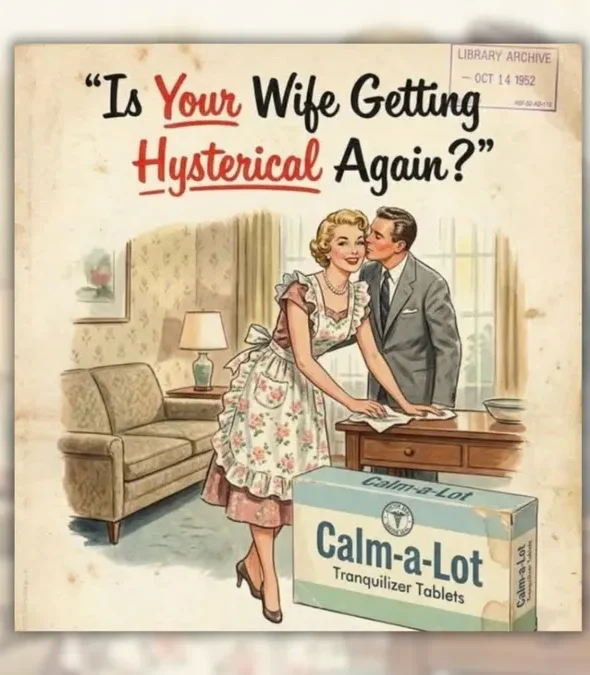
A viral image claiming to show a vintage advertisement for “Calm-a-Lot” tranquilizer tablets has spread widely online, with many social media users reacting in disbelief at what appears to be an absurdly named pharmaceutical product from decades past.
The retro-looking ad presents “Calm-a-Lot” as a tranquilizer medication supposedly marketed to stressed or emotional women in a style resembling mid-20th-century pharmaceutical advertising.
But despite how authentic the image appears, fact-checkers found no evidence the product or advertisement ever existed. (snopes.com)
What the Viral Image Shows
The image resembles a vintage magazine or newspaper advertisement and promotes:
“Calm-a-Lot tranquilizer tablets”
The ad uses retro medical-style language and visual design elements commonly associated with pharmaceutical marketing from the 1950s and 1960s.
Online users shared the image as:
- proof older medicine ads were bizarre
- evidence of sexist historical drug marketing
- an example of outdated mental health treatment culture
Many viewers assumed the ad was real because it closely imitates authentic mid-century pharmaceutical advertisements.
Did ‘Calm-a-Lot’ Ever Exist?
There is currently no evidence that a real pharmaceutical product called “Calm-a-Lot” was ever manufactured or sold. (snopes.com)
Fact-checkers searching:
- newspaper archives
- medical advertising collections
- pharmaceutical databases
- historical records
could not locate:
- authentic product registrations
- verified advertisements
- manufacturer records
- FDA references
- historical pharmacy listings
Snopes reported that no credible documentation supports the existence of the product. (snopes.com)
Why the Image Looks So Convincing
The fake or unverified ad works because it accurately imitates the style of real pharmaceutical advertising from the mid-20th century.
During the 1950s through the 1970s:
- tranquilizers were heavily marketed
- prescription sedatives became culturally normalized
- ads frequently targeted women
- emotional distress was commonly medicalized
Real advertisements from that era often promoted:
- sedatives
- “nerve pills”
- mood stabilizers
- tranquilizers
using language that now appears outdated or shocking.
Because authentic historical ads already look unusual by modern standards, the fictional “Calm-a-Lot” concept feels believable.
Vintage Drug Advertising Really Was Strange
Although “Calm-a-Lot” itself appears fictional, pharmaceutical advertising in earlier decades genuinely included products and slogans that would likely seem bizarre today.
Historic advertisements frequently:
- encouraged tranquilizer use for stress
- framed women’s emotions as medical problems
- normalized sedative dependency
- promoted prescription pills aggressively
Some real mid-century pharmaceutical ads marketed tranquilizers for:
- housewife stress
- nervousness
- “emotional imbalance”
- marital tension
- workplace anxiety
That broader historical context helps explain why many users believed the viral image was authentic.
AI and Digital Editing Blur Historical Reality
Fact-checkers note that vintage-style fake ads have become increasingly common online because modern editing tools and AI image generators can easily recreate retro aesthetics.
Creators can now generate convincing:
- fake magazine ads
- fabricated newspaper clippings
- fictional pharmaceutical promotions
- synthetic historical posters
using accurate typography and aging effects.
Experts warn that historical-looking imagery is particularly effective misinformation because:
- viewers rarely verify archives
- retro aesthetics feel authoritative
- older ads already look unusual
- fake nostalgia spreads quickly online
Some Viral Vintage Ads Are Real — Others Aren’t
The internet frequently circulates genuine historical advertisements alongside fabricated or altered ones.
Many authentic vintage ads already contain:
- outdated gender stereotypes
- aggressive medical claims
- shocking cigarette endorsements
- questionable health advice
That makes it difficult for casual viewers to distinguish real historical material from parody or AI-generated recreations.
Researchers studying visual misinformation say fake historical imagery spreads especially effectively because people often assume “old-looking” automatically means authentic.
Why People Shared the ‘Calm-a-Lot’ Ad
The image became viral because it combined:
- retro aesthetics
- pharmaceutical satire
- gender commentary
- internet humor
- nostalgia culture
Many users shared it not necessarily because they verified it was real, but because it emotionally “felt” plausible given the history of pharmaceutical marketing.
That emotional plausibility is one reason misinformation spreads so effectively online.
What Fact-Checkers Concluded
Snopes concluded there is no proof the “Calm-a-Lot” tranquilizer advertisement or product ever existed. (snopes.com)
While the image imitates authentic mid-century pharmaceutical advertising styles, researchers could not locate any historical evidence confirming the ad was genuine.
The image may have been created as parody, satire, or retro-style internet art.
Bottom Line
No verified evidence shows that “Calm-a-Lot” tranquilizer tablets were ever a real pharmaceutical product.
The viral ad convincingly imitates vintage medical advertising aesthetics, but fact-checkers found no historical proof the product or advertisement actually existed. (snopes.com)
Still, the image feels believable partly because real mid-century tranquilizer advertising often used similarly strange and heavily gendered marketing language.