A turbulent week of high-profile technological disruptions—including widespread Microsoft outages, nationwide flight groundings, banking glitches, and a blackout on an internal National Security Agency platform—has sparked a widespread public question: Is artificial intelligence to blame?
Speaking on Fox News on Nov. 17, Homeland Security Secretary Markwayne Mullin shared that a tech industry contact suspected “super intelligence”—the Trump administration’s preferred term for AI—was behind the chaos, though experts note AI and superintelligence are distinct concepts.
“That kinda makes sense to me, because I can tell you with 98% certainty, we’re not seeing the cyberattack, no one’s out there taking claims for it,” Mullin stated.
That same day on Fox Business, National Intelligence Director Jay Clayton offered a different angle, explaining that AI had flagged flaws within a globally used programming language, and the frantic effort to fix them triggered unexpected complications.
“The patching that has gone on following that has caused some of these systems to not come back up when you patch them as expected. That is what has happened at the NSA today,” Clayton said.
Senator Mark Warner, D-Va., vice chairman of the Senate Intelligence Committee, echoed those sentiments in a Nov. 18 CNBC appearance, asserting that recent system failures were “AI-related.”
“What’s happened is that these AI tools, what they’ve been able to do is spot vulnerabilities in all of our existing systems,” Warner explained. “Then all of these companies are in this mad rush to create patches because nobody wants to have their system vulnerable.”
While notable AI-driven security breaches have occurred over the past year, authorities have found no evidence that the recent wave of outages stems from hostile AI attacks or rogue algorithms.
Instead, experts explain that while AI is dramatically accelerating how fast companies find and fix system weaknesses—which inherently increases the frequency of patches and potential downtime—there is no proof that AI directly caused the actual disruptions.
“Vulnerabilities are being discovered and exploited faster than ever before, especially with increasingly capable AI models,” noted Bryan Ward, assistant professor of computer science at Vanderbilt University.
How AI is accelerating the discovery of system flaws
Historically, organizations relied on human specialists to manually audit software for bugs, according to Stuart Madnick, a professor of information technology at the MIT Sloan School of Management.
Today, artificial intelligence can perform those same audits anywhere from 10 to 100 times faster. An organization that once identified four or five bugs a year might now suddenly face 40 to 400 discovered vulnerabilities.
“The question is: Is (it) the fixing that’s causing the problem, or the fact you got 400 open windows and doors in your system that are now known that’s causing a problem?” Madnick posed.
Major AI developers like OpenAI and Anthropic have introduced advanced models capable of surfacing critical enterprise software weaknesses. For instance, a cybersecurity startup leveraging an OpenAI model recently pinpointed a severe security flaw in a core programming language utilized widely by government entities, major financial institutions, hospitals, and a vast majority of Fortune 500 corporations.
The sheer scale of these updates is immense. Cybersecurity firm Qualys reported that Microsoft pushed out fixes for 1,235 vulnerabilities in November alone, a massive leap from the 68 patches deployed in November 2025.
While Ward emphasizes that software must be engineered to be inherently more secure moving forward, organizations face an urgent, ongoing battle to patch current infrastructure.
No link connecting the independent tech outages
Government agencies and affected corporations have maintained that the recent disruptions are entirely separate incidents rooted in distinct issues rather than a shared vulnerability.
Microsoft attributed its downtime to a routine “network capacity upgrade” unrelated to artificial intelligence, though it has not shared further specifics.
Meanwhile, the nationwide flight groundings occurred after a router upgrade disrupted the Federal Aviation Administration’s telecommunications framework. Investigators are still determining whether the root cause was a faulty piece of hardware or an installation mistake, but they have explicitly ruled out a newly implemented FAA AI system.
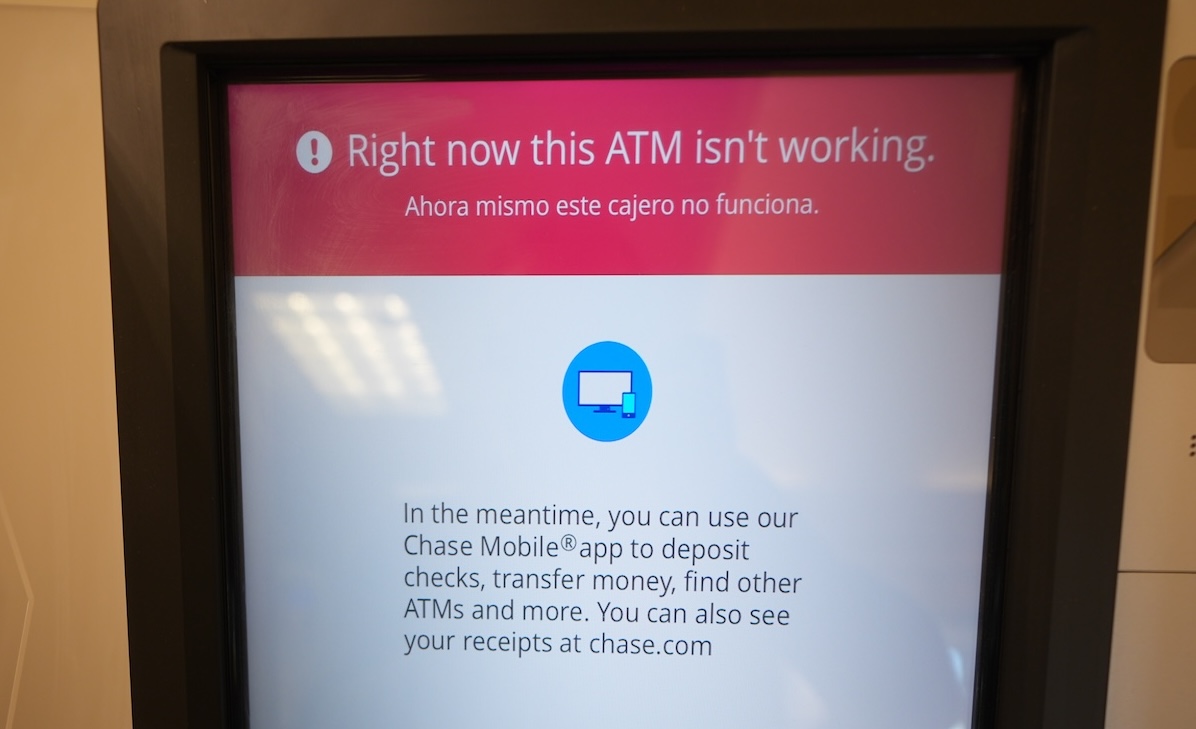
Similarly, JPMorgan Chase pointed to a “temporary issue related to a software bug in on-premise hardware systems” as the cause of its service interruption.
Nicholas Leiserson, president of the Center for Advancing Cybersecurity at the Institute for Security and Technology, noted that software updates routinely carry the risk of unintended side effects like temporary downtime.
“That’s like a perennial challenge that has existed in information technology operations for a long time, and AI can potentially accelerate it,” he said.
To safeguard personal devices and sensitive data against digital disruptions, security experts recommend taking standard preventive steps:
- Enabling automatic software updates.
- Using robust, unique passwords across all accounts, aided by a secure password manager.
- Enabling multifactor authentication wherever possible.
- Maintaining regular, secure data backups.
“I think recent events should be a wake-up call and the public should take the opportunity to improve their cybersecurity posture,” Ward advised. “Recent outages demonstrate how critical and intertwined software systems have become in our society today, and how important cybersecurity truly is.”