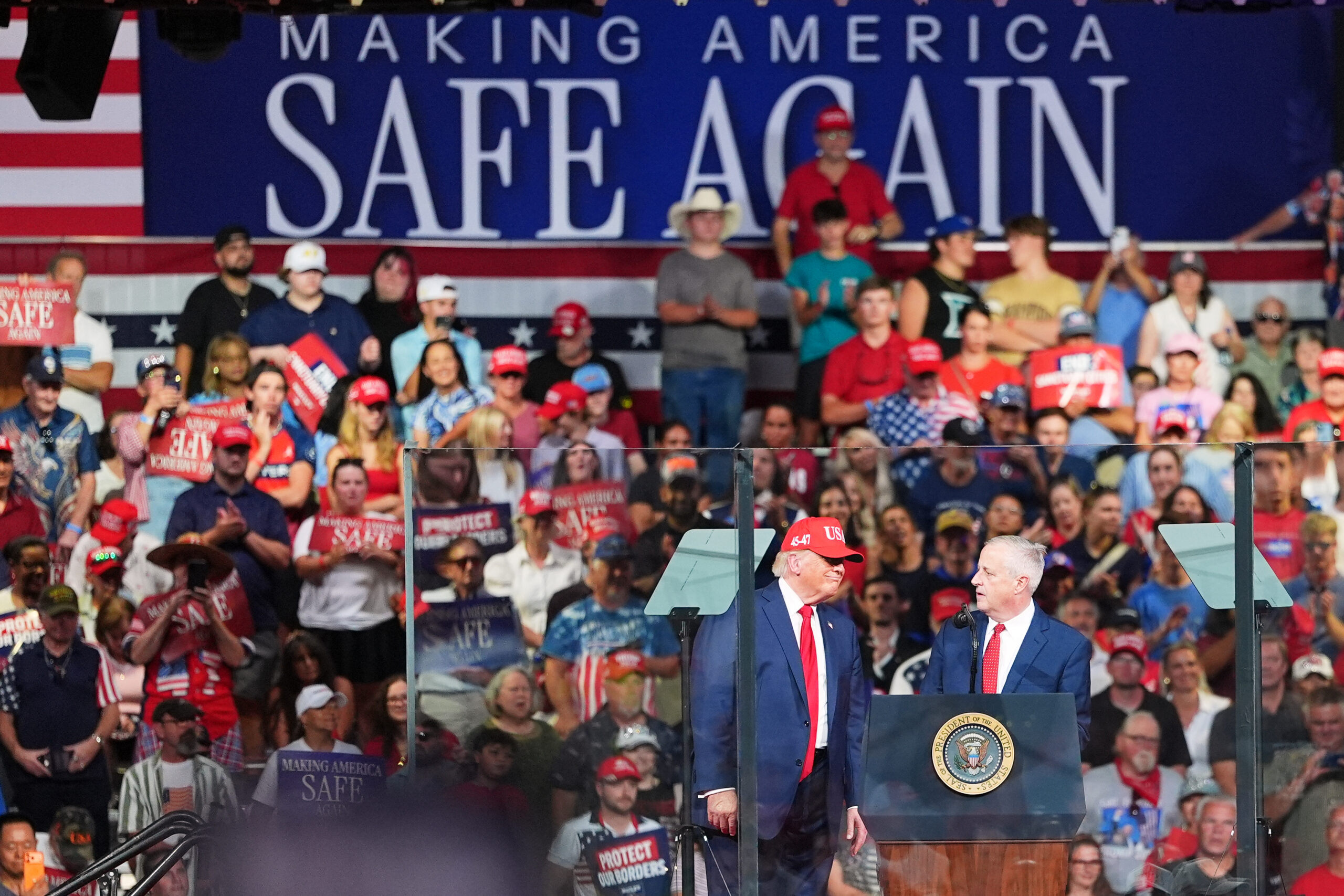
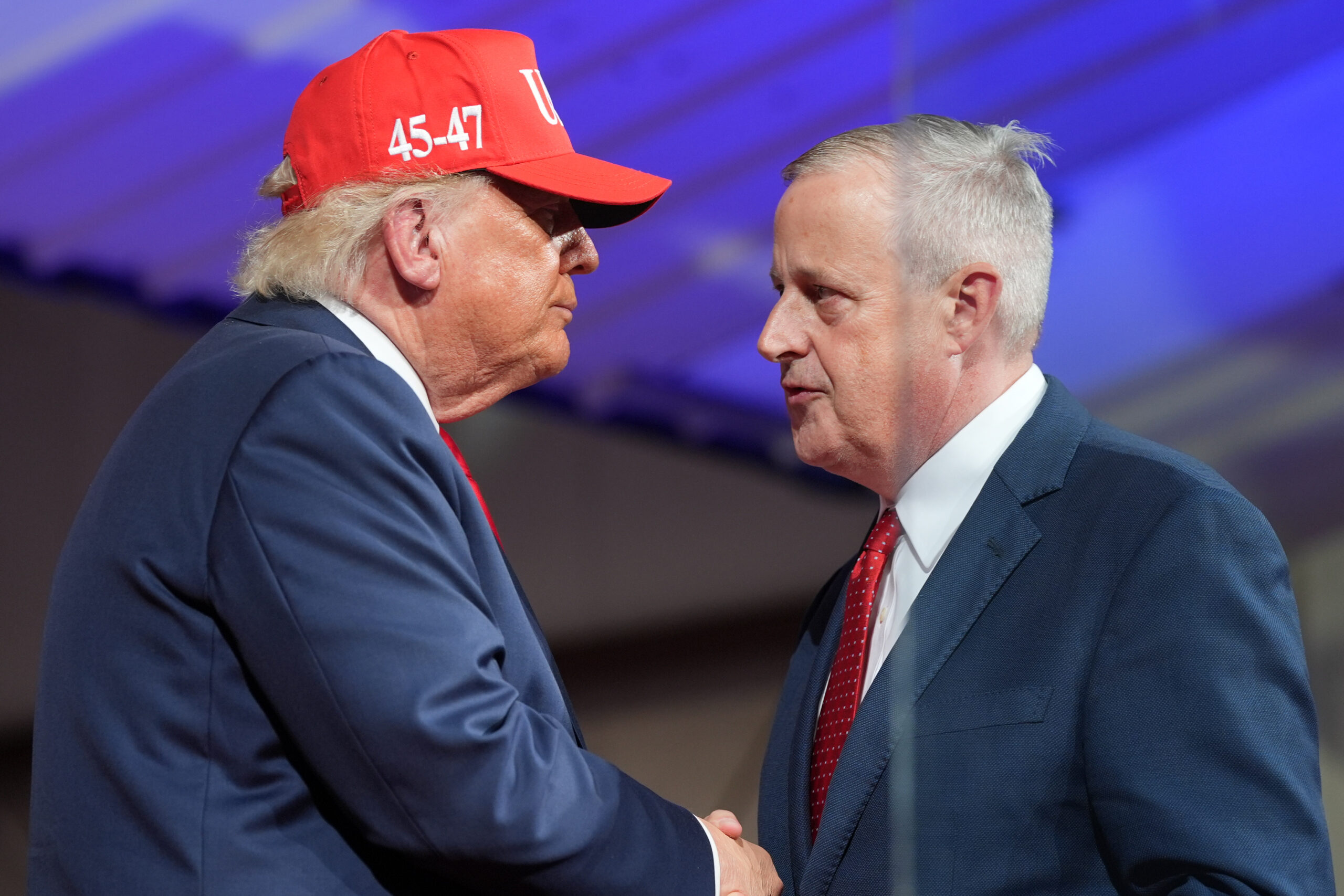
RALEIGH, N.C. — President Donald Trump appeared alongside Republican Senate hopeful Michael Whatley in Gastonia on Wednesday evening, using the stage to rally support for Whatley while launching sharp critiques against his Democratic rival, former North Carolina Governor Roy Cooper.
The race to succeed retiring Republican Senator Thom Tillis features Cooper and Whatley, alongside Green Party candidate Michael Dublin and Libertarian Shannon Bray. Analysts suggest this high-stakes contest could tip the balance of power in the U.S. Senate.
Public safety has taken center stage in Whatley’s campaign. He contends that Cooper jeopardized community safety through soft-on-crime policies, notably pointing to the 2021 release of 3,500 inmates stemming from a legal settlement.
Trump has amplified these talking points. During a Republican National Committee event in Dallas, Trump claimed Cooper would transform North Carolina into a “killing field” if elected to the Senate. In Gastonia, he escalated the rhetoric, describing the state’s urban areas as “blood-soaked killing fields.”
Both leaders heavily emphasized crime during the rally, repeating several claims that have drawn public scrutiny and fact-checking. Here is a closer look at those statements:
Trump on Cooper: “When he was governor, he let out 3,500 people, many of them murderers.”
This statement lacks crucial context, failing to mention that the prisoner releases resulted from a civil rights lawsuit filed during the COVID-19 pandemic. In April 2020, various civil rights organizations sued the Cooper administration, arguing that officials failed to adequately protect incarcerated individuals from the virus by refusing to halt jail admissions or release medically vulnerable inmates nearing the end of their sentences. The state maintained it was taking sufficient protective measures.
By June 2020, a North Carolina Superior Court judge indicated the plaintiffs were likely to prevail and ordered both sides to formulate a safety plan, which eventually involved reentry initiatives and sentencing credits. By the time a special master was appointed in December 2020 to oversee negotiations, five state inmates had died from the virus.
The resulting February 2021 settlement authorized the early release of 3,500 prisoners. While Whatley frequently campaigns against the agreement, Cooper has defended it by arguing that refusing to settle could have forced an even larger release.
Notably, while Trump criticized Cooper’s pandemic-era releases, the federal prison system under Trump’s own administration released roughly 13,000 inmates during the same health crisis.
Whatley: “And what do you think happened as soon as those criminals were back on the street? They went right back to their life of crime.”
A report published by the *New York Post* asserted that at least 18 individuals freed early under the settlement faced subsequent murder charges. However, a subsequent review of court and prison records by WRAL revealed that the majority of those accused had either already completed their sentences before the settlement was finalized or would have been released regardless of the agreement.
Earlier this year, the Republican-led North Carolina General Assembly established a special committee to investigate the settlement and its consequences, though the panel has yet to convene or publish findings.
Trump: “Cooper let DeCarlos Brown out.”
This claim is inaccurate.
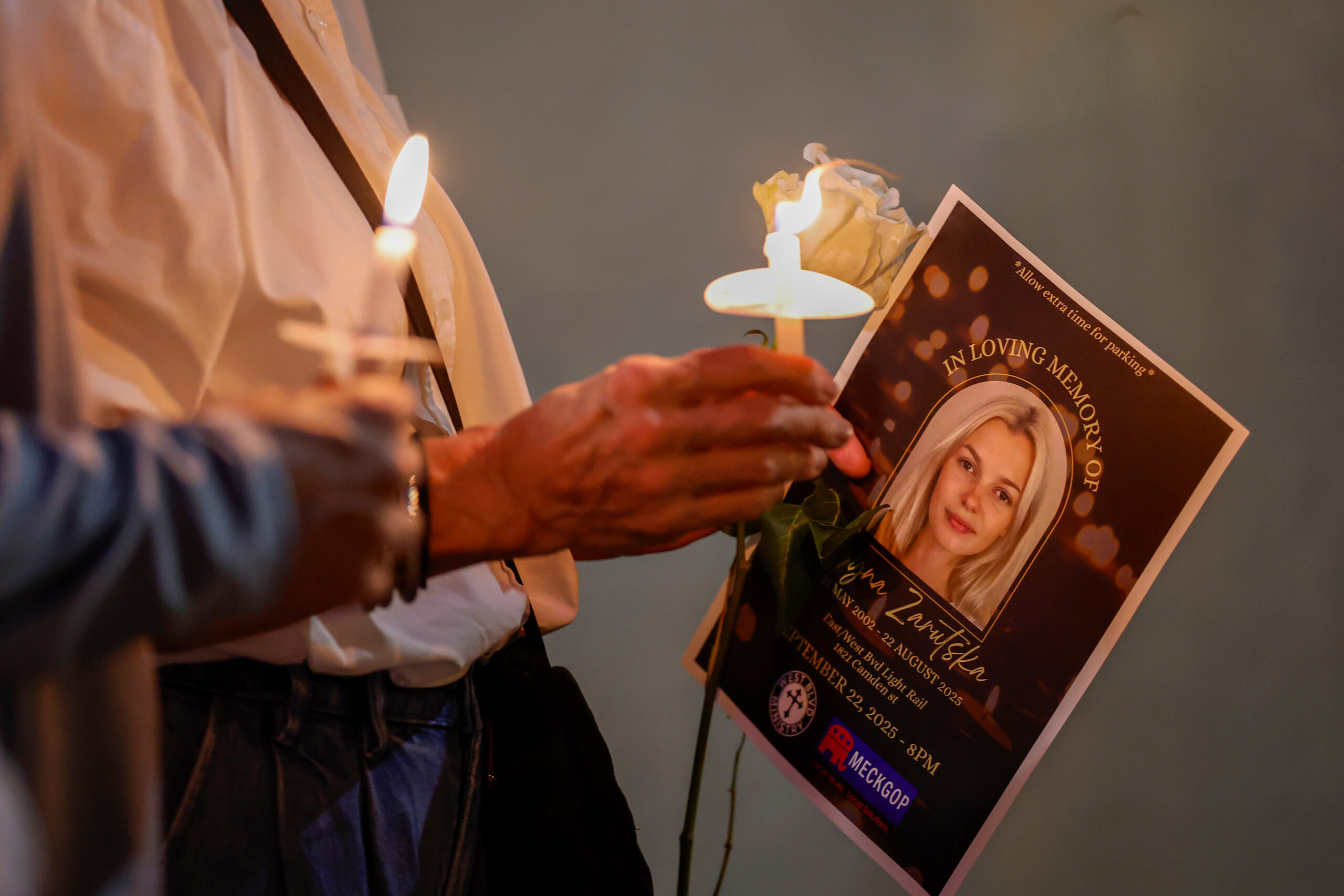
Both Trump and Whatley have tied Cooper to the tragic August 2025 killing of Iryna Zarutska, a 23-year-old Ukrainian refugee who relocated to Charlotte in 2022. Although the primary suspect, DeCarlos Brown Jr., was included on the 2021 settlement roster, state authorities have clarified that the agreement did not cause his release.
Brown had previously pleaded guilty to armed robbery in 2014 and finished serving his sentence on September 20, 2020—months prior to the state reaching its legal settlement. He qualified for inclusion on the early-release list because his scheduled post-release hearing occurred on February 15, 2021, just days before the formal agreement was executed.
Trump said “nobody used to think of North Carolina as a dangerous state, criminally dangerous. It was like North Carolina, it is beautiful. It was apple pie. And now it’s one of the most violent and one of the worst in the whole nation.”
This characterization is misleading. While comprehensive 2025 crime figures remain unavailable, data shows that North Carolina’s violent crime rate in 2024, though slightly above the national average, was far from the worst nationwide.
State crime statistics indicated 388.4 violent crimes per 100,000 residents in 2024—marking a 4.3% decline from the previous year—compared to a national average of 370.8 per 100,000. Furthermore, analyses by organizations like the Council of State Governments place 18 other states ahead of North Carolina in terms of violent crime rates.
Although Trump attributed rising crime to Cooper, state records indicate that violent crime steadily declined throughout Cooper’s second gubernatorial term and has continued to drop under his successor, Democratic Governor Josh Stein.
Trump said “Last year, we achieved the largest drop in violent crime ever recorded, while the murder rate fell to the lowest level in 125 years. That’s 1900.”
While national crime rates have reached historic lows, experts note that comparing modern statistics directly to data from 125 years ago is complicated by shifting record-keeping practices. The FBI reported a significant nationwide decline in violent crime for 2025, noting a homicide rate comparable to historic lows recorded in the mid-1950s. While some independent research groups suggested these rates approached century-old lows, criminologists generally advise caution when drawing direct comparisons across such vast spans of time due to methodological changes.
Whatley on Cooper’s handling of violent protests in 2020: “Did he call in the National Guard to put down those riots? No.”
This statement overlooks the facts. North Carolina was among at least 15 states to deploy the National Guard in response to civil unrest following the murder of George Floyd. Cooper authorized the deployment of 450 National Guard personnel to cities like Charlotte and Raleigh on May 31, 2020.
Critics at the time argued the deployment should have happened sooner after peaceful demonstrations escalated into property damage and looting, a sentiment echoed by Whatley’s campaign.
Whatley: Cooper “vetoed legislation to tell our sheriffs that they have to honor ICE detainers and get violent, criminal, illegal aliens the hell out of North Carolina.”
This claim is factual.
For years, Republican lawmakers pushed for legislation compelling local sheriffs to comply with federal immigration detainer requests. While many sheriffs cooperated voluntarily, several in major urban counties opposed the mandate, arguing that community trust would erode if local police acted as immigration enforcement.
Cooper vetoed similar measures in 2019 and 2022, describing the mandates as an unconstitutional burden on local resources. Although he issued another veto in 2024, the General Assembly successfully overrode his decision, embedding the requirement into state law.
Trump accused Cooper of trying to block disaster relief to Trump supporters after Hurricane Helene: “If they had a Trump sign, which was almost all of them, then they wouldn’t touch him. Remember that? That was Cooper.”
No evidence supports the assertion that Cooper blocked hurricane relief funds. Observers noted that Trump may have confused the situation with a separate incident in Florida involving a Federal Emergency Management Agency worker who was terminated in late 2024 after directing relief teams to bypass homes displaying Trump campaign signs. While the fired employee claimed similar avoidance policies existed in North Carolina, she made no mention of gubernatorial involvement, and FEMA leadership swiftly condemned the worker’s actions as a violation of agency values.