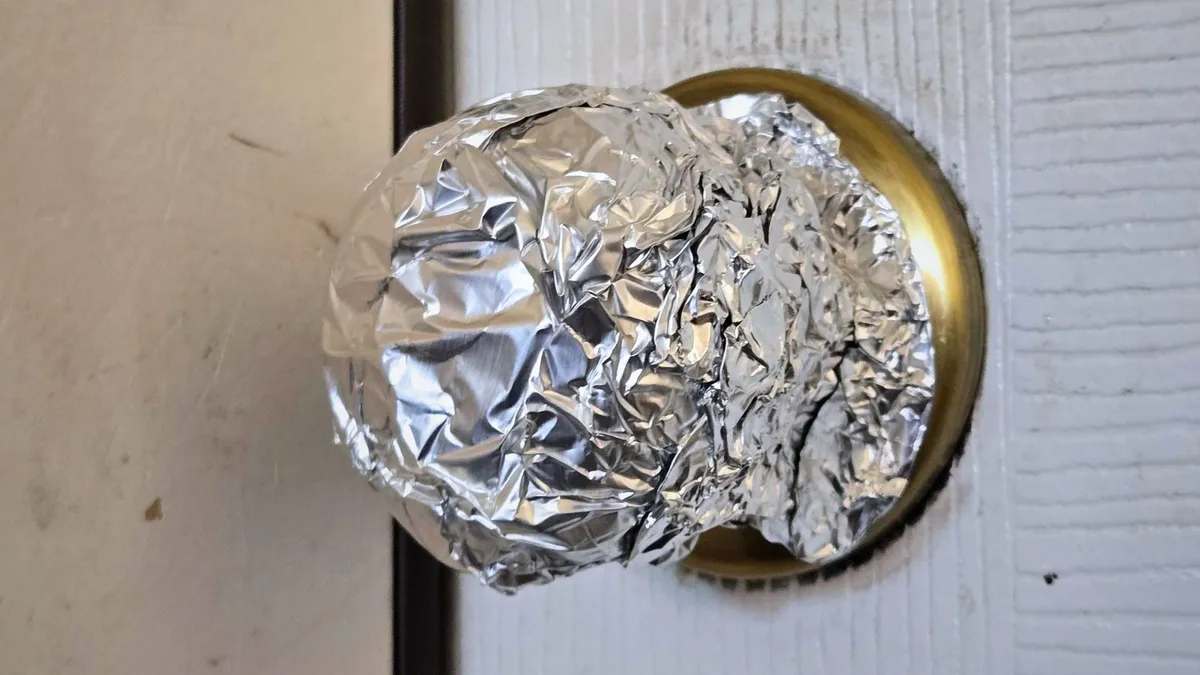
Claim: There is a legitimate reason to wrap aluminum foil around a doorknob at night if you are alone.
Rating: False
A persistent internet rumor claims that people spending the night alone should wrap aluminum foil around their doorknobs. The suggestion usually implies some sort of vague safety precaution against potential threats like burglars, fires, or other dangers.
In reality, the rumor is completely false. There is no valid security reason to put aluminum foil on your doorknobs at night.
Investigations into the origin of this viral claim reveal that it stems entirely from misleading clickbait advertisements. These ads are generated by marketers looking to profit through a digital marketing strategy known as “advertising arbitrage.”
How Advertising Arbitrage Works
Online advertisers have widely shared sponsored posts featuring images of doorknobs wrapped in foil, accompanied by captions such as: “Wrap Foil Around Your Doorknob at Night if Alone, Here’s Why.”
When curious users click on these ads, they are directed to lengthy, multi-page slideshows or listicles hosted on ad-heavy websites. To advance through the article, users are forced to click a “next” button repeatedly, loading a fresh page—and a fresh batch of ads—with every click.
The masterminds behind these sites make more money from the barrage of advertisements displayed across the dozens of pages than they spend promoting the initial clickbait hook on social media.
By the time a user clicks through an entire slideshow to finally reach the “reveal,” the article has nothing to do with personal safety or being alone at night. Instead, the final page usually offers a mundane household tip: wrapping foil around doorknobs and hinges simply protects them from stray paint drips when you are painting a door, acting as an alternative to painter’s tape. The terrifying safety warning used in the initial ad is entirely fabricated to generate web traffic.
Part of a Larger Trend of Fake Life Hacks
This aluminum foil myth is just one of many fabricated household life hacks designed to generate ad revenue. Similar viral hoaxes that have been thoroughly debunked include claims that travelers should keep bread clips in their wallets or put crayons in them, drivers should wedge plastic bottles against their car tires, coins in car door handles indicate a hidden danger, or that empty toilet paper rolls should be placed under toilet seats at night.
Ultimately, if you see a bizarre, sensationalized life hack making the rounds online, it is almost certainly a clickbait trap designed to waste your time and monetize your curiosity.