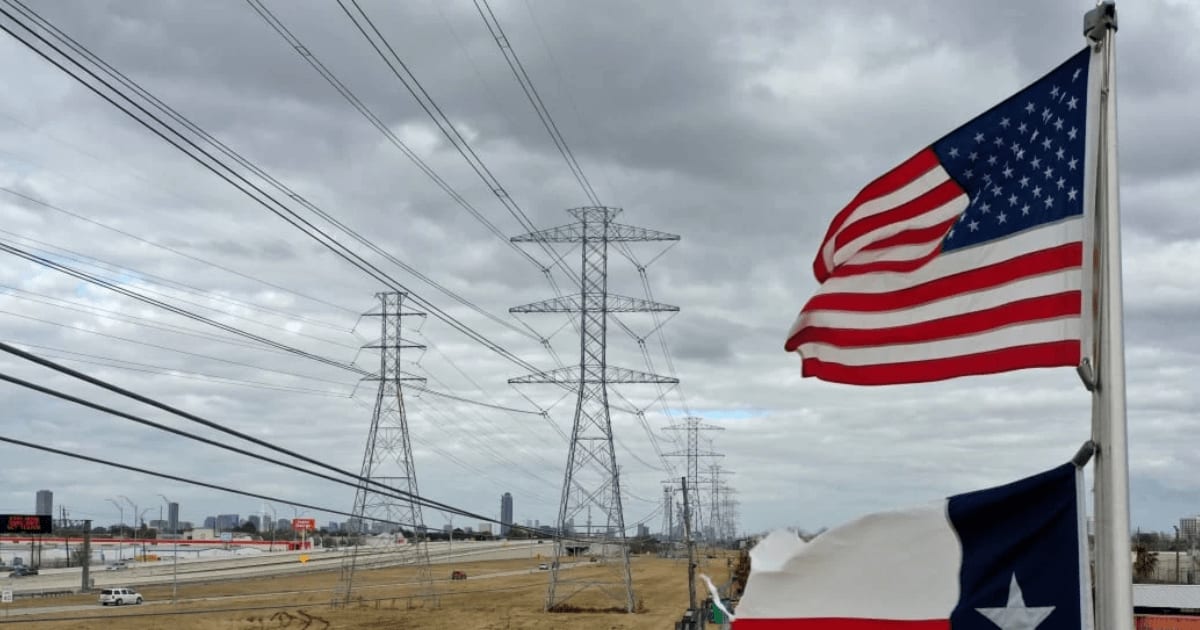
Lawmakers and political candidates are currently sparring over who should shoulder the financial burden of constructing new power plants.
WASHINGTON, DC: As the 2026 midterms approach, online discussions have intensified regarding whether artificial intelligence data centers are responsible for inflating household electricity bills nationwide. With the rapid expansion of AI technology across the United States, these massive facilities are consuming unprecedented amounts of power and straining the electrical grid. Consequently, policymakers are locking horns over how to fund the construction of new power stations, transmission lines, and essential infrastructure.
The Claim: AI Data Centers Are Inflating American Power Bills
The assertion that AI facilities are directly driving up consumer electricity costs gained significant traction following a House of Representatives vote on September 16, which aimed to hold data centers more accountable for their energy and infrastructure expenses.
This issue has quickly transformed into a prominent talking point as data centers proliferate and become a focal point of the 2026 campaign trail.
In a near-unanimous 417-3 vote, lawmakers passed the bipartisan Ratepayer Protection Act. The proposed legislation directs state utility regulators to establish guidelines ensuring that large-scale data centers absorb the financial responsibility for new power generation, grid upgrades, and transmission lines built to accommodate them.
The bill now heads to the Senate, where Ohio Republican Senator Jon Husted has called for swift action, though Senate leadership cautions that expediting the legislation may prove challenging.
At the heart of the legislation are fears that everyday citizens will be forced to subsidize the soaring energy demands of the tech sector. For example, within a single power grid covering roughly 67 million customers—including parts of Ohio and Pennsylvania—surging demand driven by data centers contributed to a $9.3 billion, or 174%, spike in system costs within a single year.
“It’s simple — don’t stick families with data center costs,” stated Rep. Bryan Steil, the Republican chairman of the House Administration Committee, who took to social media to express pride in backing the measure.
Reality Check: The Narrative is Misleading
While the rapid growth of these tech hubs is indeed pushing up energy expenses in certain markets—costs that can trickle down to everyday consumers—claiming that AI data centers have caused a universal spike in electricity bills across the entire country is misleading.
The actual impact fluctuates significantly depending on geography, local utility providers, and how electricity pricing is structured.
The widely cited $9.3 billion (or 174%) figure specifically reflects an increase in wholesale capacity costs within the PJM interconnected power market for the 2025–26 delivery period, calculated against a baseline without projected data center expansion.
Crucially, this does not mean residential power bills jumped by 174%. Wholesale market prices represent only one component of a consumer’s monthly utility statement.
Even so, data centers unquestionably play a role in elevating energy expenditures locally. PJM’s independent market monitor reported in August that both operational and planned data centers accounted for roughly 9% of the region’s wholesale power expenses through July 2026.
At the same time, other variables—such as necessary grid modernizations, equipment inflation, and broader shifts in consumer energy consumption—also influence utility rates. Therefore, while data centers are a contributing factor to rising energy costs in select regions, current data does not support the blanket assertion that AI is uniformly inflating electricity bills for all Americans.