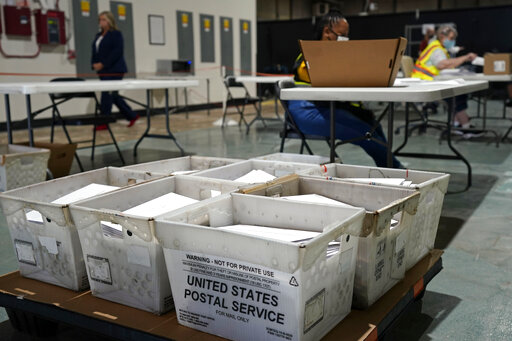
North Carolina Governor Josh Stein recently criticized an uptick in technical rejections for mail-in ballots, labeling the trend “infuriating” while citing a rejection statistic that official state figures do not support.
In an October 20 social media statement, Stein claimed, “The State Board of Elections’ last-minute changes to voting by mail are leading to thousands more absentee ballots being rejected this election — at a rejection rate twice as high as in 2022.”
Data published by the state elections board the following day indicated that while North Carolina is indeed seeing a higher *percentage* of mail-in rejections, Stein was incorrect in stating that “thousands more ballots” are being thrown out.
Overall mail-in participation has decreased across the state compared to the 2022 midterms. Jason Tyson, a spokesperson for the state elections board, explained that higher mail-in numbers in 2022 were likely tied to lingering pandemic precautions, alongside active efforts by Donald Trump to discourage postal voting.
State records show that approximately 43,500 mail-in ballots were cast by October 20—a 38% drop from the same timeframe in 2022. Consequently, the raw count of rejected ballots has actually fallen by roughly 26%.
As of October 20, election officials had rejected 1,349 mail-in ballots, equating to 3.1% of those submitted, according to Tyson. By comparison, at that exact point in 2022, officials had discarded 1,829 ballots, or 2.6%. The final rejection rate for the entirety of the 2022 midterms ultimately settled at 2.2%, based on U.S. Election Assistance Commission figures.
Rejection rates frequently fluctuate during early voting as more ballots arrive and voters correct flagged errors. County officials typically reach out to individuals with problematic ballots, offering them an opportunity to fix the issue or vote in person instead.
What Changed?
Stein is among numerous Democrats voicing opposition to newly implemented criteria governing mail-in ballots. Approved by the Republican-led state elections board, these updated guidelines heighten the likelihood that ballots will be disqualified over minor technical errors that were previously overlooked.
A federal judge recently dismissed a lawsuit aimed at blocking the changes, ruling that judicial intervention came too late since voting had already commenced. However, the state elections board did not officially adopt these new policies until the very day voting began.
While North Carolina law permits any registered voter to cast an absentee-by-mail ballot for any reason, they must adhere to rigorous directions for completion and return.
In September, the board instituted regulations allowing officials to easily disqualify ballots for simple mistakes—such as misplaced signatures, unsealed envelopes, or missing ID photocopies. Critics argue this will disenfranchise voters in a state where elections are frequently decided by razor-thin margins, noting that state data shows Democrats utilize mail-in voting more heavily than Republicans.
“It’s infuriating,” Stein stated in his October post. “North Carolinians, please make a plan to vote this year, in person if possible. And if you’re voting by mail, make sure you seal both envelopes on your ballot. Don’t let them take away your vote.”
Stein is currently involved in legal battles concerning a legislative shift in power over the state elections board. Although the governor’s office historically oversaw elections for over a century, Republican lawmakers passed a 2024 law transferring administrative authority to Republican State Auditor Dave Boliek following Stein’s gubernatorial election. Stein has repeatedly accused Boliek of politicizing the election administration ahead of the midterms—an allegation Boliek denies.
Origins of the “Double” Estimate
Asked to source the figures behind Stein’s rejection claims, his office pointed PolitiFact to an article published by Democracy Docket, a platform founded by prominent Democratic election attorney Marc Elias.
That report cited an analysis by Common Cause North Carolina and the Southern Coalition for Social Justice, which reviewed data from 27 of the state’s 100 counties to track midterms mail-in rejections. An archived version of Democracy Docket’s initial coverage stated that North Carolina’s 3% rejection rate was double what the state experienced in 2022.
The article was subsequently updated to clarify that the 3% rate was double the *national* average from 2022, which stood at 1.5% according to the U.S. Election Assistance Commission. Democracy Docket did not respond to requests for comment.
Common Cause and the Southern Coalition for Social Justice found rejection spikes of 7% to 8% in Mecklenburg and Forsyth counties. Furthermore, Common Cause State Director Sailor Jones noted that nearly 1,000 additional ballots remain at risk of disqualification if voters fail to correct them.
Tyson indicated the state elections board anticipates the ultimate statewide rejection rate will finish slightly above the 2.2% average recorded in 2022.
Our Ruling
Stein asserted that North Carolina is seeing “thousands more absentee ballots being rejected this election — at a rejection rate twice as high as in 2022.”
State records demonstrate that fewer total mail-in ballots had actually been rejected at the time of his claim due to a broader decline in mail-in voting.
While mail-in ballots are indeed being rejected at a higher frequency than in 2022, the rate has not doubled; it was only half a percentage point higher during the period cited.
Because Stein’s statement contains a kernel of truth while omitting essential context that changes the overall picture, it is rated Mostly False.