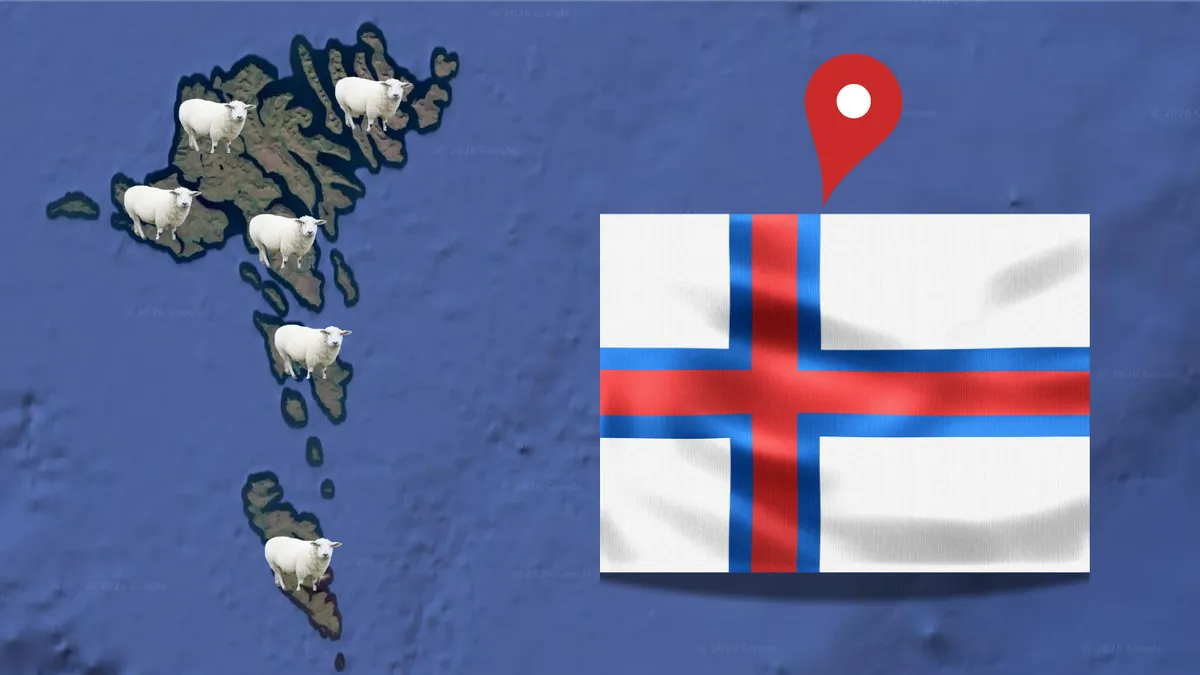
Social media users recently celebrated the anniversary of a clever, unconventional project launched in the Faroe Islands—a self-governing archipelago located north of Scotland.
The story dates back to 2016, when a local resident came up with a brilliant solution after realizing Google had left the picturesque islands off its Street View maps. While Google had mapped towering peaks, remote Arctic regions, and vast stretches of Greenland, the scenic cliffs, tunnels, and winding coastal roads of the 18 Faroe Islands remained entirely absent from the platform.
Enter Durita Dahl Andreassen, who worked for the tourist board in the capital city of Tórshavn. Recognizing that the islands’ sheep population vastly outnumbered the human residents—and that the animals roamed freely across every picturesque corner of the landscape without a schedule—she decided to enlist them for the job.
Working with fellow islanders, Andreassen helped design a lightweight, sub-kilo harness equipped with a 360-degree camera, a mobile phone, and a small solar panel to keep the batteries charged. The camera was programmed to snap a photo every minute. Five sheep across different locations were outfitted with the gear and sent out to graze, effectively capturing breathtaking panoramic views tagged with precise GPS coordinates.
The resulting project was fittingly dubbed “Sheep View 360,” earning Andreassen the enviable job title of Sheep View 360 Project Manager. The only minor hurdle reported by the tourism board was motivating the sheep to wander toward the most photogenic spots, which required someone occasionally nudging them in the right direction.
The campaign quickly gained traction across platforms like X, Facebook, and Instagram. More importantly, it achieved its ultimate goal: just weeks after the project launched in July 2016, Google took notice and announced it would partner with the Faroe Islands to bring official Street View coverage to the territory. By the following year, the island nation proudly celebrated the completion of the mapping effort, proving that when it comes to innovative geography, where there’s wool, there’s a way.
Reference