Democrats running in competitive U.S. Senate races are leveraging widespread public frustration over the ongoing conflict with Iran, pointing out that their Republican opponents consistently vote against legislative efforts aimed at halting the hostilities.
Public opinion surveys indicate that a clear majority of Americans view President Donald Trump’s management of the war unfavorably and believe the administration lacks a clear exit strategy. While Trump initially suggested the military engagement would conclude within four to six weeks, the conflict has now lasted for over half a year.
According to Rina Shah, a political strategist and former senior GOP congressional aide, pocketbook issues like inflation and the cost of living remain the primary concerns for most voters. However, she noted that a significant portion of the electorate directly connects the ongoing war to elevated energy costs and overall inflation.
Following the joint U.S. and Israel military offensive launched on February 28, gas prices surged as Iran disrupted oil transport through the Strait of Hormuz in retaliation. With national averages remaining above $4 a gallon, the current economic reality stands in stark contrast to Trump’s 2024 campaign pledge to drop gasoline prices below $2 a gallon.
Democratic campaign advertisements, debate talking points, and attacks heavily focus on congressional votes regarding War Powers Resolutions. According to a tally by The New York Times, the House and Senate have held a combined 20 votes on these measures since March.
Although select resolutions have advanced past their initial chambers since May, enacting them requires matching bills to pass both houses and subsequently survive a likely presidential veto. Overriding a veto demands a two-thirds majority in both chambers—a threshold no war powers resolution has ever reached historically.
Iowa Democrat Josh Turek: Republican Sen. Ashley Hinson “has voted in favor of (the Iran war) seven times.” (Statement from an Oct. 7 debate)
This claim is largely accurate.
Hinson has opposed six separate resolutions calling for an end to the Iran conflict. A single resolution did pass the House on September 15 with bipartisan support when seven Republicans voted alongside Democrats, though it ultimately stalled in the Senate.
One of the votes cited by Turek targeted a broader measure rather than a direct order to halt the Iran war: a June vote against a resolution introduced by Democratic Rep. Rashida Tlaib to withdraw U.S. forces from Lebanon. Although U.S. troops were not actively fighting in Lebanon, the localized conflict between Israel and Hezbollah remains intertwined with the broader Iran war and has complicated potential peace negotiations.
During the October debate, Hinson stated her desire for a swift and successful resolution to the conflict while emphasizing her opposition to placing legislative limits on presidential authority.
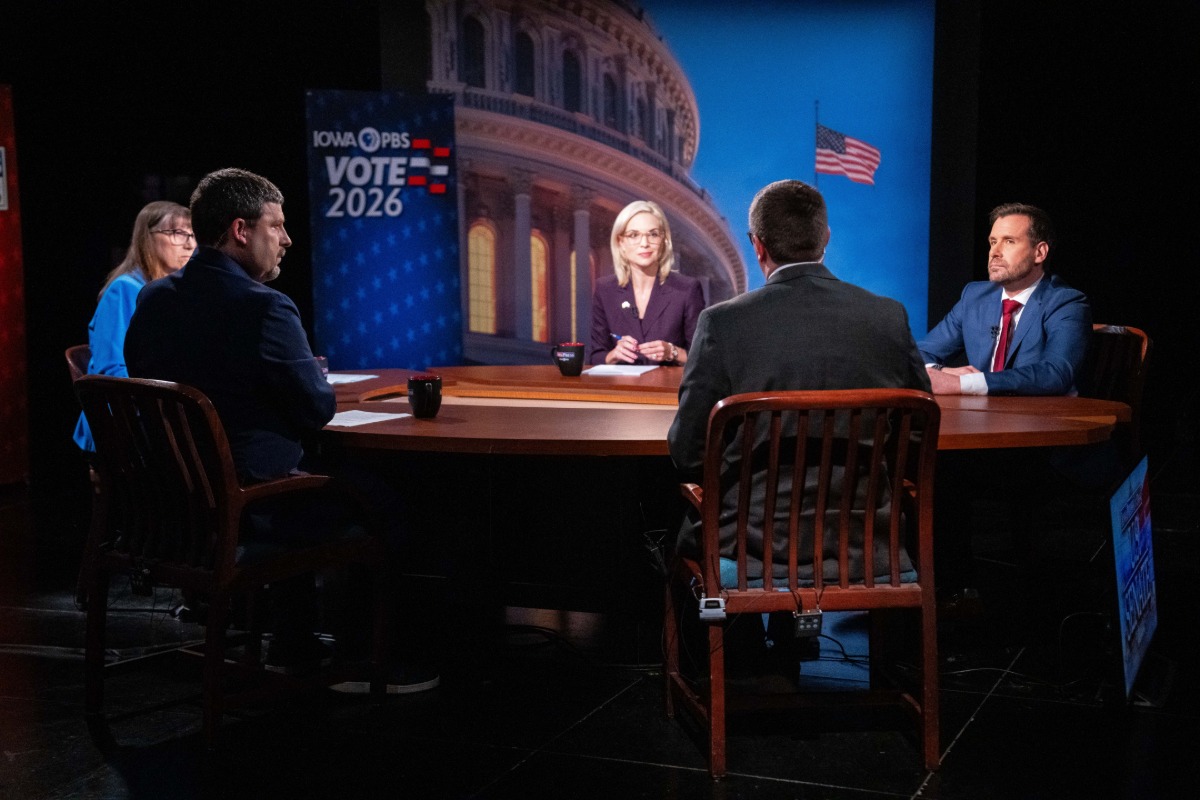
Hinson and Turek during an October 7, 2026, debate hosted by Iowa PBS in Johnston, Iowa. (AP)
Democrat Troy Jackson: Sen. Susan Collins, R-Maine, “voted against it nine times before she voted for it five times.” (Statement from an Oct. 8 debate)
Jackson inverted the sequence of these votes.
His remark was a counter to Collins’ assertion that she had backed efforts to end the conflict nine separate times.
Collins has maintained that the War Powers Act authorizes executive military action for a 60-day period, arguing that any extension beyond that threshold requires explicit congressional authorization. Following the April 30 expiration of that window, Collins joined Democrats on nine occasions to support measures concluding the war. Prior to that deadline, however, she voted against five similar resolutions in March and April.
In a prior debate appearance, Jackson conversely asserted that Collins had voted in favor of the war on five occasions.
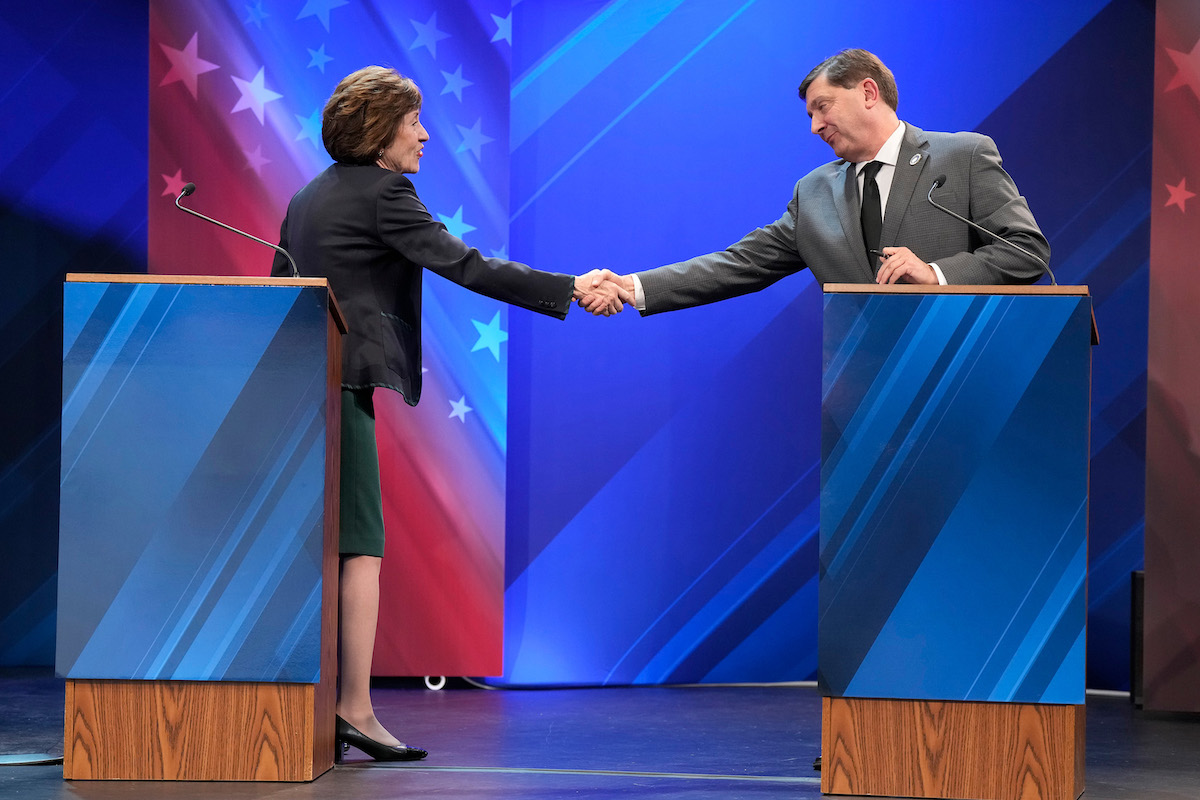
Collins and Jackson exchange handshakes following the final Maine Senate debate in Bangor on October 15, 2026. (Portland Press Herald via AP)
Ohio Democrat Sherrod Brown: Republican Sen. Jon Husted “voted 14 times for the war in Iran pushing gas, diesel prices to record highs.” (Campaign advertisement)
This statement requires substantial context.
Out of the 14 votes in question, only one directly addressed a resolution to terminate the conflict. The remaining 13 instances involved procedural motions designed to block such resolutions from reaching the floor for a vote—one occurring in 2025 following U.S. strikes on Iranian nuclear sites, and the rest throughout 2026.
Shortly before a September vote, Husted told Politico that the conflict needed a rapid conclusion to help alleviate high fuel prices. During an October 15 debate against Brown, he added that any end to the war must happen “on America’s terms and not Iran’s terms.”
Amy Natoce, a spokesperson for Husted, pushed back on the framing in an email, stating that voting against a War Powers Resolution is not equivalent to voting to sustain the war.
However, policy analysts note that these procedural votes effectively determine whether the executive branch can maintain its current military strategy.
“Voting against such a resolution, in effect, allows the president to continue his chosen policies,” explained Mark F. Cancian, a retired Marine Corps colonel and senior adviser at the Center for Strategic and International Studies. He noted that while Republicans frame these votes as support for the administration’s negotiation efforts, the persistent duration of the conflict complicates that narrative.
Aaron Pickrell, a Democratic strategist who worked on past Ohio campaigns including Barack Obama’s, emphasized that cost-of-living concerns are driving voter sentiment. Connecting the war to soaring prices gives voters a clear, tangible issue at the ballot box.
RELATED: Fact-checking Donald Trump and Jon Husted at an Ohio rally regarding the economy and Sherrod Brown’s record.
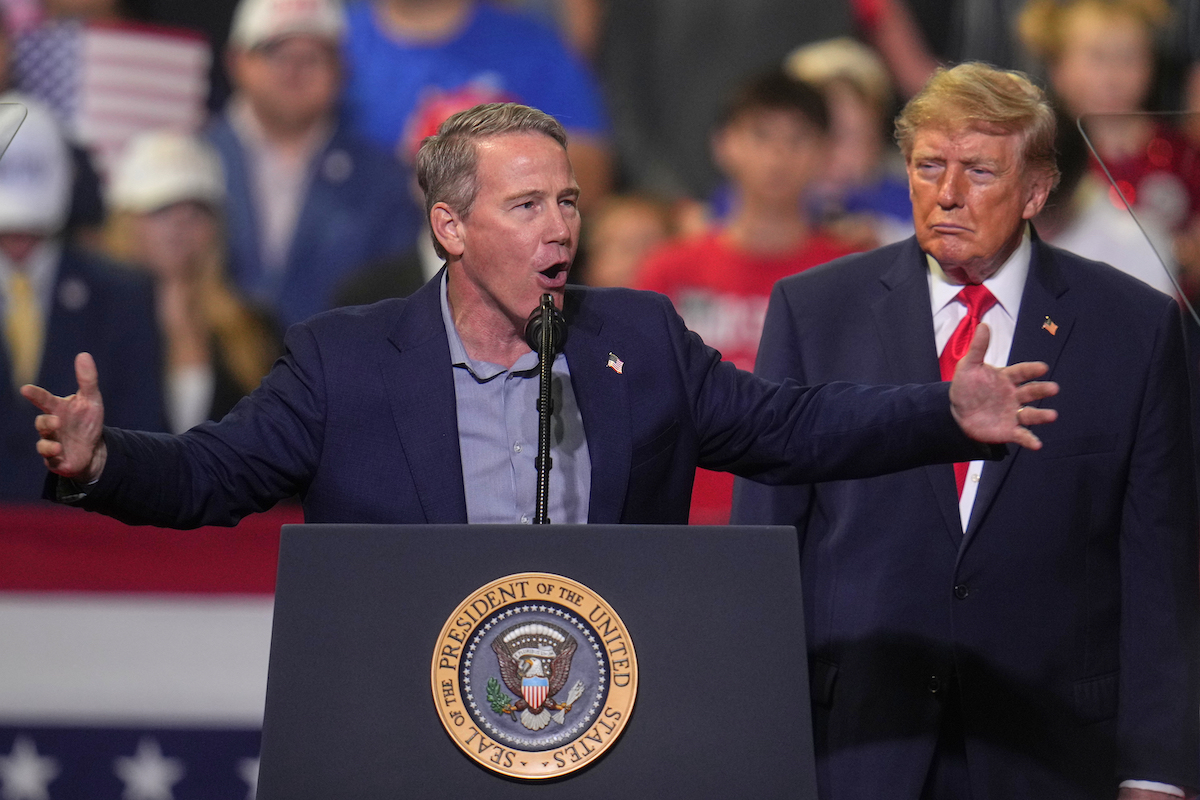
President Donald Trump listens as Husted addresses a campaign event at the Covelli Centre in Youngstown, Ohio, on October 12, 2026. (AP)
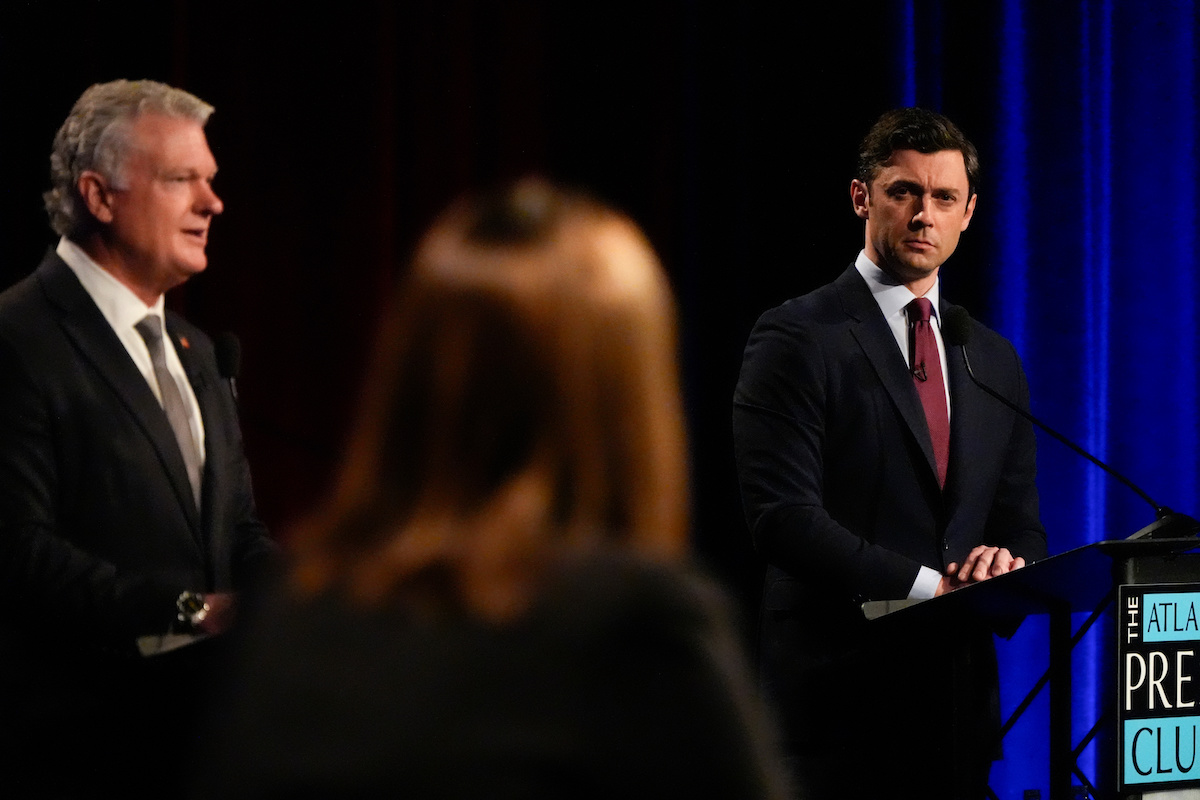
Georgia Sen. Jon Ossoff: Republican Rep. Mike Collins “voted seven times for the war in Iran.” (Statement from an Oct. 8 debate)
This claim is also largely accurate.
Ossoff’s campaign based the figure on six war powers resolution votes alongside a vote supporting a national security appropriations bill that allocated funds toward preventing a nuclear-armed Iran.
In response, Collins defended the administration’s original rationale for the intervention. “The President had every right to go in there and make sure that Iran does not get a nuclear weapon,” Collins argued during the debate, adding that Tehran was dangerously close to building an atomic device.
Military and nuclear experts note that while initial 2025 U.S. strikes degraded Iran’s nuclear infrastructure, they did not entirely dismantle the program, and subsequent operations in the current conflict have done little to further diminish those capabilities. Furthermore, intelligence assessments indicate initial justifications regarding the timeline of Iran’s nuclear development were overstated.
Brian Darling, a Republican strategist and former staffer for Sen. Rand Paul, observed that when GOP candidates emphasize their desire for a swift end to the fighting, it reflects an acute awareness of deep public dissatisfaction.
“An issue that is on the top of minds for voters may prove to be a tie breaker in these Senate elections,” Darling said.
RELATED: Trump’s evolving timeline on the duration of the Iran war and subsequent blame placed on the media.