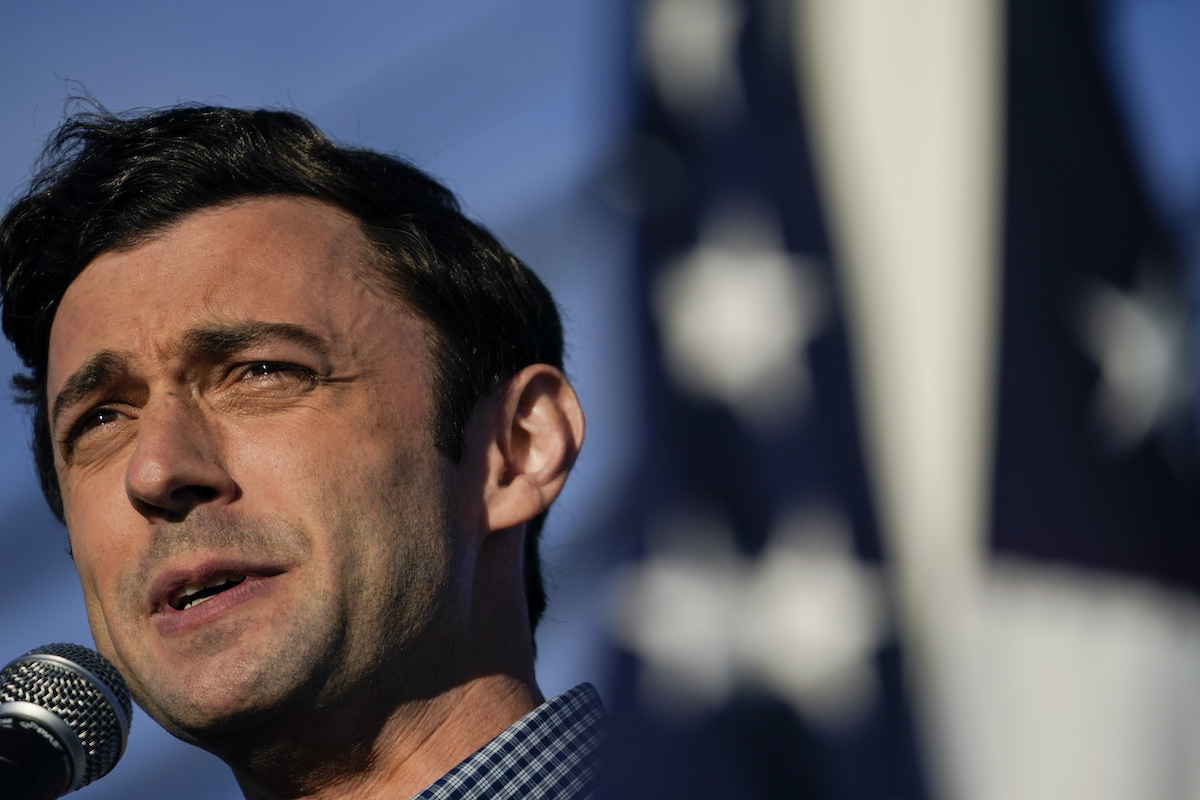
Democratic U.S. Senator Jon Ossoff of Georgia, currently fighting to defend his seat in the upcoming midterm elections, has trained his sights on his Republican challenger, Representative Mike Collins. Ossoff alleges that Collins has repeatedly failed to properly disclose several of his cryptocurrency transactions. Because digital assets face far fewer regulatory hurdles than traditional stocks or standard banking, Congress remains deeply divided over how to govern the space.
“Not a lot of people know this, but Congressman Mike Collins is literally one of the most active crypto traders in the entire Congress, House or Senate… But Mike Collins also repeatedly broke the law hiding his crypto trading,” Ossoff stated during an August 16 campaign event in Atlanta.
This analysis evaluates whether Collins truly ranks among the most active cryptocurrency traders in the federal legislature.
Public records and various media reports indicate that Collins executed roughly a dozen crypto trades in 2025 alone—outpacing the vast majority of his congressional peers. Several publications have labeled him a “prolific” digital asset trader, aligning with his history of expressing public enthusiasm for the market.
Back in December 2021, before he ever assumed federal office, Collins shared on X that he had been active in crypto since 2017, noting that his sons had also joined the space. “We’re fans to say the least,” he wrote. Around that period, *The Wall Street Journal* reported that only nine House members owned digital currency. More recent tracking indicates that holding and trading crypto remains uncommon among lawmakers overall.
Because existing transparency laws do not mandate exact figures, the precise sum of money Collins has invested in crypto remains difficult to pin down from public documents. Representatives for Collins’ campaign did not respond to inquiries seeking comment.
Under the Stop Trading on Congressional Knowledge (STOCK) Act, lawmakers are legally required to report any cryptocurrency purchases exceeding $1,000, though they only need to list them within broad financial tiers—such as $1,001 to $15,000 or $50,001 to $100,000. Consequently, smaller transactions falling beneath the $1,000 threshold do not appear on public disclosures.
Representatives for Ossoff’s campaign likewise declined to comment.
Understanding Cryptocurrency and Collins’ Trading Volume
Cryptocurrency functions as a digital asset purchased with standard currency and exchanged via blockchain technology, completely bypassing traditional banking intermediaries.
House financial disclosure documents reveal that Collins officially reported roughly a dozen distinct crypto transactions to the House clerk throughout 2025.
According to Scott Greytak, deputy executive director of the anti-corruption watchdog Transparency International U.S., this frequency is more than enough to categorize someone as an active trader.
Greytak noted that while no explicit statute legally distinguishes a passive investor from a trader based on transaction counts, “repeatedly buying and selling an asset over the course of the year is very different from simply owning crypto and holding it.”
He added that unlike traditional equities, digital currencies operate in a highly volatile landscape where valuations can swing wildly based on pending legislation in Congress.
In December 2025, digital asset publication Finbold highlighted three members of Congress who reaped the highest returns from crypto that year, placing Collins on the list largely due to several sizable Ethereum purchases worth tens of thousands of dollars. (Ethereum stands as the world’s second-largest cryptocurrency behind Bitcoin.)
Additionally, an analysis published last September by the Campaign Legal Center—a government ethics organization utilizing federal disclosure records from 2023 and 2024—concluded that Collins ranked as the third-most active crypto trader in Congress.
The crypto news outlet CoinDesk reported in late 2024 that Collins engaged directly with the market and maintained “the most extensive record” of digital asset trading among all federal lawmakers, running a profile titled: “Congress’ Most Prolific Crypto Trader Is a Georgia Trucking Operator.”
Beyond major tokens, Collins also ventured into speculative “memecoins”—joke-based digital currencies—including a late 2024/early 2025 purchase of “Ski Mask Dog,” an asset themed around a canine wearing a ski mask.
When asked by the publication Decrypt why he chose to invest in Ski Mask Dog, Collins defended his stance: “Washington and Wall Street have stigmatized emerging technology in the crypto ecosystem for far too long, and it’s about time that we start treating this industry with the respect it deserves.”
An independent review by *The Atlanta Journal-Constitution* tracking Collins’ financial movements since taking office in January 2023 estimated his cumulative net crypto expenditures between $68,026 and $495,000, with active portfolio holdings valued anywhere from $118,005 to $345,000.
Our Verdict
Jon Ossoff asserted that Mike Collins “is literally one of the most active crypto traders in the entire Congress, House or Senate.”
Official records show Collins conducted roughly a dozen cryptocurrency transactions in 2025 alone, placing him far ahead of most legislative colleagues. Specialized crypto media outlets noted his extensive trading history, while a 2025 industry report named him among the top congressional earners from digital currencies. Furthermore, government watchdog data from 2023 and 2024 positions him as the third-most active crypto trader across the entire legislative branch.
Given these substantiated facts, we rate Ossoff’s statement as **True**.