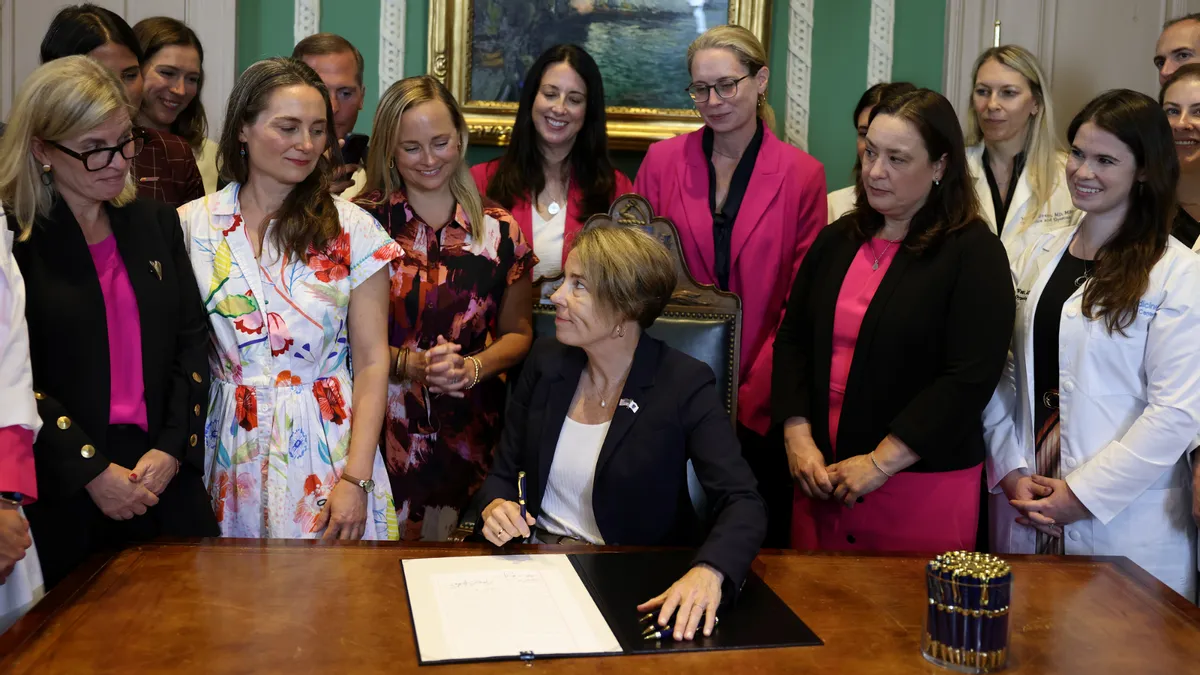
In August 2026, Massachusetts legalized abortion after 24 weeks of pregnancy.

A newly enacted statute allows doctors in Massachusetts to perform abortions past the 24-week mark based on their own professional medical judgment. However…
…terminations following that timeframe were already permitted under specific circumstances, such as protecting the pregnant individual’s life, safeguarding their physical or mental health, addressing fatal fetal abnormalities, or diagnosing severe conditions where the baby cannot survive outside the womb without extraordinary medical intervention.
Social media platforms—including Instagram, Facebook, and X—became channels for a circulating rumor in August 2026 alleging that Massachusetts had authorized “abortion until birth” (often referred to as late-term abortion). This phrase generally points to procedures conducted after 24 weeks gestation, which is commonly understood as the threshold where a fetus achieves a greater than 50% likelihood of survival outside the womb.
Among the widely shared content was a post from the anti-abortion group Students for Life of America on X, which directly addressed Massachusetts Governor Maura Healey, declaring the policy “evil.” The accompanying video featured a graphic illustration of a procedure alongside text claiming that the governor had greenlit third-trimester terminations via cardiac injections.
While Governor Healey did formalize legislation expanding post-24-week abortion protections, the state’s legal framework already permitted late-term procedures under designated exceptions.
The state legislature advanced a measure on July 22, 2026, intended to update regulations surrounding post-24-week care, empowering physicians to provide necessary abortion services guided by their professional evaluation.
This update modified previous statutes that strictly limited late-term procedures to four scenarios: safeguarding the life of the mother, protecting her physical or mental health, addressing fatal fetal defects, or managing severe diagnoses where the fetus is deemed incompatible with life outside the womb absent extraordinary medical measures.
When Healey signed the bill into law on August 10, 2026, the criteria were broadened to rely primarily on a physician’s clinical evaluation, though the final choice does not rest solely with the pregnant individual.
Data compiled by the Centers for Disease Control and Prevention indicates that procedures performed after 21 weeks are uncommon, accounting for just 1.1% of all terminations in 2022, whereas the vast majority (96%) take place prior to the 15th week of pregnancy.