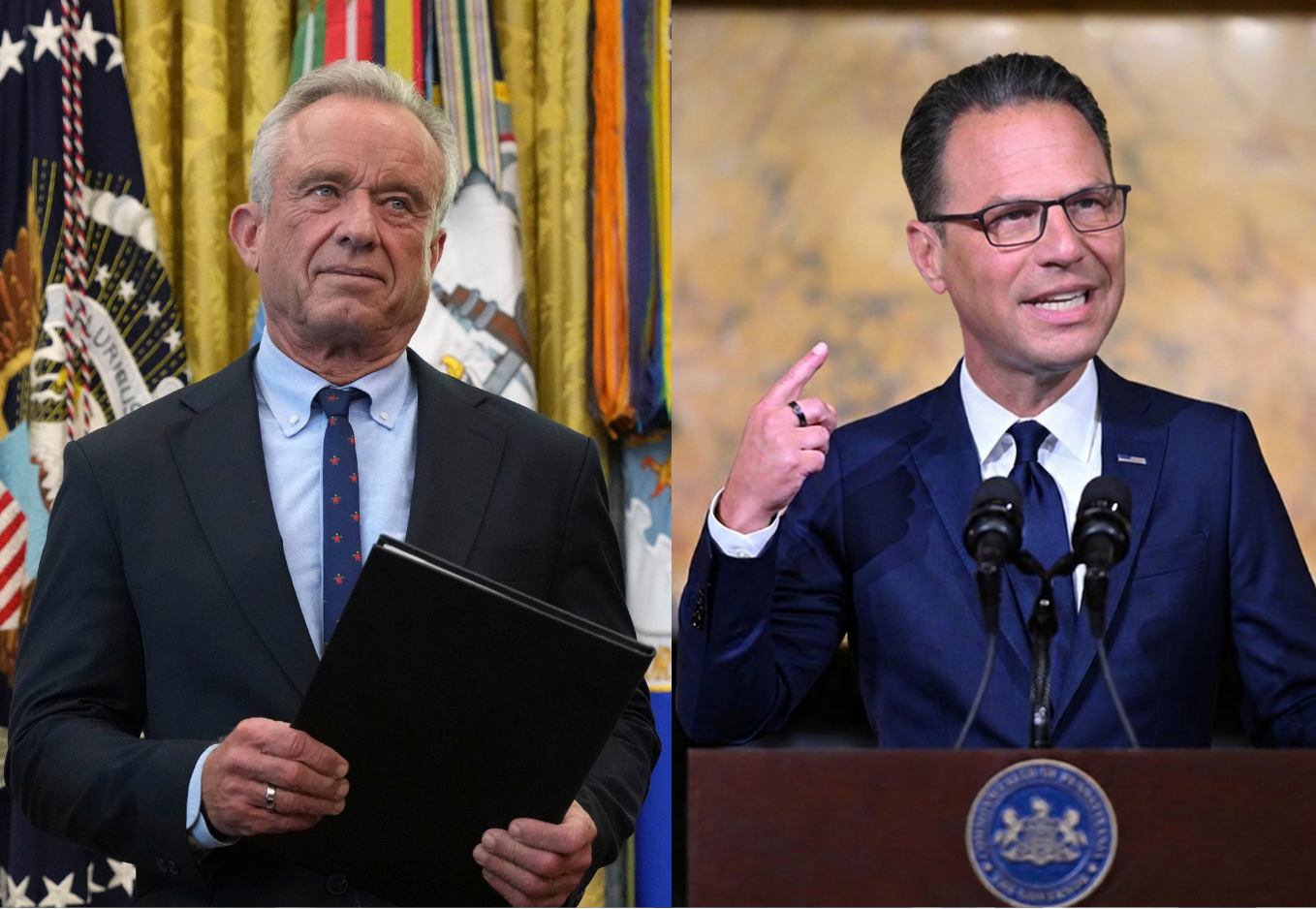
Following an announcement by Pennsylvania health authorities regarding the state’s first measles-related fatalities of 2026, U.S. Health Secretary Robert F. Kennedy Jr. publicly questioned the legitimacy of the reports, suggesting the deaths might have been “fabricated.”
This touched off a public dispute involving Kennedy, Pennsylvania Governor Josh Shapiro, state health officials, a local county commissioner, and a coroner. At the heart of the disagreement is whether a measles infection directly caused the fatalities. While the state health department categorized the deaths as “measles-associated,” the local coroner stated that for at least one of the individuals—an infant—measles was not the direct cause of death.
Public health experts note that, much like patterns observed during COVID-19, an underlying viral infection can contribute to a person’s death without being listed as the sole or primary cause on a death certificate. Even if measles is not recorded as the fundamental cause, it does not mean the virus played no role in the outcome.
Dr. Amesh Adalja, an infectious disease specialist at the University of Pittsburgh Medical Center, explained to PolitiFact that coroners and public health departments often use different terminology. A coroner’s primary responsibility is to trace the precise chain of events leading to a death, distinguishing between direct causes and contributing factors. Conversely, state health departments use broader labels like “measles-associated death” to monitor disease outbreaks in real time rather than assigning definitive legal causes to individual cases. In Pennsylvania, simply testing positive for measles at the time of death qualifies a case for this statistical category.
Consequently, the coroner’s findings and the state’s classification are not necessarily contradictory. However, because many people interpret “measles-associated” to mean that the virus was the direct cause, the discrepancy created an information gap that, as Adalja noted, “looked to a reasonable observer like either incompetence or concealment.”
Infectious disease specialists point out that a lack of transparency and specific details surrounding these cases has left room for misinformation and conspiracy theories to take root.
Governor Shapiro announced the fatalities amid a historic national surge in measles—surpassing 2,900 cases nationwide this year—coupled with declining childhood vaccination rates. Pennsylvania alone recorded over 490 cases through August 31, a figure that Dr. Paul Offit, an infectious disease expert at the Children’s Hospital of Philadelphia, believes is likely an undercount. Infections are projected to climb further as cooler weather arrives and the school year gets fully underway.
Although Pennsylvania reported two deaths, officials have only publicly confirmed that one involved a newborn, with no identifying details released regarding the second individual.
Below is a chronology of how federal and state health officials moved from expressing condolences to openly debating whether the deaths actually happened.
RELATED: A parent’s guide to measles: What to look for and how to prevent infection
Aug. 25
Fatalities announced. The Pennsylvania Department of Health confirms two “measles-associated deaths” in the state, noting both victims were residents of Lancaster County and neither had been vaccinated. Lancaster County has been the epicenter of the state’s outbreak, accounting for 227 cases so far.
Shapiro holds a press briefing. Speaking at a Lancaster hospital alongside state Health Secretary Dr. Debra Bogen, Shapiro extends condolences to the grieving families. He announces the rollout of additional pop-up vaccination clinics and urges residents to get the MMR vaccine. Shapiro also mentions that he declined an offer of federal personnel from Health Secretary Kennedy, telling reporters he gave Kennedy a blunt warning that federal rhetoric is negatively impacting communities nationwide.
CDC offers condolences. Following the press conference, the official CDC X account posts that the agency and HHS extend their sympathies to Lancaster County, noting they are working closely with local health authorities and encouraging vaccination.
Lancaster County official voices doubts. County Commissioner Josh Parsons writes on X that the coroner’s office has recorded zero cases where measles was the direct cause of death. “They have one case where a person died WITH measles, but not FROM measles,” Parsons states.
Aug. 26
Kennedy questions death reports. Speaking in Tampa, Florida, Kennedy responds to the Pennsylvania announcements by highlighting the county commissioner’s remarks. “The press is all covering this as if those measles deaths actually happened, but nobody is doing a little bit of critical inquiry,” Kennedy says, adding that officials are trying to verify the details.
State health agency issues clarification. In a Facebook post, the Pennsylvania Department of Health explains that it uses the term “measles-associated” when epidemiological or laboratory evidence of the virus is present, even if medical certifiers do not list it as the immediate cause of death. The department confirms an infant death involving a positive measles test is under review by the local coroner.
Kennedy suggests the announcement is “fabricated.” In an evening post on X, Kennedy accuses Governor Shapiro of showing “giddy delight” and compares the situation to Democratic messaging during COVID-19. Citing the lack of public information from the coroner, Kennedy calls the state’s announcement premature and suggests the numbers might have been “fabricated by one of the Governor’s hopeful staffers.”
Top state health official pushes back. Dr. Bogen releases a statement on X, emphasizing that epidemiologists thoroughly verified both individuals tested positive and that findings were withheld until investigations were complete. She also notes that under state law, the health department is not obligated to report deaths to local coroners.
Coroner attributes infant death to a ruptured spleen. Dr. Stephen Diamantoni, the elected Republican coroner for Lancaster County, tells multiple media outlets that the forensic pathologist ruled the primary cause of death as a ruptured spleen. While the baby had a lung infection of measles acquired from the mother prenatally—which can sometimes cause an enlarged, rupture-prone spleen—the pathologist found no direct evidence linking the measles to the spleen rupture, Diamantoni states.
Aug. 27
Measles listed as a contributing factor. Diamantoni clarifies in an interview that measles was indeed included on the infant’s death certificate as a contributing condition, though he personally maintains his belief that the virus did not contribute to the child’s passing.
CDC shifts its stance. Reversing its initial condolences, the CDC’s X account responds to Kennedy’s allegations by stating, “We appreciate Secretary Kennedy’s efforts to clarify conflicting information from Pennsylvania officials.” The agency adds that the governor’s office had declined offers of assistance and failed to provide relevant outbreak details, echoing concerns about inflated COVID-19 death statistics.
Pennsylvania refutes CDC statement. In a direct reply on X, the state health department asserts that it remains in regular communication with professional CDC staff regarding public health programs and measles cases.
Aug. 29
Kennedy reiterates skepticism. During an appearance on FOX News, Kennedy refers to the incidents as “so-called ‘measles deaths'” and asserts that the governor has failed to identify any child who actually died from the disease.
Aug. 30
CDC excludes Pennsylvania numbers. In its regular weekly update, the CDC announces it will temporarily leave the two Pennsylvania deaths out of its official tally. “Available information does not establish whether measles caused or contributed to the deaths or whether the individuals died from other causes while infected,” the agency states while it reviews further details.
Family speaks out. The Atlantic publishes an interview with an Amish couple from Lancaster County whose newborn son died shortly after birth under circumstances matching the national reports. The mother, identified as Anna, had suffered from severe dehydration and illness after her other children contracted measles. “They assumed that Anna’s severe case of measles contributed to their loss,” the article notes, adding that their midwife shared the same assessment.