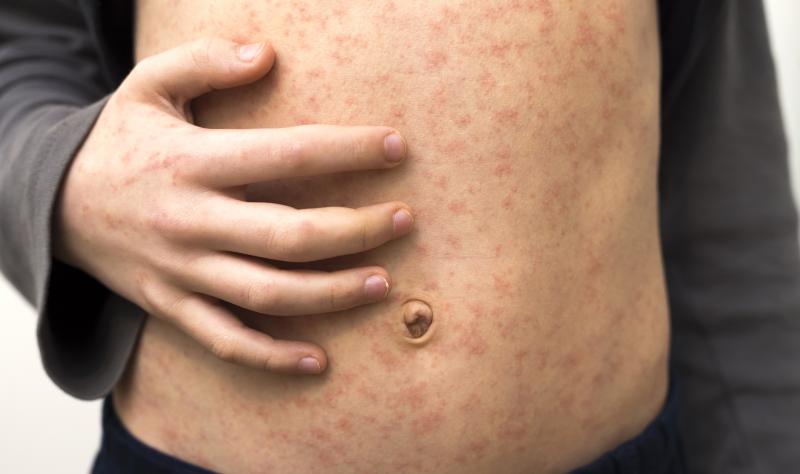
Recent outbreaks of measles in the United States have underscored the difficulties in controlling the disease’s spread within specific populations.
Two new reports shed light on these challenges. The first, published in Morbidity and Mortality Weekly Report (MMWR) by a Centers for Disease Control and Prevention (CDC)-led team, details a measles outbreak in West Texas during 2025. The second report, appearing this week in Vaccine, investigates a school-based outbreak in South Carolina during the 2025-26 period.
Both analyses arrive at a similar conclusion: maintaining high vaccination rates for measles is the most effective method for preventing the illness and minimizing disruptions to educational institutions and communities. These two outbreaks represent the largest seen in the country over the past two years, with case numbers not observed in decades.
West Texas Outbreak: 762 Cases, 2 Fatalities
Gaines County, located in western Texas near the New Mexico border, became the epicenter of a significant measles outbreak. On January 29, 2025, local health officials were notified of an unvaccinated child diagnosed with measles. The subsequent spread of the virus led to 762 reported cases, with 99 individuals requiring hospitalization and two fatalities, according to the MMWR report.
The vast majority of identified cases, 97%, involved individuals who were unvaccinated or whose vaccination status was unknown. Only a small percentage, 3%, had received at least one dose of the measles, mumps, and rubella (MMR) vaccine. Children comprised the majority of those affected, and 18% of all patients needed hospitalization. At the time of the outbreak, MMR vaccination rates for kindergarteners in the affected region ranged between 77.3% and 94.6%, falling below the overall Texas coverage rate of 93.2%.
Extensive public health efforts were implemented, including 33 vaccination clinics and 16 testing clinics, alongside culturally sensitive educational materials translated into various languages. Despite these measures, vaccine uptake remained low, with approximately 275 MMR doses administered. Researchers also suspect that the actual number of cases may have been higher than 762 due to community distrust of external institutions and a preference for internal solutions, which hindered reporting and engagement with public health systems. This sentiment complicated the implementation of standard measles control measures and epidemiological investigations.
South Carolina Outbreak: Largest Since Measles Elimination
Spartanburg County, South Carolina, experienced the nation’s most extensive measles outbreak since the disease was declared eliminated in 2000. From October 2025 to April 2026, the virus spread across 32 schools, resulting in 997 confirmed cases. At least 21 individuals were hospitalized due to measles-related complications, though no deaths were reported in this outbreak.
Researchers from Cornell University analyzed vaccination data and quarantine orders for the Vaccine report. They observed that schools experiencing multiple quarantines exhibited significantly lower vaccination coverage. Schools with confirmed measles exposures had an average two-dose MMR coverage of 82.5%, compared to 91.0% in schools without exposures. Schools requiring repeated quarantine periods showed average vaccination rates of 77%, in contrast to 86% in schools with only a single quarantine.
A concerning pattern emerged, with 13 of the 32 affected schools (41%) necessitating multiple quarantine rounds. The report suggests that quarantine should be viewed as a temporary measure to facilitate vaccination efforts rather than a standalone strategy. Low vaccination coverage not only increases the risk of exposure but also perpetuates the virus’s circulation. The researchers noted that quarantining school-aged children can incur substantial social and educational costs. Beyond schools, a church in Inman, South Carolina, was linked to 29 cases, illustrating how faith communities with shared vaccine attitudes can sustain and amplify transmission, a dynamic observed in other US outbreaks.
Vaccination Gaps Leave Communities Vulnerable
The reports indicate that culturally tailored communication strategies may be most effective for reaching groups that distrust external institutions and prioritize internal community solutions. They also highlight that vaccination gaps render communities susceptible to outbreaks.
Both studies conclude that promoting vaccination and maintaining high coverage rates are the most effective preventative measures. As the South Carolina study authors stated, "Maintaining high vaccination coverage… is not only an infection control measure but a prerequisite for uninterrupted schooling, sustainable public health capacity, and the prevention of severe neurological complications."