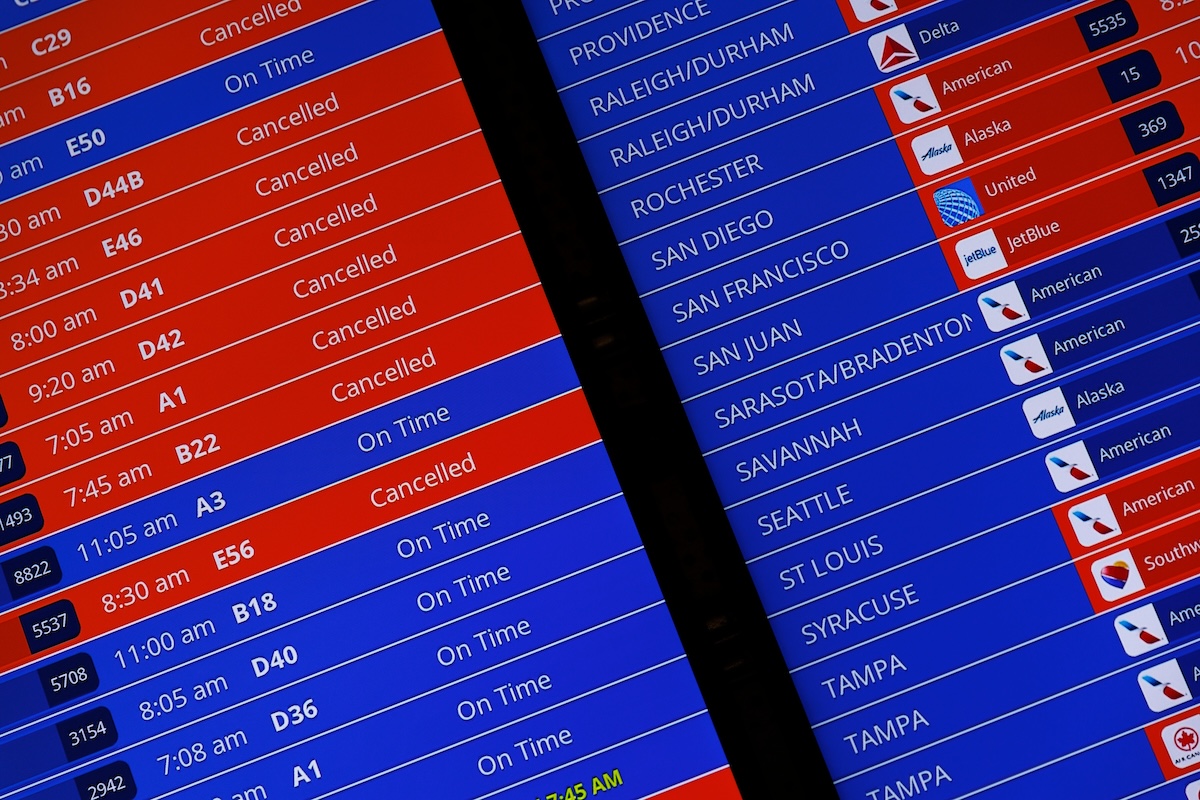
It has been a relentless wave of disruptions.
Major corporations—including Microsoft, United Airlines, JPMorgan Chase, and U.S. Bank—recently faced technical glitches and system failures that disrupted global workdays, grounded flights, and triggered widespread banking difficulties. Shortly after, Apple and Marriott users encountered digital hurdles, while 178 businesses were reportedly impacted by a malware incident on November 16.
Simultaneously, critical U.S. government infrastructure—such as the Federal Aviation Administration, the National Security Agency, and the National Weather Service—suffered operational hiccups, culminating in an unusual nationwide ground stop. For many observers, the accumulation of alarming headlines felt deeply ominous.
“We’re under attack in a way we’ve never seen before,” posted Nalin Haley, a conservative commentator and son of Republican politician Nikki Haley, on November 17. “This is an AI cyberattack.”
On Bluesky, political strategist Christopher Webb questioned whether the concurrent incidents were linked.
“Coincidence??? 4 major banks reporting outages, a massive Microsoft disruption, and a nationwide FAA ground stop, all within days of each other,” he noted on November 16.
Despite the speculation, the most credible evidence points to ordinary causes—such as scheduled maintenance, isolated technical bugs, or disconnected security incidents—rather than a synchronized offensive or a total digital collapse.
So, why is that reality so difficult for people to accept?
The human mind is built to find patterns and resist ambiguity
The sheer velocity of the events fueled skepticism, particularly with its unfortunate overlap with a routine, pre-planned test of the Emergency Alert System set for November 17.
Human psychology is fundamentally wired to establish connections and identify trends in the environment.
“Detecting patterns is important for perceiving the world and learning about cause and effect,” explained Javier Granados Samayoa, a psychology professor at Texas Christian University. However, this innate cognitive habit “can sometimes lead people to see connections where none may exist.”
One study exploring conspiracy mentalities utilized a simple coin flip. Individuals who claimed to spot patterns within random sequences of coin tosses were significantly more inclined to embrace supernatural beliefs and conspiracy theories.
Additional research indicates that feelings of powerlessness heighten the tendency to perceive nonexistent patterns.
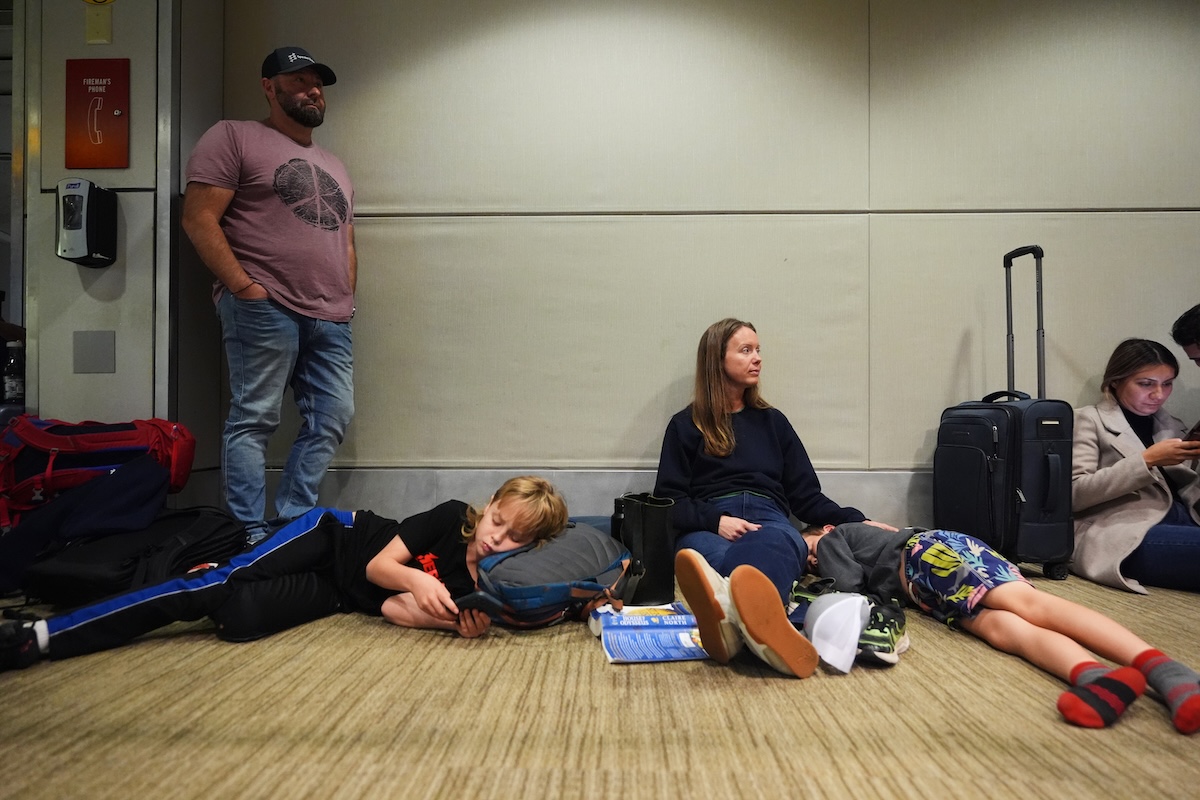
For travelers stranded at airports or employees locked out of their professional software, helplessness and confusion were palpable—emotions that frequently pave the way toward conspiratorial thinking.
“People are looking for ways to understand what is going on and they don’t like the uncertainty that often surrounds unfolding events,” noted Karen Douglas, a professor of social psychology at the University of Kent. “Also, a simple explanation is often not very appealing. People assume that there must somehow be a bigger explanation, or more going on than people know about.”
Psychological biases and social media amplify panic
A relentless stream of frustrating technological failures, combined with the well-documented negativity bias prevalent across digital platforms, can easily provoke exaggerated emotional responses during crises.
Negativity bias ensures that distressing information leaves a heavier footprint, causing people to dwell on it longer, according to Granados Samayoa. On social media, content featuring pessimistic language or designed to trigger intense outrage naturally generates higher engagement and faster viral spread.
Algorithms continuously boosted some of the most sensational posts and conspiracy theories, with Axios reporting that roughly 30% of these claims were amplified by suspected automated bots, potentially tied to foreign interference.
Spreading unverified theories online takes seconds, but untangling the resulting confusion is far more difficult.
“Once people believe in a conspiracy theory, it is often difficult to convince them otherwise,” Douglas warned.
As the public and journalists alike began hyper-focusing on glitches that would typically go unnoticed, concerns snowballed—a psychological phenomenon known as frequency bias.
“United’s outage this afternoon is so pedestrian, it’d be a non-story if not for what’s happened the last four days,” observed Kyle Potter, an editor at Thrifty Traveler, in a November 16 post.
RELATED: As AI detects flaws in computer systems, is it causing more tech outages and disruptions?