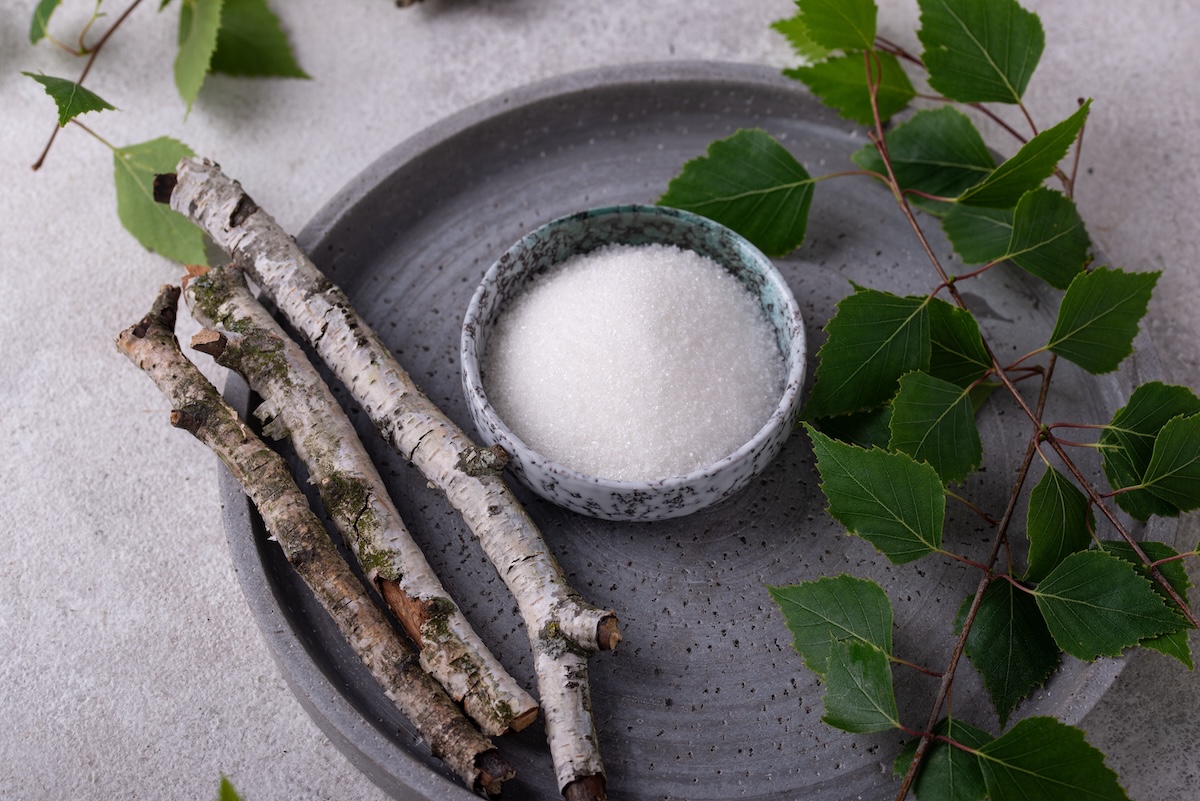
Recent headlines have linked xylitol—a popular low-calorie sweetener commonly found in items like cough drops, jams, and chewing gum—to potential cardiovascular risks.
While this sounds concerning, there is no need to empty your pantry just yet. The conclusions stem from research that has not yet undergone peer review or official publication. Furthermore, the amounts of xylitol identified in the study may originate from the body’s internal production rather than dietary sources.
Here is a breakdown of what is currently understood—and still unknown—regarding this widespread sugar alternative.
What is xylitol?
Xylitol is a naturally occurring sugar alcohol found in various fruits and vegetables, and it can also be derived from specific plant fibers.
Additionally, the human body synthesizes xylitol as a byproduct of normal glucose metabolism. A healthy individual naturally generates approximately 5 to 15 grams of xylitol daily.
Over the past few decades, it has gained traction as a reduced-calorie sweetener, providing roughly 2.4 calories per gram compared to regular sugar’s 4 calories per gram.
What foods contain xylitol?
Because of its proven dental health benefits, xylitol is widely used in sugar-free oral hygiene products. It is a standard ingredient in toothpaste, mouthwash, chewing gum, breath mints, chewable vitamins, and cough drops.
It is also frequently used in sugar-free syrups, baked goods, jams, and nut butters, and it is available in bulk for home baking.
RELATED: The mixed science on diet sodas, and how to kick your habit
What did the study discover?
In short, the study analyzed blood xylitol concentrations in participants and tracked how many experienced major cardiovascular incidents, such as strokes, heart attacks, or death, in the following years.
Because the full research paper has not yet been published, critical methodological details remain unclear, such as the exact number of blood samples collected, the timing of collection, and whether dietary surveys were conducted.
However, certain details are known. The project encompassed 17,710 subjects split across two groups. Researchers conducted follow-ups after six years for one group and after 30 years for the other.
Among the six-year follow-up cohort, individuals with the highest blood xylitol concentrations faced a 57% greater risk of a cardiac event compared to those with the lowest concentrations. In the 30-year cohort, the elevated risk was 18%. The analysis adjusted for variables like age, smoking habits, sex, blood pressure, cholesterol levels, and diabetes.
Dr. Marco Witkowski of Charité University Hospital in Berlin, the study’s lead author, observed similar trends in an earlier 2024 study with a three-year tracking period, where elevated xylitol levels also correlated with heightened heart risks.
That prior investigation involved laboratory tests on mice and platelet samples, suggesting that xylitol might promote blood clotting. It also administered a 30-gram dose of xylitol to a very small group of 10 people.
Because the recent study is observational, it does not establish that xylitol directly causes adverse cardiovascular events. Instead, it highlights an association that warrants further investigation into whether blood xylitol levels can serve as a marker for future heart disease risk.
What the research does not establish
The findings do not demonstrate that this increased risk of stroke or heart attack is tied to consuming xylitol in food.
According to Dr. Bettina Wölnerhanssen, a professor at the University of Basel in Switzerland who has studied the sweetener, molecules of xylitol produced internally by the body and those ingested from food are chemically identical, meaning “a blood concentration alone does not identify their source.”
Experimental data shows that dietary xylitol does not linger in the bloodstream for long periods. Research led by Witkowski indicated that blood xylitol levels return to baseline within four to six hours after ingestion.
If participants do not fast prior to a blood draw, the measured xylitol simply reflects recent dietary intake—such as chewing a piece of gum or eating sugar-free jam earlier that morning—rather than long-term eating habits.
“There is currently no evidence that xylitol progressively accumulates in plasma with chronic consumption,” Wölnerhanssen noted.
Conversely, if a patient fasts before the test, any detected xylitol primarily reflects internal production.
This was the case in Witkowski’s 2024 three-year study, where participants fasted before providing blood samples, meaning the correlation with cardiac risk was linked to naturally occurring xylitol rather than dietary intake.
Without the complete text of the latest paper, it is impossible to confirm whether fasting was required before the blood draws, though the protocols used by the two cohorts suggest that fasting was not mandatory.
While scientists understand how the body manufactures xylitol, the reasons why certain individuals produce higher amounts than others remain less clear. Wölnerhanssen noted that factors like insulin resistance, altered glucose metabolism, kidney function, and oxidative stress are thought to play a role.
It remains possible that elevated natural xylitol production is linked to adverse cardiovascular outcomes—either as a contributing factor or merely a side effect of underlying metabolic issues—but current science does not prove that dietary xylitol is the underlying cause.
Wölnerhanssen emphasized that definitive conclusions regarding xylitol’s cardiovascular impact require replication through larger, controlled human trials.
Should you throw away foods containing xylitol?
There is no need to clear out your cabinets just yet. The research lacks peer review and official publication, leaving many unanswered questions. Furthermore, existing data ties cardiac risks to elevated natural xylitol levels rather than dietary consumption.
For individuals with pre-existing heart conditions or a high risk of blood clotting, exercising caution is understandable. However, experts like University of California, Davis nutritional biologist Professor Kimber Stanhope caution that this is not a justification to revert to traditional sugar.
“I have never seen anything in any non- or low-caloric sweetener that is as strong as the negative data I get with sucrose, high fructose corn syrup, and fructose,” Stanhope stated, “and their effects on risk factors.”