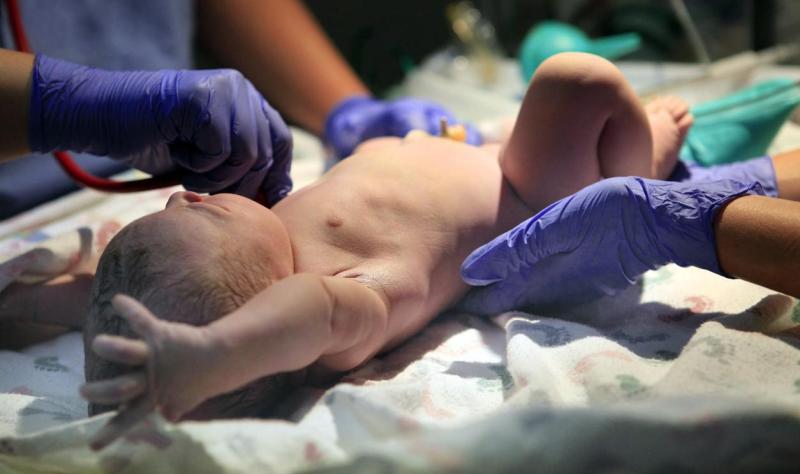
Newborn girls are less likely than boys to receive critical preventative treatments, increasing their risk of serious health complications. A recent study revealed a significant rise in parental refusal of both the vitamin K (VK) injection and the hepatitis B vaccine (HBV) for infants of both sexes between 2018 and 2025.
Researchers from the Children’s Hospital of Philadelphia and the University of Pennsylvania examined data from three centers within a single healthcare system, analyzing parental decisions regarding VK prophylaxis and HBV administration for newborns born at 35 weeks gestation or later. The findings were published in JAMA Network Open.
Of the 93,163 newborns studied, 777 did not receive VK prophylaxis and 9,400 did not receive HBV. Notably, 83% of infants whose parents declined the VK injection also did not receive the HBV vaccine.
The analysis indicated that newborn girls were twice as likely as boys to not receive VK prophylaxis. Parental refusal of VK prophylaxis saw a significant increase for both sexes. Annually, VK refusal rates rose by 1.37 per 1,000 female births, reaching 19.8 per 1,000 births by 2025. For male newborns, the annual increase in VK refusal was 0.75 per 1,000 male births, reaching 10.1 per 1,000 by 2025.
While female sex was associated with slightly higher rates of HBV nonreceipt, HBV refusal also rose significantly for both genders. Among girls, annual HBV refusal rates escalated by 10.3 per 1,000 female births, reaching an incidence of 173.7 per 1,000 by 2025. For boys, the annual increase in HBV refusal was 11.0 per 1,000 male births, with an incidence of 166.3 per 1,000 by 2025.
Factors such as birth center, non-Hispanic maternal race, and public insurance coverage were associated with the administration of VK and HBV. Circumcision rates remained consistent between 72% and 77% annually, with no circumcisions performed on newborns who did not receive VK.
The study authors highlighted that newborn female sex was linked to lower odds of receiving VK prophylaxis and HBV. They observed that VK prophylaxis refusal rates doubled between 2018 and 2025 for both sexes, with two-thirds of newborns not receiving VK being female.
The researchers suggested that sociocultural, religious, and individual beliefs likely influence parental decisions regarding newborn care. They theorized that the desire for circumcision might play a role in VK prophylaxis acceptance among parents of male newborns who are otherwise hesitant. While sex disparities in HBV administration are less understood, previous reports from lower and middle-income countries have shown similar gender differences in childhood vaccination.
It was noted that as of late 2025, the Centers for Disease Control and Prevention no longer recommends routine newborn HBV administration. This shift in guidance, which contrasts with recommendations from the American Academy of Pediatrics, could potentially lead to confusion among families, reinforce misinformation about vaccines, and contribute to declining vaccination rates.
The study’s limitations include its focus on a single healthcare system, the possibility of unmeasured factors influencing parental decisions, and the inability to track long-term health outcomes such as VK deficiency bleeding after hospital discharge. The authors called for further national studies to investigate sex-specific rates of VK prophylaxis and HBV administration, VKDB, and neonatal hepatitis B infection. They emphasized the need for innovative strategies to address disparities in these preventative measures and reduce life-threatening health issues in female newborns.