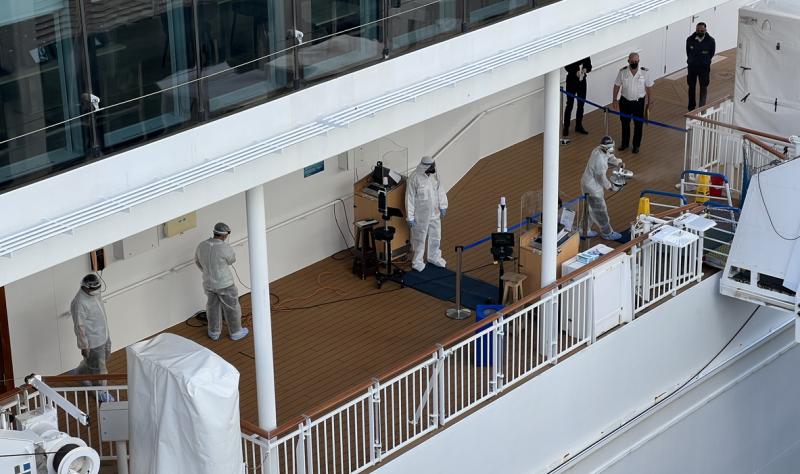
A recent outbreak of Andes hantavirus aboard a Dutch cruise ship, which resulted in 13 individuals falling ill and three fatalities, was successfully managed through a comprehensive international public health effort. This coordinated response effectively contained the outbreak and minimized the risk to the wider population.
A report detailing this public health operation, involving international medical evacuations, contact tracing, quarantine measures, and laboratory surveillance spanning multiple continents, was compiled by researchers from the Netherlands’ Centre for Infectious Disease Control and other global health organizations. The findings were recently published in the journal Eurosurveillance.
The Genesis of a Deadly Case
The outbreak is believed to have originated when a passenger contracted the Andes virus (ANDV) from infected rodents in South America prior to boarding the MV Hondius. Researchers suggest the primary case’s infection likely occurred through airborne transmission of the virus from rodent urine, feces, or saliva in South America, preceding their embarkation.
The vessel embarked on its journey from Ushuaia, Argentina, on April 1st, carrying 121 passengers and 61 crew members. The multi-week voyage was scheduled to conclude in Cape Verde, an island nation located off the coast of West Africa. The ship made several stops en route, including South Georgia, Cooper Island, Tristan da Cunha, Gough Island, Saint Helena, and Ascension Island.
During the ship’s stay in Saint Helena from April 22nd to 24th, 32 passengers disembarked, including the spouse of the initial patient, who subsequently became the second confirmed case. The remains of the first patient were also removed from the ship in Saint Helena.
Upon reaching the capital of Cape Verde on May 3rd, the ship’s arrival coincided with notifications to the World Health Organization and the European Centre for Disease Prevention and Control (ECDC) from British and Dutch authorities regarding a cluster of severe respiratory illnesses onboard. Laboratory tests confirmed the presence of Andes virus, a strain of hantavirus known to cause significant respiratory illness in humans.
Evidence suggests that the 12 confirmed and one probable case on the ship resulted from person-to-person transmission, a characteristic of ANDV not seen with other hantaviruses. No rodents were found on the vessel. Routine screening identified two cases before the onset of symptoms. The outbreak resulted in three deaths, indicating a case-fatality rate of 23%.
The Public Health Response
Given the prolonged incubation period of the Andes virus, which can extend up to 42 days, the potential for continued disease spread after passengers disembarked was a significant concern. Following a precautionary approach, the ECDC identified all individuals onboard as high-risk contacts, recommending a six-week quarantine period from their last potential exposure to the virus, coupled with active health monitoring.
The response included medical teams boarding the vessel in Cape Verde. Passengers exhibiting symptoms underwent medical evacuation, and repatriation flights were coordinated to various countries, including Canada, France, Ireland, Spain, the Netherlands, the United Kingdom, the United States, and Turkey. Health officials also initiated tracking and monitoring of individuals who had disembarked earlier on remote islands, as well as airline passengers, airport personnel, and healthcare workers who might have had potential exposure.
Follow-Up with High-Risk Contacts
In total, health authorities identified 188 high-risk contacts across seven nations. These individuals were placed under quarantine, underwent daily monitoring, and were tested weekly. On June 10th, the quarantine periods for 12 healthcare and laboratory workers who had handled clinical waste from a confirmed patient were concluded.
Quarantine was lifted for the 61 passengers and crew members held in the Netherlands on June 18th, coinciding with the end of the 42-day monitoring period for individuals exposed on airplanes. American passengers completed their quarantine period on June 21st. The final individual under monitoring was expected to conclude their quarantine on July 2nd. As of June 18th, all reported cases remained confined to individuals who had been on the ship, with no evidence of community transmission detected. Experts deem further community transmission to be improbable.
The authors of the report emphasized the critical need for robust preparedness protocols for expedition and cruise vessels. These should include early detection of illness clusters, swift international notification with comprehensive information sharing regarding passengers and crew, and their contacts. The protocols should also encompass collaboration, the implementation of onboard infection prevention and control measures, prompt medical evacuation, structured risk communication, and coordinated repatriation and follow-up procedures.