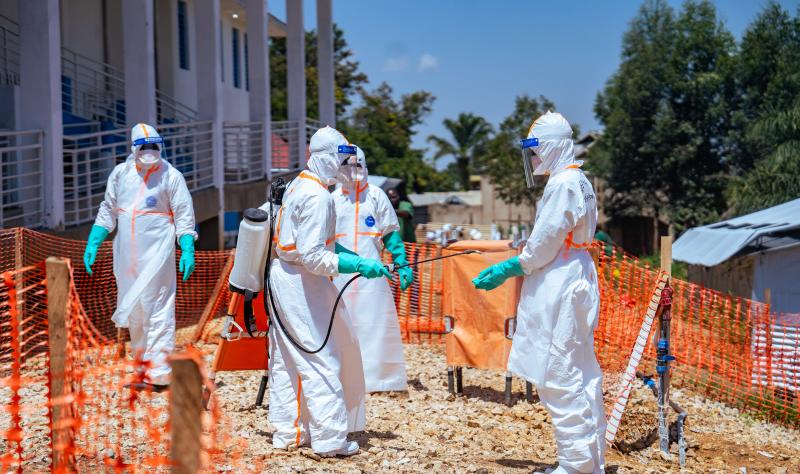
The Africa Centres for Disease Control and Prevention (Africa CDC) is hosting a three-day meeting to bolster regional preparedness for the escalating Ebola outbreak in the Democratic Republic of the Congo (DRC). This outbreak has already resulted in over 300 fatalities.
The gathering includes officials from the DRC, neighboring Uganda, and 11 other African Union member states identified as high-risk. Representatives from the World Health Organization (WHO) and other critical technical partners are also in attendance. According to Africa CDC officials, the participating countries will assess their current preparedness levels, exchange insights gained from the ongoing response, and enhance cross-border collaboration.
Tolbert Nyenswah, DrPH, a senior official at Africa CDC, stated in a press release, "Africa CDC is working with Member States and partners to move from plans to operational readiness at borders, in communities, in health facilities and inside emergency operations centres."
Potential to Become the Largest Ebola Outbreak on Record
The current outbreak in the DRC, now the second-largest recorded there, shows no signs of abating. It has reached 1,155 confirmed cases with 304 deaths. Uganda has reported 20 confirmed cases and two deaths. During a press conference, Africa CDC Director-General Jean Kaseya, MD, MPH, expressed concern, warning that without improved contact tracing, "it will be the largest Ebola outbreak ever."
Dr. Kaseya highlighted that effective control requires healthcare workers in the DRC to identify and monitor 80% of contacts of Ebola patients, a target that is currently unmet, with only 30% being reached, according to The New York Times.
"Africa CDC is working with Member States and partners to move from plans to operational readiness at borders, in communities, in health facilities and inside emergency operations centres."
South Sudan, which shares a northeastern border with the DRC and possesses some of the region’s most fragile healthcare infrastructure, is among the nations at risk. A modeling study published in The Lancet Infectious Diseases by researchers from the WHO Regional Office for Africa suggests a nearly 70% probability of at least one case emerging in South Sudan within the next four months.
The study’s authors noted, "Cross-border movement between eastern DR Congo, Uganda, and South Sudan occurs through both formal and informal routes, with many individuals crossing borders daily for trade, health care, and family visits. Such mobility substantially increases the likelihood of regional spillovers."
This outbreak is attributed to the Bundibugyo virus, a less-studied strain for which there are no licensed treatments or vaccines. It is only the third documented outbreak caused by this virus since Ebola’s discovery in 1976.
CDC Elevates Response Level
In a media briefing, officials from the US Centers for Disease Control and Prevention (CDC) announced an escalation of their response to Level 1 activation, the agency’s highest emergency response level, due to the outbreak’s continued growth.
Satish Pillai, MD, MPH, the incident manager for the CDC’s Ebola response, stated, "We are very concerned about the trajectory of cases, which are rising rapidly, as well as the continued geographic spread. Elevating the response level reflects the urgency, scale, and complexity of the outbreak and allows CDC to bring additional resources to support the coordination and operational needs of our response."
The CDC’s last Level 1 activation was during the 2014-2016 West Africa outbreak, which affected over 28,000 people and resulted in more than 11,000 deaths. Dr. Pillai emphasized that this upgraded status signifies the outbreak as a top priority within the agency, leading to the mobilization of staff and resources with maximum efficiency and speed.
He added, "The purpose of this is to signal internally how seriously our acting director and our agency leadership take this response."
Dr. Pillai also reiterated that the risk to the United States remains low.