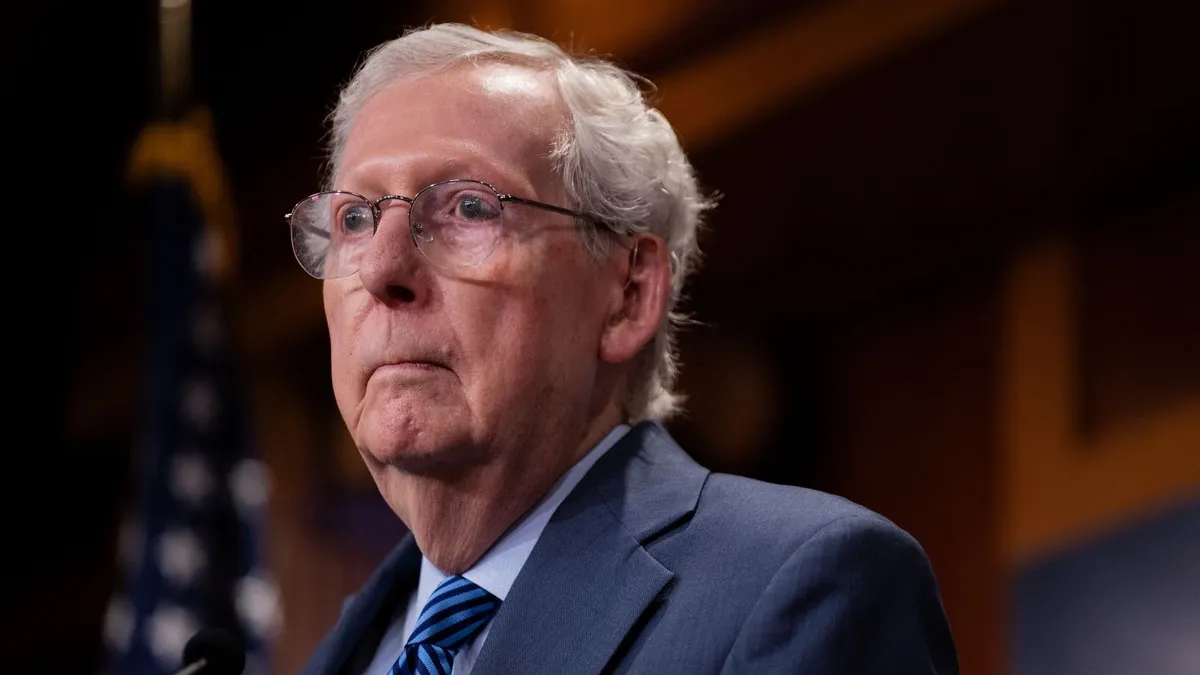
Examining the Record: Mitch McConnell’s Votes on Sick Leave
Claim: U.S. Senator Mitch McConnell (R-Ky.) voted against or blocked legislation mandating employee sick leave in 1993, 2015, 2020, and 2022.
Rating: Mostly True (with specific contextual clarifications)
Context and Overview
Amid public attention surrounding U.S. Senator Mitch McConnell’s extended health-related absence from Congress in the summer of 2026, social media users recirculated claims regarding his legislative record on paid and unpaid leave. Posts on platforms like X (formerly Twitter) and Threads asserted that the veteran Kentucky Republican consistently opposed employee leave mandates throughout his career, specifically highlighting votes or legislative blocks in 1993, 2015, 2020, and 2022.
A review of congressional voting records shows that these claims are mostly true, though certain details—such as whether the proposed leave was paid or unpaid—require careful distinction. Across the four cited years, McConnell did consistently vote against measures designed to establish or expand guaranteed sick and family leave provisions.
Detailed Breakdown by Year
1. The Family and Medical Leave Act of 1993
- The Claim: McConnell voted against family leave legislation in 1993.
- The Facts: On February 5, 1993, President Bill Clinton signed the Family and Medical Leave Act (FMLA) into law as the new administration’s inaugural major social policy achievement. The bill granted eligible employees working for companies with 50 or more employees up to 12 weeks of unpaid leave (not paid leave, as some online posts incorrectly claimed) to care for a new child or a seriously ill family member.
- McConnell voted against the FMLA during the Senate roll call. Congressional archives and period newspapers contain no recorded statement from McConnell explaining his “nay” vote at the time.
2. Paid Sick Leave Amendment of March 2015
- The Claim: McConnell voted against paid sick leave in 2015.
- The Facts: On March 26, 2015, the Senate passed an amendment introduced by Senator Patty Murray (D-Wash.) by a 61–39 vote. While not a binding standalone law, the amendment established funding mechanisms to accommodate a paid sick leave provision within the Senate’s fiscal year 2016 budget resolution.
- McConnell voted against the amendment. During floor debates, Republican opponents argued that existing FMLA guidelines providing 12 weeks of unpaid leave were already sufficient for American workers.
3. Legislative Actions During the COVID-19 Pandemic in 2020
- The Claim: McConnell blocked or voted against pandemic-related paid leave in 2020.
- The Facts: McConnell’s voting record during the onset of the COVID-19 pandemic involves a significant nuance:
- On March 18, 2020, McConnell voted in favor of the Families First Coronavirus Response Act, emergency bipartisan legislation that mandated employers provide temporary paid sick leave and expanded family leave through December 31, 2020.
- However, earlier that exact same day, McConnell voted against a broader Democratic-backed amendment (also introduced by Senator Murray) that would have expanded these benefits and extended the paid leave mandate through the end of 2021.
- Later in December 2020, as Senate Majority Leader, McConnell reportedly spearheaded efforts to prevent a congressional extension of the temporary paid leave mandate, allowing the requirement to expire at the end of the year as originally scheduled.
4. Rail Workers’ Sick Leave Measure in 2022
- The Claim: McConnell voted against seven days of paid sick leave for rail workers in 2022.
- The Facts: On December 1, 2022, the Senate passed legislation to avert a national rail strike that lawmakers warned would severely disrupt the American economy. Concurrently, the House of Representatives passed a separate resolution aimed at securing seven days of annual paid sick leave specifically for railroad employees.
- That separate resolution failed in the Senate after falling short of the 60 votes required to pass. McConnell and 42 other senators voted against the measure. (Subsequent federal reports indicated that the vast majority of major freight rail employees eventually secured paid sick days through subsequent private negotiations and agency agreements by late 2024).
Sources
- U.S. Senate Roll Call Votes (103rd, 114th, 116th, and 117th Congresses).
- U.S. Department of Labor (FMLA and Families First Coronavirus Response Act documentation).
- Congressional Record (Floor statements by Senators Patty Murray, Mike Enzi, and Bernie Sanders).
- Associated Press, Reuters, BuzzFeed News, and C-SPAN legislative archives.