Whether browsing online or following current events, chances are you’ve encountered discussions about data centers. While some communities welcome these massive facilities, others push back against them.
So, what exactly are these hubs?
They serve as the backbone for everyday digital actions, from streaming your favorite television shows and utilizing Apple Pay to browsing social media or querying an AI chatbot. All of these functions depend heavily on networks and computers stored securely inside data centers.
Though data centers are not a recent invention, a massive surge in construction over the past few years has heightened local anxieties regarding potential spikes in utility bills and the strain placed on local water reserves. Consequently, political candidates have demanded tighter restrictions, while others continue to highlight their promise as economic drivers.
President Donald Trump has expressed a desire to expand the nation’s data center footprint, suggesting the lease of federally owned property for this purpose. Furthermore, his administration is actively simplifying federal guidelines to fast-track approvals and build out the power infrastructure required to support them.
In this overview, we will break down what data centers are, how they function, the influence of artificial intelligence on their operations, and what the arrival of a new facility means for the surrounding neighborhood.
Data centers: An overview
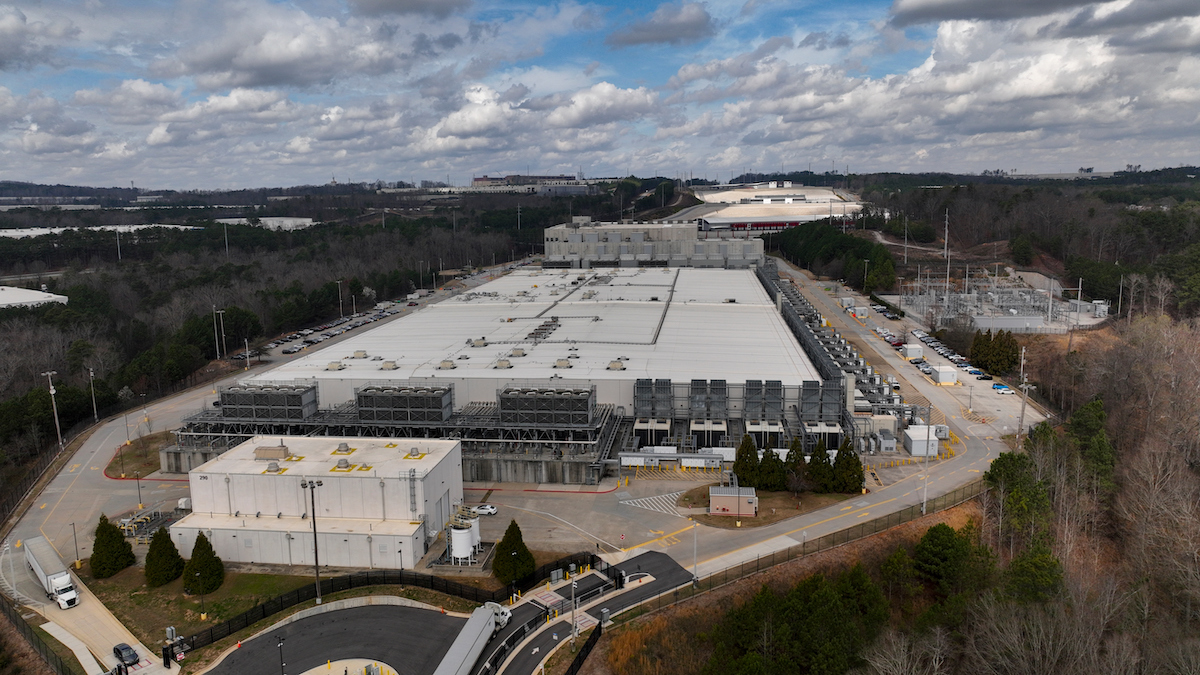
The phrase “data center” generally refers to a dedicated building that houses thousands of powerful computer servers, data storage systems, and specialized networking hardware. Operating around the clock, these complexes are tasked with managing and safeguarding information for various online platforms and digital services.
“The machines stay on and stay busy,” noted Dimitrios Nikolopoulos, an engineering professor at Virginia Tech.
On average, a standard data center spans roughly 100,000 square feet—a footprint comparable to a typical Walmart Supercenter or Costco warehouse.
While these facilities have existed for decades, the earliest iteration dates back to 1945, when a facility housed the world’s first programmable computer, built to compute U.S. Army artillery calculations during World War II.
According to Nikolopoulos, early facilities handled basic workloads like email, databases, and standard web hosting, consuming a relatively modest and steady amount of electricity. In contrast, modern data centers draw massive amounts of power to handle exponentially larger data loads.
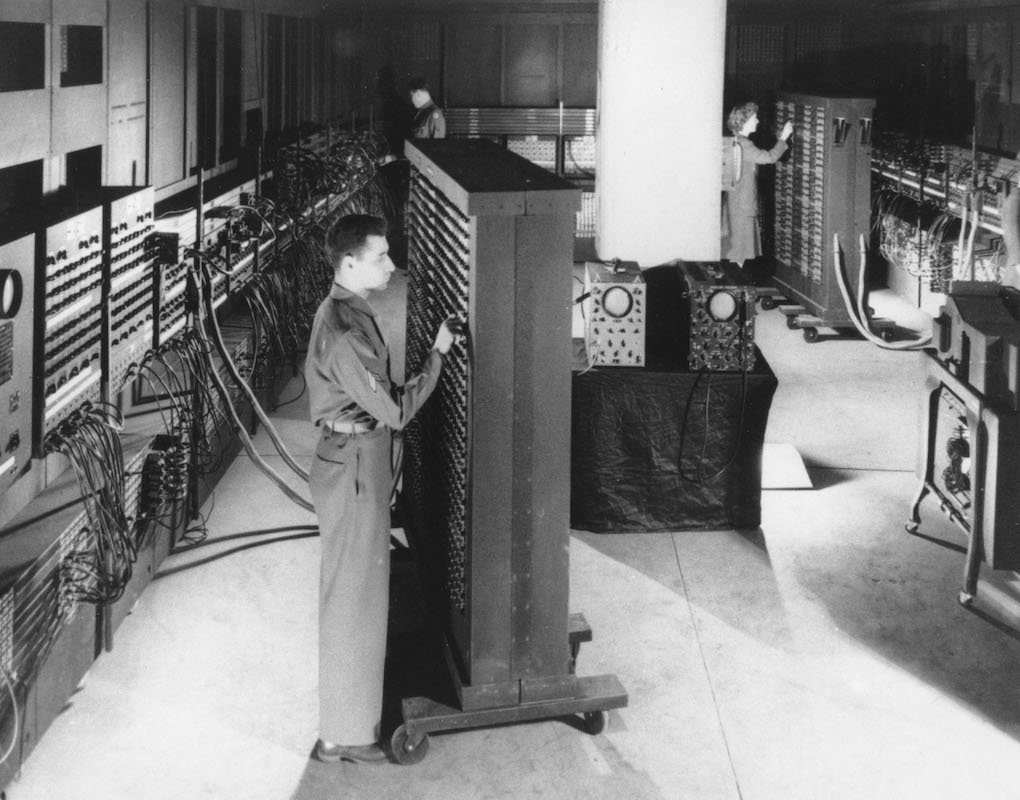
This 1946 photograph shows ENIAC, a 30-ton electronic machine at the University of Pennsylvania. In the 1980s the National Society of Professional Engineers named ENIAC as one of the 10 most outstanding engineering achievements of the past 50 years. (AP)
What do data centers need to function?
Fundamentally, the computing hardware inside these structures requires a constant stream of electricity to run, alongside intensive cooling systems—often relying on water—to prevent the machinery from overheating.
The International Energy Agency noted that a single artificial intelligence data center can consume as much electricity in a year as 100,000 typical households, with some under-construction mega-facilities projected to demand up to 20 times that amount.
Data centers globally accounted for roughly 415 terawatt-hours in 2024, equating to about 1.5% of global electricity consumption, figures show.
Furthermore, a federal research study published in June by the Lawrence Berkeley National Laboratory projects that by 2030, these complexes will demand between 9.5% and 15.3% of the total electricity used across the United States.
To keep computers from melting under constant high-performance loads, facilities typically utilize freshwater drawn from local municipal supplies. (Alternative water sources, such as saltwater, are avoided because evaporation leaves behind mineral and salt buildup that can corrode sensitive hardware).
Cooling infrastructure inside these complexes generally incorporates heavy-duty air conditioning units, industrial fans, and chilled-water piping networks.
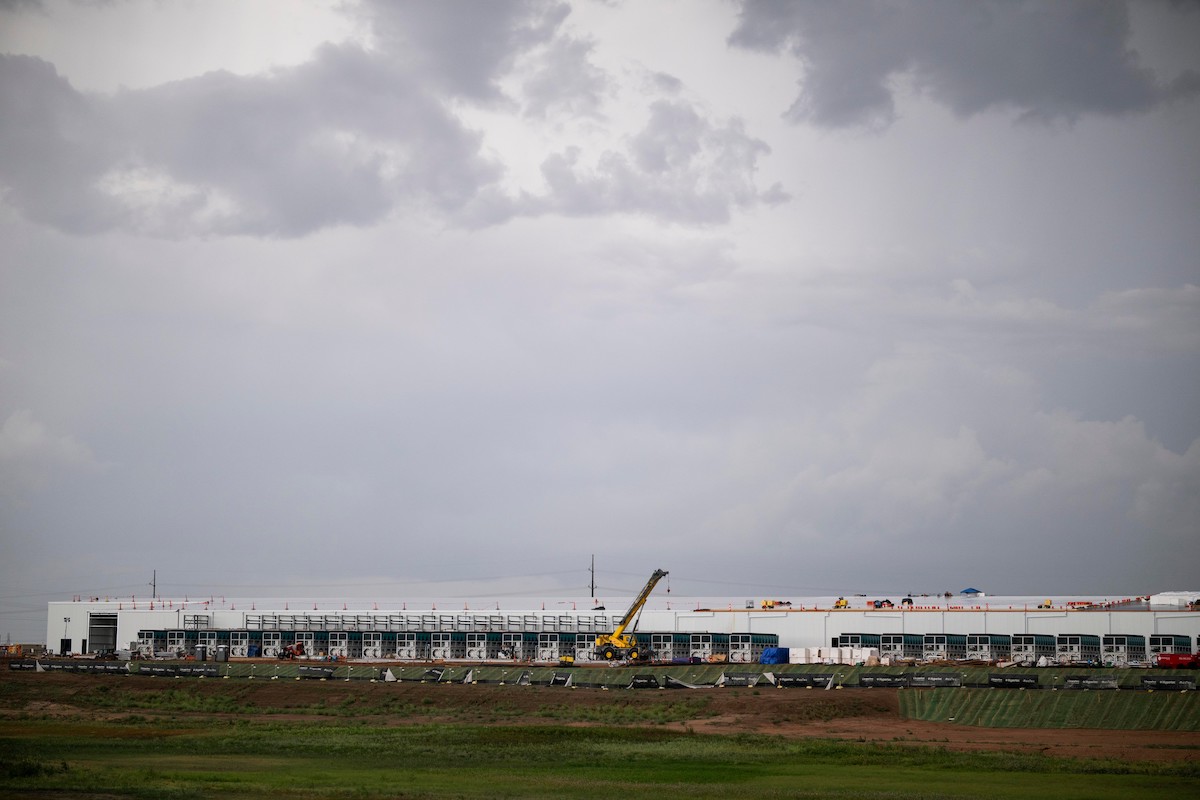
The site of a future data center being built near Abernathy, Texas, July 18, 2026, in Hale County, Texas. (AP)
The link between data centers and our increasing use of artificial intelligence
Artificial intelligence enables machines to mimic human capabilities like reasoning, perception, learning, and complex problem-solving. Advanced AI systems achieve this by training on vast repositories of information.
“Every day digital communications like the internet, banking, healthcare systems, cloud computing/gaming, and websites all use remote servers and therefore data centers,” explained Ke Xu, a professor at the Rochester Institute of Technology who specializes in energy-efficient AI hardware, via email. “AI changed the scale and type of computing, and the intensity normal people use them.”
Xu noted that while a standard e-commerce website might demand minimal processing power per user click, training a complex AI model requires thousands of specialized computer chips working in tandem for extended periods. Furthermore, handling millions of simultaneous user prompts expected to generate instant replies demands massive computational muscle.
How can a new data center affect a community?
Proponents of data centers argue that the facilities provide short-term construction work for electricians and laborers alongside permanent positions for facility managers, security personnel, and technicians. Additionally, the complexes bolster municipal and state coffers through property and sales tax revenues.
Conversely, a July national survey commissioned by Americans for Responsible Innovation—a consumer-focused AI advocacy group—revealed that registered voters harbored the greatest anxieties regarding water consumption, tax subsidies granted to tech firms, and climbing electric utility bills.
With household electricity rates having climbed over the past five years, heavy data center demand has emerged as a primary contributor in several regions.
Various media organizations have also highlighted ongoing noise complaints from nearby residents. People living adjacent to facilities in Virginia, Michigan, and Wisconsin have reported enduring a continuous, low-frequency hum. According to The New York Times, some of these sounds dip into ultralow frequencies that may not register audibly to humans, yet their persistent vibrations can still be felt, leading residents to report health complications, insomnia, and chronic fatigue.
Where are data centers now and where are they opening?
The United States currently hosts upwards of 3,000 data centers, traditionally concentrated in urban environments, data from the Pew Research Center indicates. However, Pew noted in April that more than half of all newly proposed facilities are slated for rural locales.
Furthermore, over 1,900 additional data hubs are slated to open across the country through 2034, with heavy clusters planned in Texas and Virginia.
Market intelligence firm Cleanview reported that as of mid-August, some of the largest operational sites are situated in Arizona, Texas, Tennessee, and Wisconsin. The most expansive facilities exceed one million square feet—roughly equivalent to the space of 17 football fields.
Industry giants like Amazon, Microsoft, Google, and Meta operate numerous facilities nationwide, alongside specialized real estate investment trusts that rent out space to outside enterprises.
Companies frequently select regions like Texas and Virginia because local governments offer attractive tax incentives or because preexisting infrastructure makes development more straightforward.
Nikolopoulos pointed out that Northern Virginia was an early pioneer due to the physical integration of MAE-EAST, one of the earliest commercial internet exchange points. This left the area with robust, high-speed fiber networks, allowing newly built facilities to establish inexpensive, short-distance links to hundreds of networks instantly.
“Texas competed on different terms,” Nikolopoulos added. “It offered land, tax breaks, plenty of generation and a faster grid connection.”
Nonetheless, responding to mounting resource pressures, Texas Republican Gov. Greg Abbott ordered a temporary halt on new data center approvals on Aug. 3, directing state agencies to review projected power and water usage, cooling mechanics, and local tax exemptions.