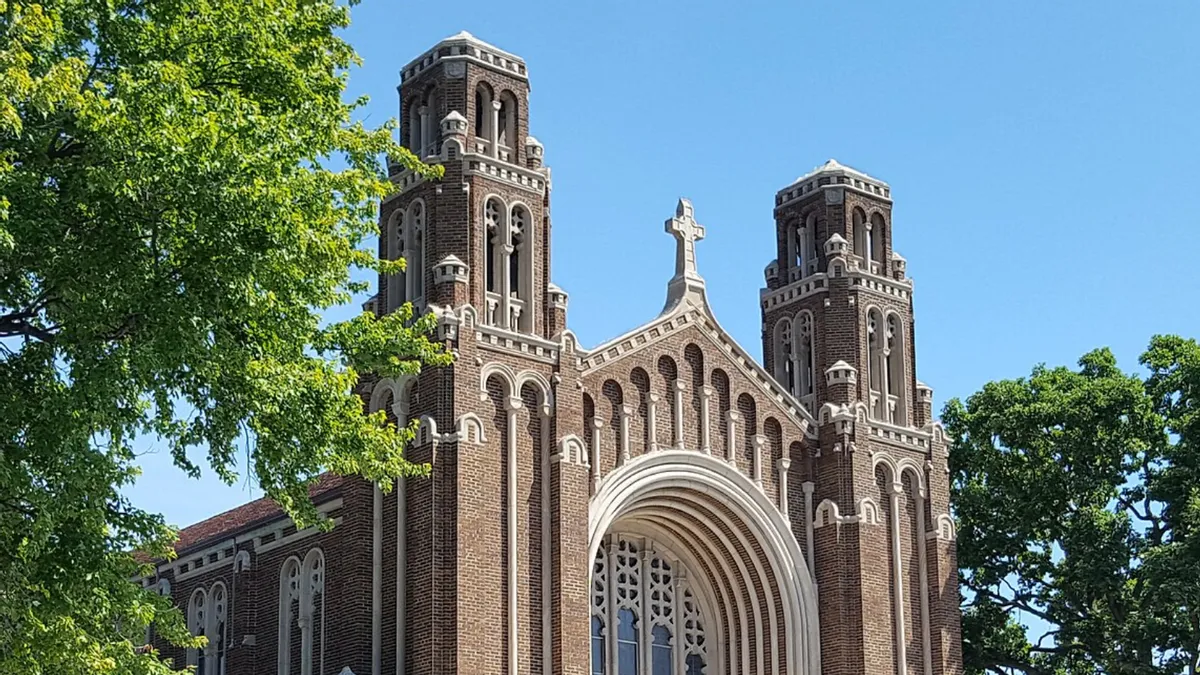
Muslim residents in Dearborn, Michigan, issued demands in July 2026 for local churches to halt Sunday bell-ringing.

While Dearborn experienced a separate, documented community debate regarding mosque loudspeakers and the Islamic call to prayer in 2025, local news coverage focused exclusively on noise concerns, not any push by Muslims to silence church bells.
Social media platforms saw the recirculation of an unfounded rumor in August 2026, alleging that the Muslim community in Dearborn, Michigan, had demanded an end to Sunday church bell ringing.
A typical post spreading this narrative on X (archived) claimed:
In Dearborn Michigan: Muslims DEMAND submission!!
In Dearborn Michigan, Muslims are now demanding that CHRISTIAN CHURCHES stop ringing their bells on Sundays. This is real and their reasoning should terrify every Christian American.
Muslims are saying “According to Sharia Law, church bells cannot be louder than our Islamic call to prayer. We are the majority in this city and you HAVE TO respect us, our laws, and our religion.”
Similar iterations of this story appeared across various platforms, including X, LinkedIn, and Threads.
However, the claim existed solely within unverified online posts that failed to provide basic details such as the identities of those involved, the targeted churches, the timing, or the source of the quotes. Investigators found
Inquiries sent to the city of Dearborn regarding any incidents matching the social media claims have not yet received a reply; updates will be provided if new information emerges.
Background on Mosque Loudspeaker Discussions
The viral rumor likely stemmed from a genuine, albeit unrelated, local noise dispute in Dearborn. Regional news outlets previously covered concerns raised by certain residents regarding the outdoor use of loudspeakers for the Islamic call to prayer. In October 2025, Detroit broadcaster WXYZ highlighted that community members had voiced objections to the broadcasted calls to prayer being heard across parts of the city.
According to that reporting, the Islamic Institute of Knowledge utilized loudspeakers twice daily for roughly two minutes. Resident Andrea Unger brought her concerns before the City Council, stating she preferred not to hear the broadcasts from her property.
Fouad Berry, a board member for the institute, noted in the same report that the mosque voluntarily halted early-morning broadcasts following complaints to maintain community harmony. Furthermore, Dearborn Police Chief Issa Shahin clarified during an October 7, 2025, City Council meeting that mosques faced potential citations if loudspeaker usage occurred before 7 a.m. or breached decibel thresholds.
Additional coverage from Detroit station WKBD confirmed similar complaints, noting that Unger submitted a petition regarding noise at the Dearborn Community Center. City officials subsequently performed decibel assessments, identifying a few instances of ordinance non-compliance, while center director Nabeel Bahalwan maintained that operations stayed within legal limits and aimed to respect neighbors.
At no point did these reports indicate any demands by Muslims to silence church bells; they focused strictly on ordinary noise concerns and the application of municipal noise ordinances.
Overview of Dearborn Noise Regulations
The city’s legal framework offers no validation for the claims made in the viral posts. Dearborn’s standard noise ordinance bans “unreasonably loud, disturbing, unusual or unnecessary noise” that disrupts community peace or safety, without referencing religious institutions, Shariah, or bells.
Another specific statute regulates amplified sound systems between 10 p.m. and 7 a.m. if they create residential disturbances. This rule applies universally to all loudspeakers “for any purpose” rather than targeting specific religious practices.
Demographic Realities in Dearborn
Characterizations of Dearborn as an exclusively “Muslim-majority town” do not align with official religious census tracking, which does not exist at the municipal level.
While Dearborn maintains a prominent Arab American and Muslim population, frequently cited demographic data reflects ancestry rather than religious affiliation. WDIV reported that U.S. Census Bureau figures indicated individuals of Middle Eastern or North African descent constituted 54.5% of residents, a metric tracking heritage rather than faith.
Federal agencies do not track citizens by religion. As the Pew Research Center has noted, official U.S. census questionnaires exclude inquiries regarding personal religious beliefs, a policy echoed by the Census Bureau’s methodological guidelines.
While independent repositories like the Association of Religion Data Archives offer regional membership estimates for the broader Detroit metropolitan area, specific city-level religious counts remain unavailable.
Fact-checkers have previously addressed numerous fabricated claims attempting to link Dearborn or other Michigan areas to religious legal systems. Past investigations include a misrepresented photo of a restaurant in Saudi Arabia falsely claimed to show gender-segregated lines at a Dearborn KFC in 2017, alongside a 2018 satire-driven rumor alleging the creation of a “Shariah zone” banning bacon and mandating burqas in the state.