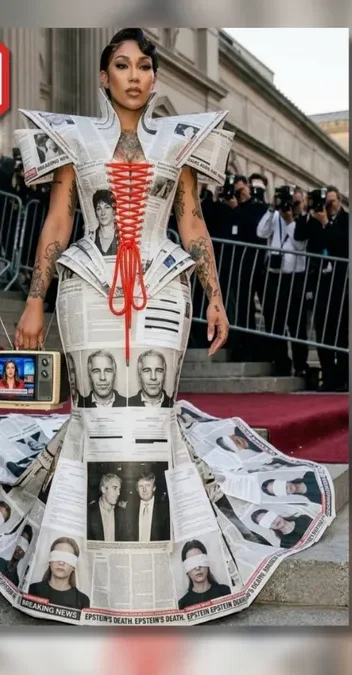
A bizarre image circulating online claims to show a Met Gala attendee wearing a dress made entirely from newspaper articles about disgraced financier Jeffrey Epstein.
The image quickly spread across social media platforms, where users reacted with shock, confusion, and outrage. Some posts claimed the outfit was a deliberate political statement at the 2026 Met Gala, while others treated the image as proof that fashion events had become increasingly extreme.
But the image is not real.
According to recent investigations by Snopes, the viral photo was generated using artificial intelligence tools and does not depict an actual Met Gala attendee.
What the Viral Image Claimed to Show
The image portrayed a woman standing at what appeared to be a Met Gala red carpet event wearing a dress seemingly constructed from newspaper pages referencing Epstein.
Some versions of the viral posts identified the woman as “Laree Chante,” though fact-checkers found no evidence such a person attended the Met Gala or appeared on official guest lists.
The image spread rapidly because it combined several viral internet triggers:
- celebrity culture
- conspiracy discussions
- Epstein-related controversy
- shocking fashion imagery
- AI-generated realism
Many users assumed the photo was authentic because the rendering quality looked highly realistic at first glance.
How Fact-Checkers Determined the Image Was Fake
Investigators used several verification methods to analyze the image.
According to Snopes:
- reverse-image searches failed to locate authentic event photography
- Getty Images and major photo archives contained no matching photos
- no verified media outlet documented the supposed outfit
- the social account that shared the image prominently featured AI-generated content
Snopes also reported that the originating Instagram account described itself as:
“Your AI Prompt Queen”
The account’s feed reportedly consisted largely of synthetic AI-generated imagery rather than authentic photography.
Because of those findings, Snopes labeled the image “Fake.”
Why AI-Generated Met Gala Images Spread So Easily
The Met Gala has become one of the internet’s biggest annual visual events.
Each year:
- celebrities wear unusual outfits
- fashion photos dominate social media
- millions of users discuss red carpet looks in real time
That environment creates ideal conditions for AI-generated misinformation because outrageous outfits already feel believable within the context of the event.
As AI image generators improve, fake celebrity and fashion images are becoming increasingly difficult for casual viewers to identify.
Researchers studying deepfakes and synthetic media have repeatedly warned that realistic AI-generated imagery can spread misinformation extremely quickly online.
Signs the Image Was AI-Generated
Although convincing at first glance, closer inspection revealed several indicators commonly associated with AI-generated imagery.
Users analyzing the image pointed out:
- distorted newspaper text
- inconsistent fabric details
- unnatural facial rendering
- strange lighting artifacts
- unrealistic typography patterns
These are common flaws seen in many AI-generated images shared online.
Fact-checkers also noted the complete absence of professional event photography confirming the dress existed in real life. Given the intense media coverage surrounding the Met Gala, a genuine outfit that provocative would almost certainly have been photographed extensively by major outlets.
Reuters, Getty Images, Vogue, and other event photographers covered the 2026 Met Gala extensively, but no legitimate images matching the viral Epstein dress surfaced.
AI Fashion Hoaxes Are Becoming More Common
The fake Epstein dress is part of a larger trend involving AI-generated celebrity and event imagery.
In recent months, social platforms have seen viral fake images involving:
- politicians
- celebrities
- major public events
- luxury fashion
- protests
- disasters
These images are often created specifically to:
- trigger outrage
- increase engagement
- farm clicks and shares
- confuse viewers
- exploit political or cultural tensions
The realism of modern AI tools means many users now struggle to distinguish authentic photography from synthetic media.
Why Epstein-Related Content Goes Viral
Content involving Epstein continues to generate unusually high engagement online due to ongoing public fascination surrounding:
- conspiracy theories
- elite networks
- unreleased documents
- celebrity associations
- political speculation
Combining Epstein imagery with the Met Gala — already one of the internet’s most-discussed fashion events — dramatically increased the viral potential of the fake image.
That emotional combination helped the image spread far faster than fact-check corrections.
Bottom Line
No, a Met Gala attendee did not wear a dress made from Jeffrey Epstein newspaper articles.
Fact-checkers determined the viral image was AI-generated and not authentic. No credible media outlet, event photographer, or official Met Gala source documented the supposed outfit.
The fake image is another example of how realistic AI-generated visuals are increasingly blurring the line between authentic photography and internet misinformation.
FAQ
Was the Epstein newspaper dress real?
No. Fact-checkers concluded the image was AI-generated and not a real Met Gala outfit.
Who created the fake image?
The original source appears linked to an account that openly posted AI-generated content, though the exact creator has not been publicly confirmed.
Did the woman in the image attend the Met Gala?
There is no evidence the named individual attended the event, and no official guest records support the claim.
Why are fake Met Gala images common?
Because the event already features extravagant fashion, AI-generated fake outfits can appear believable and spread quickly online.