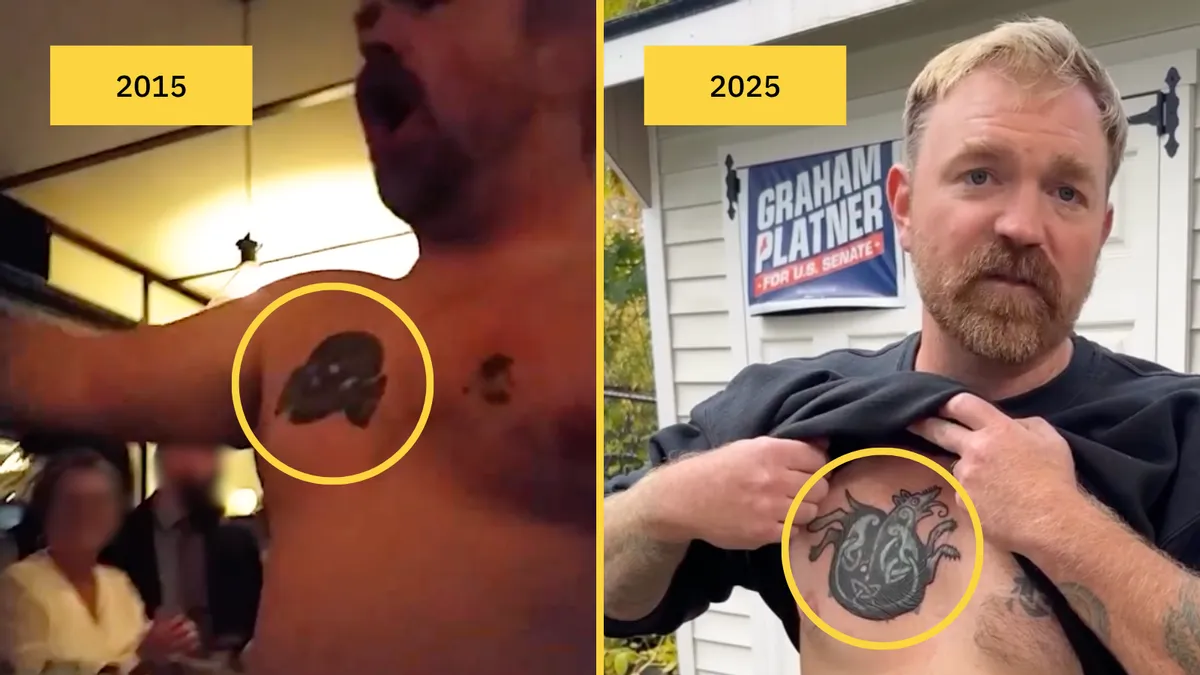
Social media posts claimed that Maine Senate candidate Graham Platner had a tattoo of a Nazi symbol on his chest, fueling accusations that he secretly supported extremist ideology. While the tattoo did resemble a symbol associated with Nazi Germany, the full story is more complicated than many viral posts suggested.
According to reporting reviewed by Snopes and other news outlets, the tattoo depicted a skull-and-crossbones design closely resembling the “Totenkopf,” or “death’s head,” symbol used by Adolf Hitler’s SS during the Nazi era. The symbol became particularly associated with SS units involved in guarding concentration camps during World War II.
Platner acknowledged that the tattoo resembled the Nazi-linked symbol but denied that it was intended as extremist imagery. He said he got the tattoo in 2007 while serving in the U.S. Marine Corps during a shore leave trip to Croatia with fellow Marines. According to Platner, the group selected a “terrifying-looking skull and crossbones” design from a tattoo shop wall without understanding its historical associations.
Platner further stated that he was unaware of the resemblance to Nazi symbolism until reporters and political operatives raised questions during his Senate campaign. He argued that if he had knowingly carried a Nazi symbol, it would likely have been identified earlier during military screenings and background checks. Platner served in both the Marine Corps and Army National Guard and later underwent security clearance reviews while working as a State Department contractor.
After the controversy emerged publicly, Platner said he covered the tattoo with a new design. In public statements and interviews, he described the realization as “horrifying” and apologized to people offended by the image.
However, later reporting complicated Platner’s explanation. Some former acquaintances reportedly claimed that he had previously referred to the tattoo as “my Totenkopf,” potentially suggesting prior awareness of the symbol’s meaning. Platner denied knowingly embracing Nazi imagery.
The Anti-Defamation League has noted that some people may acquire symbols resembling extremist imagery without fully understanding their historical significance, while also emphasizing the seriousness of such symbols when used publicly.
The viral claims were therefore missing important context. The tattoo did visually resemble a Nazi-associated symbol, but there is no verified evidence proving Platner intended it as an expression of Nazi ideology. At the same time, questions remain because of conflicting accounts about his awareness of the symbol’s meaning.
Final Verdict: Mostly True
References:
https://www.snopes.com/fact-check/graham-platner-nazi-tattoo/
https://www.wmtw.com/article/graham-platner-tattoo-covered-up-nazi-totenkopf-skull/69123653
https://www.pbs.org/newshour/politics/maine-democrat-platner-on-defense-over-tattoo-takes-page-from-trump-playbook-to-keep-up-senate-bid
https://www.theguardian.com/us-news/2025/oct/21/maine-graham-platner-tattoo-democrat-senate
https://themainemonitor.org/platner-tattoo-nazi-totenkopf/